2026 Top Kids Stool Types What Should Buyers Choose?
Choosing a Kids Stool in 2026 means balancing stability, comfort, materials, and the child’s everyday routine. A low step stool beside a bathroom sink serves a different purpose from a lightweight seat at a play table. The right choice depends on where it will be used, who will move it, and how easily it can be cleaned. Small details matter.
Grand View Research’s Kids Furniture Market Size, Share & Trends Analysis Report estimates the broader global kids’ furniture market at approximately US$36.7 billion in 2023, with projected growth through 2030. This figure covers many product categories, not stools alone, so it should not be treated as a measure of stool demand. Still, it points to a large and evolving children’s furnishings sector. Buyers should compare actual product features rather than rely on market growth as proof of quality.
Safety deserves equal attention. The U.S. Consumer Product Safety Commission advises families to check children’s products for hazards and follow age and use guidance. For stools, inspect the base, joints, surface grip, and weight limits; a wobble on a tiled floor is not a small concern. Look for clear care instructions and credible testing information, too. Not every listing provides enough detail. That is worth questioning.
This guide compares common Kids Stool types, including step stools, seating stools, adjustable models, and foldable designs. It considers likely settings, useful features, and trade-offs, helping buyers choose with care rather than assuming one style fits every child.
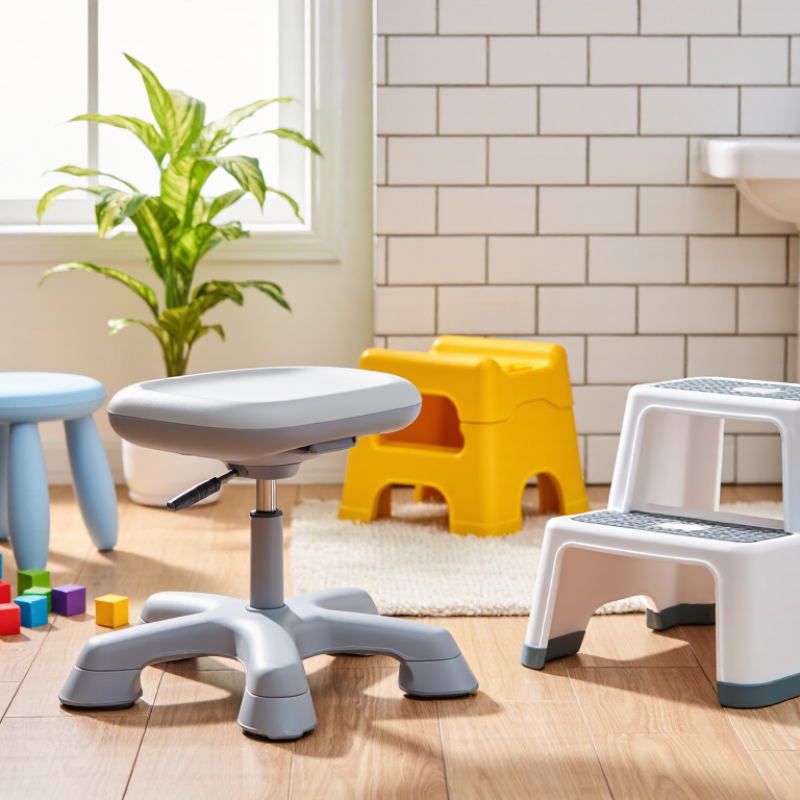
What Is a Kids’ Stool and How Is It Used?
A kids’ stool is a small seat or raised platform that helps a child reach a sink, counter, or low shelf. Some models are designed for sitting; others function as step stools. The distinction matters: a flat-topped seat may not provide safe footing for climbing, and a step stool may feel awkward for drawing or reading.
In everyday use, a child might stand on a stable stool to wash hands, with an adult nearby, or sit on one while putting on shoes. Look for a broad base, grippy feet, and a height suited to the task. Check the weight limit and inspect the stool for cracks or loose parts. A smooth bathroom floor can still be slippery. Small details matter.
From practical use, placement is easy to underestimate. A stool left beside a counter can invite climbing when no adult is present. Move it out of reach when it is not needed, and teach children to keep both feet centered. Even a sturdy stool can tip if used sideways. That part takes repetition. A child’s balance, reach, and confidence also change over time, so reassess whether the stool still fits the task.
Which Types of Kids’ Stools Are Available in 2026?
In 2026, kids’ stools generally fall into a few practical types. A basic step stool is lightweight and easy to move between the bathroom and kitchen. Many have a wide top and rubberized feet, though grip can wear down over time. Check the base on your own floor; tile and rugs behave differently.
Adjustable stools offer changing heights as a child grows. Folding stools save cupboard space, but their hinges need careful inspection. For supervised kitchen tasks, a learning tower surrounds the standing area with rails. It gives more support than a simple stool, yet takes up more room. Not every child needs one.
Bathroom stools are often compact, with a textured surface for reaching the sink. Wooden models feel sturdy, while plastic versions are usually easier to wipe clean. Some stools have two steps; others provide one broad platform. Small details matter. Look for a clearly stated weight limit, stable legs, and no obvious pinch points. I would not choose by age label alone: children differ in balance, reach, and confidence, and product categories can be confusing. Measure the sink or counter height, then consider where the stool will be used and stored.
How Do Stool Materials and Designs Affect Everyday Use?
A stool’s material affects how it feels, moves, and cleans up after daily use. Wooden stools often feel sturdy and suit longer use at a desk, but they can be heavy for children to reposition. Plastic models are usually lighter and wipe clean after spilled paint or snacks. Check that the surface is not slippery, especially when socks are involved. Metal frames can be durable, though hard edges and cold surfaces may feel less comfortable. Small detail, big difference.
Tips: Look for a broad base, secure joints, and feet that grip the floor. Match the stool height to the child’s task: feet should rest comfortably, not dangle. Check the stated weight limit and inspect screws or joints periodically. No stool stays stable on every surface.
Design matters just as much as material. A simple, backless stool can slide under a table and save space, but children may need reminders to sit near the center. A stool with a backrest can offer support during longer activities, while adding bulk. Handles make some models easier to carry, yet openings should not pinch small fingers. Foldable designs are convenient for storage, but their locks need to engage fully before use. I would not choose by appearance alone; room layout and the child’s habits are easy to overlook.
2026 Kids’ Stools: How Do Materials Affect Everyday Use?
Approximate material density helps explain why a stool made from a lighter material may be easier to move. It does not determine the finished stool’s weight: thickness, hollow sections, and overall design matter too. For everyday use, also consider a stable base, non-slip feet, and a seat height suited to the child.
Approximate material densities in grams per cubic centimetre. Pine density varies by species and moisture content.
What Safety Features Should Buyers Check?
When choosing a kids’ stool, check how it behaves on the floor you actually have. A wide base and non-slip feet help reduce wobbling on smooth kitchen tiles. Press down on each corner before use; rocking can reveal an uneven frame or loose joint. Small details matter. Look for rounded edges, a sturdy top, and a weight limit clearly stated by the maker. A stool that feels solid in a showroom may still slide on a damp floor.
Match the stool’s height to the child and task. For handwashing, the child should reach the sink without stretching or standing on tiptoe. A grippy surface can help keep feet in place, but deep grooves may trap water and dirt. If the stool folds, test its locking mechanism and check that fingers cannot easily reach pinch points. Carry handles should be smooth and too small to invite climbing.
Inspect screws, feet, and hinges regularly, especially after the stool has been moved between rooms. No feature removes every risk. Children may still lean, climb, or use a stool unexpectedly, so an adult should stay close.
I’d also admit that bright colors can distract buyers from basic stability checks. Prioritize construction over appearance.
How Can Buyers Choose the Right Kids’ Stool?
Choosing a kids’ stool starts with its job: reaching a sink, sitting at a craft table, or adding a perch in a bedroom. A step stool needs a broad, stable base and a grippy top. A seat should suit the child’s leg length, with feet resting comfortably on the floor. Check the stated age and weight limits, not just the product photos. Small details matter.
Measure the space where the stool will be used, including the distance from the floor to the counter or table. For a step stool, look for non-slip feet, secure joints, and edges that feel smooth to the touch. At home, place it on the actual floor surface and check whether it rocks. Measure before buying. A stool that works on tile may slide on a rug.
Think about storage and cleaning, too. Lightweight stools are easier for children to move, but very light designs can shift during use. A heavier stool may stay put, though it can be awkward to carry. There is no perfect choice for every room, and age alone does not tell you whether a child can use one safely. Watch how the child climbs or sits, then reconsider the fit if the stool wobbles or encourages stretching. Not every stool fits.