
The 2026 search for a top Plush Toys Factory is no longer based on price alone. Global buyers need reliable quality, documented safety controls, flexible production, and clear communication. Grand View Research valued the global stuffed and plush toys market at approximately USD 7.9 billion in 2023. It also projects continued growth through 2030, with demand supported by gifting, licensed characters, collectibles, and infant products.
The market is expanding. Expectations are rising faster.
This guide examines factories through a buyer’s practical lens. It considers fabric selection, embroidery accuracy, filling consistency, stitching strength, sample approval, and production traceability. A qualified Plush Toys Factory should explain its testing process clearly. Relevant checks may include flammability, small parts, mechanical safety, restricted substances, and age grading. Requirements differ across markets, so buyers should verify applicable standards before placing orders.
The Toy Association and Circana have repeatedly highlighted changing consumer preferences, including collectible products, value-conscious purchasing, and stronger interest in responsible materials. These trends affect factory selection. Recycled polyester, water-based inks, paper packaging, and efficient cutting processes can support sustainability goals, but claims need evidence. A certificate alone does not prove every production step is responsible.
Factory visits, third-party audits, and production samples often reveal more than polished websites. Look closely at loose threads, uneven facial features, carton labeling, and moisture protection. Small details matter.
No factory is perfect. Even experienced suppliers may face delays, material substitutions, or communication gaps. This guide therefore compares capabilities, risks, and improvement areas rather than promising one universal winner. The strongest partner is the factory that documents its limits, corrects mistakes quickly, and protects product consistency at commercial scale.
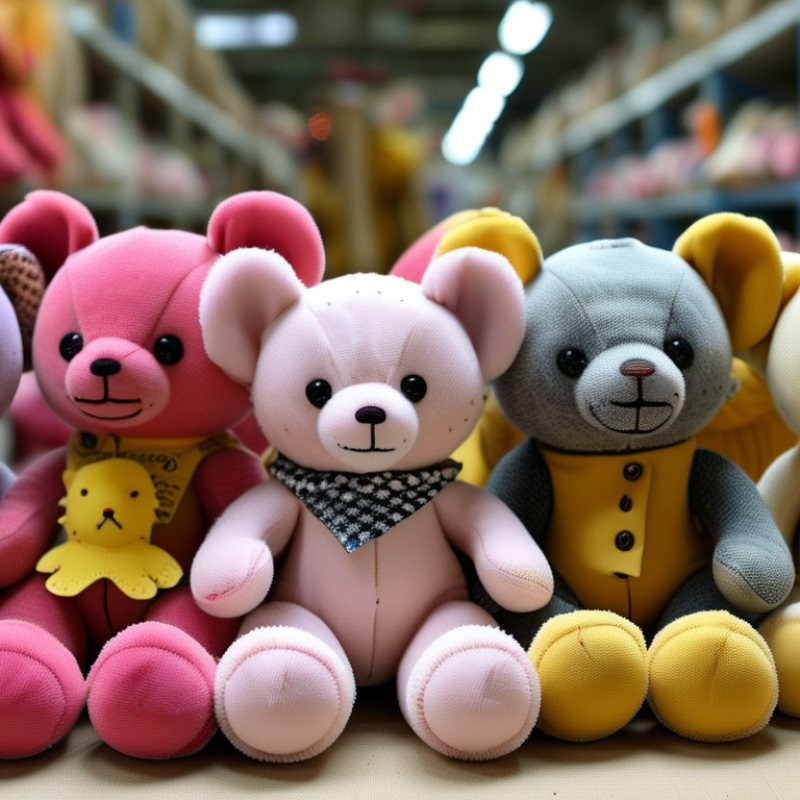
A top plush toys factory in 2026 is defined by evidence, not polished photos. Global buyers need clear control from design file to packed carton. Experienced teams explain fabric choices, filling density, seam strength, and wash performance in practical terms. They should provide dated samples, production records, and inspection results. A reliable factory also identifies limits early. That honesty matters. I have found that a quick, specific answer often reveals more than a long presentation.
Safety begins with material discipline. The factory should verify fiber content, dyes, stuffing, accessories, and packaging through documented supplier records and suitable laboratory testing. Risk assessments should cover loose parts, sharp edges, flammability, and age grading. Production lines need incoming checks, first-piece approval, patrol inspection, and final sampling. Ask to see rejected pieces. A clean workshop helps, but it does not prove consistent quality. Traceable batch codes and retained samples provide stronger evidence when questions arise.
Capability also means dependable execution. A strong partner can manage pattern changes, color matching, carton measurements, and realistic delivery schedules without hiding capacity problems. Buyers should review worker training, equipment maintenance, emergency procedures, and environmental controls. Communication should include photos of critical steps and written corrective actions. No factory is flawless. A small crooked eye or uneven seam may appear during sampling. What matters is whether the team records the cause, fixes it, and prevents repetition. Independent inspections remain wise for new programs and unfamiliar production sites.
2026 Top Plush Toys Factory for Global Buyers?
Safety Standards, Materials, and Quality Control
A reliable plush toy factory treats safety as a daily process, not a certificate on the wall. During factory evaluations, buyers should review testing for applicable standards, such as ASTM F963, EN 71, or CPSIA requirements. Requirements vary by market. Every toy needs traceable records, including material batches, production dates, and inspection results.
Material selection affects both comfort and safety. Soft polyester fabric should feel smooth, hold color after washing, and resist excessive shedding. Recycled fibers may be suitable when their composition and testing records are clear. Filling must be clean, evenly distributed, and free from sharp debris. Embroidered features can reduce risks linked to loose plastic parts, but stitching still requires careful inspection.
Quality control should happen before, during, and after production. Inspectors can check seam strength, stuffing density, pull resistance, color migration, and washable labels. Metal detection may help identify contamination, although it cannot replace careful housekeeping. A factory should keep samples from each batch for comparison. No inspection system is perfect. I have seen a small missed stitch reveal a larger training problem. That is why corrective actions, repeated testing, and honest communication matter more than polished factory photos. An experienced supplier should welcome difficult questions and explain what happens when a product fails inspection.
Selected regulatory reference limits for restricted substances in toy materials, shown in parts per million (ppm).
The chart compares selected limits used in major toy-safety frameworks. Lower limits indicate tighter substance controls. Plush-toy suppliers should verify the applicable market requirements, material composition, age grading, testing records, and batch-level quality controls before shipment.
References: U.S. Consumer Product Safety Improvement Act (CPSIA) limits for lead in paint and surface coatings and specified phthalates; EU REACH Annex XVII restrictions for lead in accessible articles and specified phthalates. Requirements, exemptions, and test methods may vary by product and jurisdiction.
For global buyers, the right plush toy factory should make customization practical, not merely attractive on paper. Share drawings, fabric references, size measurements, and embroidery files before requesting a quotation. A skilled production team can then review proportions, stitching points, filling density, and safety details. The first sample may still feel slightly wrong. That is normal, and useful. Adjusting the ears, seams, or facial expression early prevents expensive revisions later.
A reliable process usually includes design confirmation, material sourcing, prototype approval, pre-production inspection, bulk manufacturing, and final quality checks. Ask for fabric composition, color references, stuffing options, and packaging details in writing. Production times depend on design complexity and seasonal capacity. Minimum order quantities also vary. Simple designs may begin around 500 pieces, while complex custom items may require 1,000 or more. Confirm whether the MOQ applies per design, color, or total order.
Tips: Request a physical sample before bulk production. Check seam strength by gently stretching key areas. Review embroidered features closely. Ask for a clear replacement policy for defective units. Keep a written approval record, because memory becomes unreliable during revisions. Do not choose only by the lowest quotation; cheaper fabric or rushed inspection can create hidden costs. I have seen small details, such as uneven eyes or loose threads, delay an otherwise promising shipment. Allow time for correction.
2026 Top Plush Toys Factory for Global Buyers?
Global buyers need more than a colorful product catalog. A dependable plush toy factory should provide clear export services, stable quality, and responsive communication. Request material specifications, production photos, and a physical sample before placing a large order. Check stitching, filling density, seams, embroidery, and surface cleanliness. Small defects often become expensive problems at scale.
Pricing should show product cost, packaging, tooling, inspection, and shipping terms separately. Ask whether the quote uses EXW, FOB, or another delivery basis. Confirm minimum order quantities, sample fees, production capacity, and lead times in writing. During supplier selection, review quality-control procedures and applicable safety documentation for your destination market. A factory with export experience should explain customs paperwork without vague promises. The cheapest offer can look attractive. In practice, it may hide weak packaging or delayed production. No supplier is perfect. Buyers should still record risks and decide which ones are acceptable.
Tips: Compare at least three written quotations. Test one sample before mass production. Ask for carton dimensions and gross weight. Confirm who pays for rework after failed inspection. Keep communication records, even when discussions seem simple. Visit the facility when possible, or use an independent inspection service. My own preference is a supplier that admits limitations early. That honesty is more useful than polished sales language.
| Evaluation Dimension | Typical 2026 Buyer Requirement | Practical Supplier Benchmark | Export-Service Evidence to Request | Selection Notes |
|---|---|---|---|---|
| Product Range | Custom plush toys, promotional plush, animal figures, character-style toys, and seasonal collections | Capability to develop several sizes, fabrics, embroidered details, printed parts, and accessory options | Digital catalogue, sample portfolio, material list, and development workflow | Prioritize factories that can manage both standard products and custom designs. |
| Indicative Unit Pricing | Price must align with size, filling weight, fabric, decoration, packaging, testing, and order volume | Small basic plush: approximately US$1.50–5.00; medium customized plush: approximately US$4.00–12.00; larger or highly detailed items: approximately US$10.00–30.00+ | Itemized quotation showing tooling, sampling, packaging, testing, and freight separately | These are indicative ranges only; obtain a written quotation based on a confirmed specification. |
| Minimum Order Quantity | Flexible quantities for market testing, retail launches, or promotional campaigns | Common custom-production levels range from about 300–3,000 pieces per design, depending on construction and material | Written MOQ by design, color, size, and packaging configuration | A lower MOQ may increase unit cost or require standard fabrics and packaging. |
| Sampling and Prototype | Accurate shape, proportions, colors, embroidery, labels, and safety details before mass production | Initial samples commonly require about 7–20 working days after receipt of complete artwork and specifications | Sample approval procedure, revision policy, sample fee, and pre-production approval record | Do not authorize bulk production until the final sample or approved reference is documented. |
| Production Lead Time | Reliable delivery for launches, holidays, retail programs, and promotional events | Approximately 25–60 working days after sample approval and deposit; complex projects may require more time | Production schedule, capacity confirmation, inspection date, and shipment booking plan | Add time for testing, packaging approval, port congestion, and customs clearance. |
| Materials and Construction | Soft-touch fabric, secure seams, non-toxic filling, durable embroidery, and consistent color | Polyester plush fabric and polyester fiber filling are widely used; material composition should be declared and traceable | Material specifications, color references, test reports, and batch-control process | Request confirmation that small parts, eyes, noses, seams, and attachments meet the target market requirements. |
| Safety and Compliance | Compliance with the destination market’s toy safety, chemical, labeling, and traceability rules | Testing should be arranged against the applicable destination-market requirements, such as mechanical, flammability, chemical, and labeling criteria | Recent third-party laboratory reports, conformity documentation, warning labels, and batch traceability records | Requirements differ by country; the importer remains responsible for confirming legal obligations. |
| Quality Control | Consistent appearance, dimensions, stitching, filling, odor, packaging, and carton quantity | Documented incoming-material, in-process, final, and pre-shipment inspections | Inspection checklist, defect classification, production photos, and independent inspection option | Use approved samples and measurable tolerances instead of relying only on visual descriptions. |
| Packaging and Labeling | Retail-ready packaging, care information, age grading, warnings, barcodes, and shipping marks | Individual polybags, paper tags, printed cartons, master cartons, and customized inserts are commonly available | Packaging dielines, carton dimensions, gross/net weight, barcode placement, and label proof approval | Confirm whether packaging materials and printed warnings are included in the quoted price. |
| Trade Terms and Logistics | Clear responsibility for manufacturing, export clearance, freight, insurance, import clearance, and delivery | Quotations may be offered under EXW, FOB, CIF, or DAP terms, subject to route and destination | Commercial invoice, packing list, export documents, freight quotation, and shipment tracking process | Compare quotations on the same Incoterm, currency, port, packaging, and freight assumptions. |
| Payment Structure | Payment milestones that protect both production cash flow and buyer control | A deposit before production and balance before shipment are common; exact terms depend on supplier verification and order size | Pro forma invoice, bank-account verification, refund policy, and documentation of approved milestones | Avoid payments to unrelated personal accounts and verify banking changes independently. |
| Customization and Intellectual Property | Ownership protection for artwork, patterns, character files, packaging designs, and tooling | Ability to sign confidentiality, non-use, and non-disclosure terms where commercially appropriate | Written ownership terms, tooling ownership statement, restricted-use agreement, and file-handling procedure | Remove unauthorized third-party artwork and confirm rights before production. |
| Factory Verification | Confidence that the supplier has suitable equipment, workforce, quality systems, and export experience | Verifiable business registration, production address, audit history, export records, and transparent communication | Factory audit, live video inspection, certificates, customer references, and sample-to-production evidence | Evaluate documented capability rather than catalogue size or online claims alone. |
| Recommended Supplier Score | Balanced decision based on total landed cost, compliance, quality, capacity, communication, and delivery risk | Suggested weighting: compliance 25%, quality 20%, total cost 20%, delivery 15%, customization 10%, export service 10% | Completed supplier questionnaire, quotation comparison, test documentation, approved sample, and inspection plan | Select the supplier with the strongest verified overall fit, not simply the lowest unit price. |
Pricing, minimum order quantities, lead times, testing costs, and freight charges are indicative market ranges and must be confirmed through a current, specification-based quotation. Toy safety and labeling obligations vary by destination market.