
Choosing the right Cinema Seating Manufacturers is a practical investment in comfort, durability, and audience experience. Comscore’s 2024 year-end industry reporting estimated global box office revenue at about $30 billion, underscoring the scale of theatrical exhibition. That figure does not measure seating quality, of course. It does show why cinemas compete to make each visit feel worth the trip.
Former National Association of Theatre Owners president John Fithian described the industry’s changing environment this way: “The movie theater business is not dead. It is not dying. It is changing.” Seating choices are part of that change. A buyer should look beyond glossy upholstery samples and compare seat dimensions, frame construction, service access, warranties, and replacement-part availability. Comfort is measurable. Ask for product specifications and, where possible, inspect a working installation. Notice how the seat moves, how quietly it returns, and whether cupholders feel secure.
The best selection depends on room layout, audience needs, cleaning routines, and the manufacturer’s ability to support the installation over time. Trade reports can frame market conditions, but they cannot verify a supplier’s claims. References and clear documentation matter. Small details matter.
There is no universal “best” seat. A premium recliner may suit one venue, while a compact, robust model better serves another. Even a careful shortlist can miss a detail that becomes obvious only after opening night. These seven tips will help buyers ask sharper questions before committing.
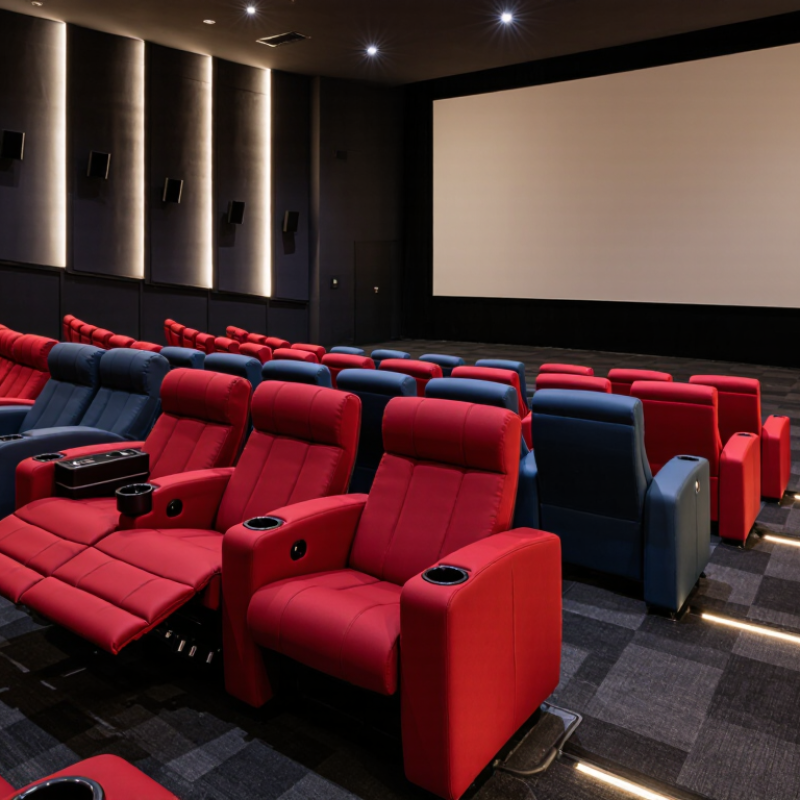
Choosing cinema seating starts with the room, not the catalogue. Map the screen, exits, columns, aisles, and accessible positions before comparing models. Measure seat width and row pitch with armrests down, then test the full recline. Nominal dimensions can hide a tight aisle. Small details matter. Allow room for ushers and cleaning carts, too.
Audience needs shape the layout. The World Health Organization’s 2022 Global Report on Health Equity for Persons with Disabilities estimates that 1.3 billion people, or 16% of the global population, experience significant disability. This supports planning beyond minimum accessible positions: consider clear routes, companion seating, transfer options, and useful sightlines in different parts of the auditorium. Have qualified design professionals check local access and fire requirements; a supplier’s standard drawing is not a compliance review.
Demand also varies by venue. The International Union of Cinemas’ 2024 annual report recorded about 861 million admissions across its territories in 2023. High-turnover sites may need durable upholstery, replaceable parts, and easy cleaning access, while smaller venues may favor wider spacing or recline. A full-size mock-up can reveal awkward cup-holder reach or knees too close to the row ahead. Seat width is easy to over-prioritize; more width can reduce capacity or aisle comfort. Recheck the complete layout against measured room dimensions.
| Tip | Venue Requirement | What to Check with the Manufacturer | Useful Planning Consideration | Evidence to Request |
|---|---|---|---|---|
| 1. Match seating to the auditorium layout | Room width, row spacing, aisle locations, platform position, and screen sightlines affect seat selection and capacity. | Ask for dimensioned seat and row-layout drawings, including seat width, arm spacing, and the space needed for folding seats. | As an early planning allowance, many projects compare row pitches around 900–1,100 mm; the right figure depends on the room, seat design, circulation, and applicable rules. | Scaled layout drawings and a review against the venue’s measured floor plan. |
| 2. Confirm comfort for the expected audience | Show duration, audience profile, and ticket positioning influence preferred cushioning, lumbar support, seat width, and recline. | Compare seat dimensions, foam specifications, upholstery options, recline range, and armrest configuration using a physical sample where possible. | Wider or reclining seats can improve comfort but may reduce the number of seats that fit and change required row spacing. | Product drawings, material specifications, and an in-person sample evaluation. |
| 3. Design for accessibility and safe circulation | Accessible seating, companion positions, transfer routes, and clear paths must work with the complete auditorium plan. | Check whether seat modules, removable arms, and layout options can support the project’s accessibility plan and local building requirements. | Requirements vary by jurisdiction and project; verify aisle widths, accessible locations, and egress with the design team and relevant authorities. | Project-specific plans reviewed by the architect or code professional. |
| 4. Evaluate durability and ease of maintenance | High audience turnover, food and drink service, and frequent cleaning can accelerate wear on upholstery, hinges, and armrests. | Ask about upholstery abrasion and cleaning guidance, replaceable components, fasteners, and access to spare parts. | Select materials based on the venue’s cleaning products and maintenance routine; confirm compatibility before specifying them. | Material data sheets, care instructions, and a written spare-parts policy. |
| 5. Verify fire and product compliance | Upholstery, foam, and complete seating assemblies may be subject to venue-specific fire, safety, and product requirements. | Identify which standards apply to the project and confirm that the offered materials and finished product have relevant test documentation. | Requirements differ by location and building type. Do not assume a material certificate alone proves compliance of the complete assembly. | Current test reports and compliance documents applicable to the specified configuration. |
| 6. Assess installation and project coordination | Delivery access, floor conditions, installation sequence, and construction schedules can affect installation time and cost. | Clarify site-measurement responsibilities, fixing details, packaging, delivery phases, installation scope, and coordination with other trades. | Confirm floor levels and substrate requirements early, especially where seats are fixed to stepped or sloped floors. | Installation method statement, site checklist, delivery plan, and itemized quotation. |
| 7. Compare lifecycle support, not just purchase price | Downtime, maintenance labor, replacement parts, and warranty coverage influence the long-term value of cinema seating. | Review warranty terms, exclusions, response process, parts availability, repair instructions, and the expected service life of key components. | Compare total ownership costs, including installation, cleaning, routine repairs, and replacement parts—not only the initial unit price. | Written warranty, service contacts, parts list, and a lifecycle cost breakdown. |