
7 Best Fufu Mixer Machines for Commercial Buyers

Choosing a commercial Fufu Mixer Machine is about more than buying a motor and mixing bowl. The machine must turn cassava, plantain, or yam into a smooth, elastic dough without leaving dry pockets. For a busy kitchen, steady output matters. So does a machine that staff can clean and operate safely.

The wider equipment market offers useful context. Grand View Research’s Food Processing Equipment Market report valued the global market at USD 58.4 billion in 2022 and projected an 8.4% compound annual growth rate from 2023 to 2030. This is not a fufu-specific forecast. Still, it reflects growing investment in food processing equipment, where consistency and production efficiency matter. For buyers, the number is context—not a reason to purchase the biggest mixer available.

A practical comparison should examine batch capacity, mixing speed, motor power, construction, cleaning access, and available service support. Ask suppliers how the machine performs with the dough texture and batch size your kitchen actually needs. A shiny stainless-steel exterior tells only part of the story. Check the warranty, replacement-part availability, and operating requirements before comparing prices. No brochure answers every question. Some claims need testing. This guide introduces seven options for commercial buyers, with attention to everyday use as well as specifications. The best fit may not be the most powerful model; it may be the one your team can run reliably during a crowded service.
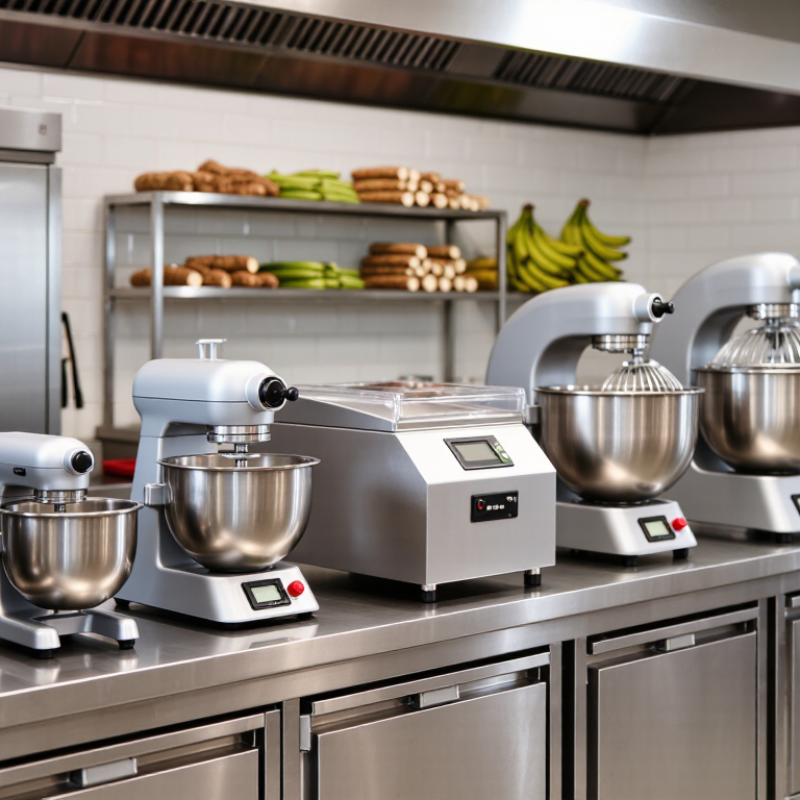
7 Best Fufu Mixer Machines for Commercial Buyers

Understanding Fufu Mixer Machines and Their Commercial Role

A commercial fufu mixer is more than a faster pestle and mortar. It is a production tool for combining cooked cassava, yam, or plantain into a smooth, elastic dough.

FAOSTAT records global cassava production at roughly 330 million tonnes in 2022, showing the scale of this widely used crop. That figure does not measure fufu demand, but it highlights why dependable processing matters to food businesses.

In a busy kitchen, capacity should match the batch size, not just the advertised motor power. A mixer that struggles with dense dough may heat unevenly, leave lumps, or force staff to stop and scrape the bowl.

Look for sturdy food-contact surfaces, guarded moving parts, accessible controls, and components that can be cleaned thoroughly. Check whether the machine handles hot, sticky batches; specifications alone may not answer that.

Texture is the real test. Operators should trial their own ingredients and portion sizes before committing, then note mixing time, consistency, and cleanup effort.

Even a capable machine cannot correct poorly cooked roots. And manual adjustment still matters.

A little mess is part of real production. It is easy to overlook how much counter space the machine needs, especially when several batches are prepared back to back.

Key Features to Evaluate Before Choosing a Fufu Mixer

When comparing fufu mixer machines, start with the batch size your kitchen actually needs. A large bowl may look efficient, but it can waste space and energy when daily orders are modest. Check the usable capacity, not just the bowl’s advertised volume. Ask whether the machine can mix a small batch evenly without leaving dry flour around the edges.

Mixing action matters. Fufu should become smooth and cohesive, not lumpy or overly stiff. Look for controls that allow operators to adjust speed, and ask how the machine handles thick mixtures during extended use. A motor that slows under load can disrupt service. Test it with your usual ingredients if possible. Real batches reveal more than brochures.

Construction and cleaning affect daily reliability. Inspect food-contact surfaces for smooth finishes, and check whether the bowl and mixing parts are easy to reach and wash. No tight corners. Confirm that guards, emergency stops, and other safety features are practical for your workspace. Also compare power requirements with your kitchen’s electrical supply, and ask about spare parts and service availability. One detail is easy to overlook: noise. A machine that sounds manageable in a showroom may feel distracting during a busy shift. Consider the full routine, including setup, cleaning, and operator training, before choosing.

7 Best Fufu Mixer Machines for Commercial Buyers — Key Features to Evaluate Before Choosing a Fufu Mixer

Machine Type How It Works Best-Fit Commercial Use Key Advantages Points to Check Before Buying
Dedicated mechanical fufu pounding machine Uses a powered pounding mechanism to work cooked starchy ingredients into a cohesive dough. Restaurants and caterers serving fufu regularly and seeking a process close to traditional pounding. Designed for pounding; can reduce repetitive manual labor. Confirm batch size with the actual cooked ingredient, cycle time, guarding, cleaning access, and availability of service parts.
Tilting-bowl pounding machine Pounds food in a bowl that can be tilted to help discharge the finished dough. Kitchens that need easier unloading or handle larger batches than are practical to transfer by hand. Tilting can simplify unloading and reduce manual handling. Check the tilt mechanism, bowl stability, safe discharge procedure, footprint, and whether the bowl can be cleaned thoroughly.
Heavy-duty planetary mixer A mixing tool rotates while moving around a stationary bowl; suitable attachments depend on the machine. Food-service operations considering a versatile mixer for multiple preparations, subject to a successful fufu test. Can support different mixing tasks when compatible attachments are available. Do not assume it can pound dense, hot fufu. Verify the manufacturer’s permitted applications, attachment strength, batch limits, and cooling requirements.
Heavy-duty dough mixer Uses a mixing or kneading tool to develop dough; designs and intended foods vary by model. Businesses evaluating one machine for dough work and selected fufu preparations. May offer useful versatility for operations that also prepare other dough-based foods. Ask for a demonstration with the intended cooked ingredient; confirm heat tolerance, maximum load, mixing time, and cleaning procedure.
Commercial food processor with a suitable paddle Uses a motor-driven blade or paddle in a processing bowl; results depend on the tool and food texture. Small batches, recipe trials, or kitchens processing a range of ingredients. A familiar, multipurpose equipment category with interchangeable processing tools on some models. Check whether dense or sticky fufu is an approved application. Review bowl capacity, motor duty rating, overheating risk, and safe scraping procedures.
Cook-and-mix kettle with agitator Heats food in a vessel while an agitator stirs or mixes it; equipment configuration varies. Production workflows that need cooking and mixing in a shared vessel or controlled process. Can combine heating and agitation where the machine is designed for both operations. Confirm that the agitator can handle the finished mixture, and check temperature control, scraping action, drainage, cleaning, and installation requirements.
Continuous or automated mixing system Moves ingredients through a powered mixing process continuously or in automated stages, depending on the system design. High-throughput operations with a consistent recipe, defined production flow, and trained operators. May support repeatable production when feed, mixing, and discharge are properly controlled. Request a process trial and verified throughput data for the specific recipe. Evaluate cleaning downtime, controls, operator training, and maintenance support.

Buyer note: Machine performance depends on the ingredient, cooking method, batch size, and desired texture. Before purchase, test the machine with your own recipe and confirm its rated duty, food-contact materials, cleaning instructions, electrical requirements, safety features, warranty, and local service availability.

Comparing Seven Fufu Mixer Machines for Commercial Kitchens

Comparing seven fufu mixer machines for commercial kitchens means looking beyond headline capacity. A compact batch mixer may suit a small menu, while a larger bowl can help during a busy lunch service. Check the stated dough capacity, not just bowl volume. Fufu thickens as it cooks, and an overloaded mixer may strain its motor or leave uneven patches.

Paddle shape matters. Broad paddles can move dense cassava or yam mixtures; narrow ones may leave material near the bowl wall. A tilting bowl can make transfer easier. Variable speed helps operators adjust as the mixture firms. Compare these features across all seven machines, along with motor specifications, cleaning access, safety interlocks, and service support. Small details count. Look for removable parts and smooth interior surfaces where paste could collect. Ask suppliers about continuous operating limits, since a machine rated for one batch may not suit repeated back-to-back use. Capacity figures can be hard to compare, and that is frustrating. A practical test with your usual portion size may reveal more than a brochure, though test conditions should match your kitchen’s routine.

Matching Machine Capacity to Production Volume and Fufu Type

Choose capacity from peak demand, not an average day. Estimate portions needed during the busiest service window, then work backward using your actual batch size and mixing time. A machine’s advertised capacity may describe its bowl, not the amount it can mix evenly. Leave room for movement and avoid filling it to the rim. Small batches behave differently.

Fufu type matters just as much. Cooked cassava, yam, and plantain blends can vary in density, moisture, and fiber. A dense yam mixture may need stronger torque, while a cassava blend may require steady kneading to reach a smooth texture. Adjustable speed and sturdy mixing tools can help, but they do not fix every recipe. A little too much water changes the result.

Before buying, test the machine with the ingredients and portion size your kitchen actually uses. Note the kilograms processed, mixing time, texture, and how easily staff can clean food-contact parts between batches. Ask for working-capacity and duty-cycle details, not just bowl volume. One trial is useful, though it may not represent a busy week. Recipes vary, and your first estimate may be wrong.

Commercial Buying, Installation, and Maintenance Considerations

Commercial buyers should size a fufu mixer around peak-hour batches, not just the largest capacity listed. A 10-kilogram bowl may be excessive for a small kitchen, while repeated small batches can slow service. Ask for a demonstration using your usual cassava or yam preparation. Watch for uneven mixing, excess heat, and dough collecting near the bowl wall. Small details matter.

Before purchase, measure doorways and the full route from delivery area to kitchen. Confirm floor strength, drainage, ventilation, and electrical supply with a qualified installer. Leave room to open the lid, reach controls, and remove the bowl. A machine that fits on paper may feel awkward beside a hot range. Check that safety guards and emergency stops remain accessible during normal work.

Plan cleaning and maintenance before installation. Ask how to remove food-contact parts and whether routine checks require special tools. Keep a simple log for cleaning, unusual noise, and scheduled inspections. Maintenance plans look neat in a binder and can still fail during a busy shift. That is worth admitting. A short staff walkthrough, repeated after turnover, may prevent missed cleaning steps and avoidable downtime.

7 Best Fufu Mixer Machines for Commercial Buyers

Commercial Buying, Installation, and Maintenance Considerations

Suggested purchasing-priority weights for comparing machines—not market-survey results. Assess batch capacity, construction, and cleaning requirements alongside service access and installation needs; adjust the weights to fit your kitchen’s workload and operating conditions.

Back To Top