What Is the Best Cupstock Board for Global Buyers in 2026?
Choosing the best Cupstock Board in 2026 is not simply a matter of selecting the heaviest sheet. Global buyers must balance forming performance, liquid resistance, print quality, supply consistency, and total delivered cost. FAOSTAT’s forestry production data puts worldwide paper and paperboard output at roughly 401 million tonnes in 2022. That scale matters, but it does not tell a buyer whether a specific board will seal cleanly on a high-speed cup line. A number cannot replace a production trial.
The FAO-led Pulp and Paper Capacities Survey tracks capacity across major producing regions, helping buyers assess where supply may come from. Yet origin alone is not a quality guarantee. For a café serving hot drinks, a practical specification should address stiffness, rim curl, coating adhesion, and leakage after filling. Cold-drink cups may need different barrier performance and print protection. Ask suppliers for technical data sheets, food-contact documentation relevant to the destination market, and recent batch test results. Then test the board on the intended machine, using the actual cup design and sealing settings. Small differences show up fast.
There is no universal winner. Fiber source, coating type, grammage, converting equipment, and shipping distance all change the result. Buyers should also distinguish verified recyclability claims from assumptions about local collection and processing. A board described as “eco-friendly” may still be a poor operational fit. That detail is easy to miss. The strongest choice is the grade that meets documented performance needs, can be supplied consistently, and withstands a real-world trial. Even then, forecasts for 2026 remain imperfect; procurement plans should leave room to reassess.
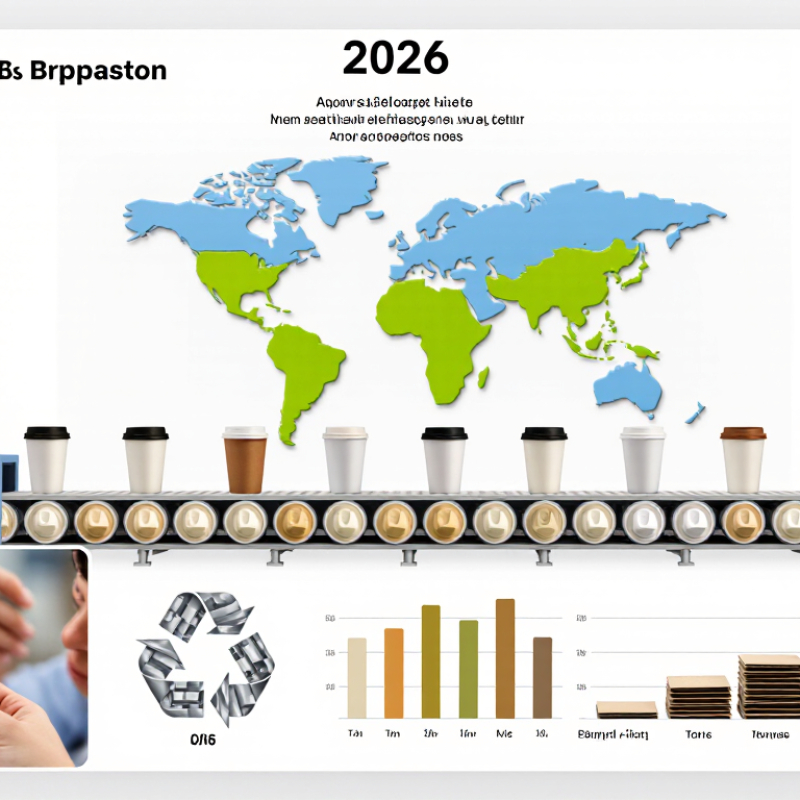
Cupstock Board Basics: Typical 170–350 g/m² Grammage and Barrier Layers
Cupstock board is commonly specified at roughly 170–350 g/m², but grammage alone does not predict cup performance. A lighter sheet may suit a small cold-drink cup; a heavier grade can add stiffness for larger formats. Not always. Fiber quality, caliper, forming conditions, and moisture all matter. ISO 536 provides a standard method for measuring grammage, while ISO 535 measures water absorptiveness using the Cobb test. These results help buyers compare samples, but they do not replace a filled-cup trial.
Barrier layers protect the board from liquid, grease, or water vapor. Common options include polyethylene coatings and dispersion-applied barriers; each can change sealing behavior and end-of-life handling. Ask suppliers for coating weight, Cobb values, seal-window data, and test conditions—not just a claim of “high barrier.” Eurostat reported that paper and cardboard made up 40.8% of EU packaging waste in 2022, or about 34 million tonnes. That scale makes material recovery a practical sourcing consideration, though actual recyclability depends on coating design and local collection systems. A small seam leak can still ruin a good board choice. Use pilot runs with the intended beverage, fill temperature, and holding time before locking in a specification.
Compare PE, PLA, and Aqueous Coatings for Liquid and Heat Resistance
Cupstock choice depends on what the filled cup must withstand. A cold drink can expose weak moisture barriers at the rim and base. Hot coffee adds heat, pressure, and longer contact with the coating. Buyers should compare finished-cup performance, not coating names alone.
Polyethylene (PE) coatings provide reliable resistance to water and many liquid foods. They also support common heat-sealing processes. Yet a PE layer can complicate fiber recovery where local mills cannot separate it efficiently. PLA is plant-derived and can suit some cup applications, but it may soften under high temperatures. Compostability also depends on suitable facilities and accepted collection systems. Check the specific grade.
Aqueous coatings use water-based formulations and may allow easier repulping in some systems. Their liquid and heat resistance varies by formulation, application weight, and cup construction. Ask suppliers for test results using the intended beverage temperature and hold time. A practical check: fill sample cups with hot liquid, then inspect seams, bases, and rims. This is not a substitute for standardized testing, but it can reveal issues early. I would avoid assuming one coating fits every market; local recycling routes and actual serving conditions can change the best choice.
Check Compostability Claims Against EN 13432’s 90% Biodegradation Criterion
What Is the Best Cupstock Board for Global Buyers in 2026?
EN 13432 sets a measurable benchmark for industrially compostable packaging. It requires at least 90% biodegradation within six months under controlled composting conditions, assessed through carbon dioxide production. The standard also requires disintegration testing: after 12 weeks, no more than 10% of the original dry mass may remain on a 2 mm sieve. These are laboratory thresholds, not a guarantee that every local composting facility accepts the cup. A claim can sound reassuring—and still be incomplete.
For cupstock buyers, request the full test report, not just a compostable-material statement. Check that it covers the exact board grade, barrier coating, inks, and adhesives. EN 13432 testing uses established methods, including ISO 14855-1 for measuring biodegradation under controlled composting conditions. A report on a coating alone does not establish that the finished cup meets the standard. Look for test conditions, sample identification, results, and the laboratory’s accreditation. Small details matter.
Real disposal conditions differ. A cup may be compostable under industrial test conditions but still be rejected by a facility lacking suitable collection or processing systems. Ask suppliers for current, product-specific evidence and confirm acceptance with intended waste handlers. Paper content alone proves little. The coating can change the result.
What Is the Best Cupstock Board for Global Buyers in 2026?
Check compostability claims against EN 13432’s biodegradation and disintegration criteria.
EN 13432 requires at least 90% biodegradation within a maximum of 6 months under controlled composting test conditions. It also requires at least 90% disintegration by dry mass to pass through a 2 mm sieve within 12 weeks. These are separate tests; a cupstock claim should be checked against certification for the finished packaging, not the board alone.
Verify Food-Contact Compliance with EU Regulation 1935/2004 and FDA 21 CFR 176.170
What Is the Best Cupstock Board for Global Buyers in 2026?
For cupstock buyers, food-contact compliance should be checked against the intended use, not inferred from a product description. EU Regulation 1935/2004 sets general requirements for materials that contact food, including that they must not transfer substances in harmful amounts or unacceptably alter food. Traceability matters, too. Ask for documentation that identifies the board, coating, and relevant production batches.
For the US market, 21 CFR 176.170 covers paper and paperboard components intended for contact with aqueous and fatty foods, subject to specified conditions of use. That qualification matters. A cup used for hot coffee is not automatically equivalent to one holding chilled juice or fatty soup. Request evidence tied to the food type, temperature, contact time, and construction being purchased. Where needed, ask for migration or extractives test results and a clear declaration of compliance.
Look closely at the finished structure, not just the base paper. Coatings, inks, adhesives, and changes in suppliers can affect the assessment. Paperwork may appear complete while a small formulation change goes unnoticed. That is an uncomfortable gap. Confirm change-control procedures and keep records linked to each shipment. No document replaces checking that the tested sample matches production; buyers should verify this before approving a new grade.
What Is the Best Cupstock Board for Global Buyers in 2026? — Verify Food-Contact Compliance with EU Regulation 1935/2004 and FDA 21 CFR 176.170
Compliance note: EU Regulation (EC) No 1935/2004 sets general requirements for materials and articles intended to come into contact with food; it is not a product certification. In the United States, 21 CFR 176.170 addresses components of paper and paperboard in contact with aqueous and fatty foods under specified conditions. Confirm the applicable requirements for each destination market and intended use, and request documentation and test evidence for the finished cup or package—not only the base board.
Compare Suppliers on FSC or PEFC Traceability, Quality, and Landed Cost
A credible cupstock comparison starts with traceability, not a logo on a brochure. Ask whether the FSC or PEFC claim applies to the exact grade and order, and request current chain-of-custody documentation. Check that the invoice, product description, and shipment records use consistent wording. Small gaps matter.
Then test quality against your converting line. Request samples from the intended production grade, not a hand-picked substitute. Check caliper, stiffness, coating consistency, curl, and edge condition. Run a short forming trial with your own blanks and sealing settings. A board can look smooth and still crack at a tight fold. Food-contact suitability should be supported by relevant test documents for the intended use. One sample is not enough.
Compare landed cost per usable cup, not just price per tonne. Include freight, insurance, duties, port handling, and expected trim or forming waste. Confirm sheet size, moisture protection, minimum order, lead time, and replacement terms for damaged loads. A cheaper offer may lose its advantage after yield losses. That calculation is imperfect; actual waste can shift with machine settings and operator practice. Ask suppliers to state assumptions, then check them against trial data and recent freight quotes.