
What Are the Best Hardwood Bathroom Vanities for 2026?

Choosing the best Hardwood Bathroom Vanity for 2026 means looking beyond color and showroom shine. Bathroom air changes quickly: a hot shower fogs the mirror, water beads near the sink, and cabinet doors face repeated humidity shifts. Wood scientist Gene Wengert’s guidance, paraphrased, is that wood changes as its moisture conditions change. That matters here. A durable vanity needs thoughtful joinery, a suitable protective finish, and installation that limits standing water.

This guide compares hardwood options such as oak, maple, and walnut, while examining construction, storage, finish, and everyday upkeep. It also distinguishes solid-wood components from stable plywood cabinet boxes, since “all solid wood” is not automatically the best choice for a damp room. Check sealed edges, drawer movement, door alignment, and the manufacturer’s care instructions. Small details count.

Looks can mislead.

A dark, glossy finish may hide wear at first, while a lighter surface can show water marks sooner. The honest answer is not perfectly neat: performance depends on the wood, build quality, ventilation, and how the vanity is used. We’ll weigh those trade-offs rather than promise a maintenance-free cabinet. The goal is a well-made vanity that suits your room, handles ordinary bathroom conditions, and still feels right years after installation.
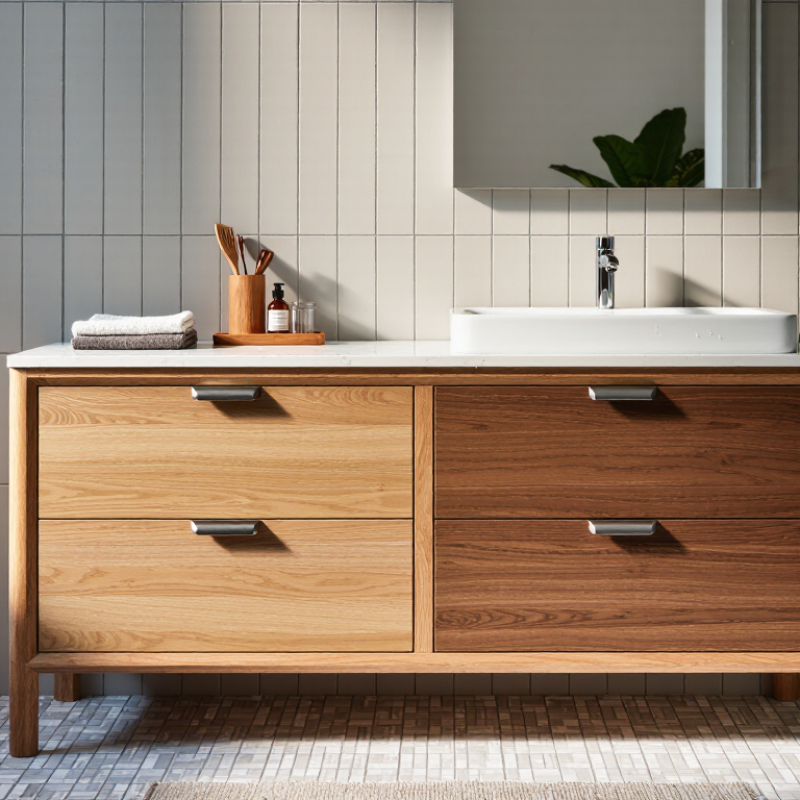
What Are the Best Hardwood Bathroom Vanities for 2026?

How to Evaluate Hardwood Bathroom Vanities for 2026

A good hardwood bathroom vanity should suit the room’s moisture, daily routines, and available space. Start by checking what “hardwood” means in the product specifications. Confirm which parts are solid wood and which use veneer or engineered panels. Neither is automatically unsuitable, but clear construction details make comparisons more reliable.

Look closely at joints, drawer bottoms, and the cabinet’s underside. Look underneath. Even, tight joinery and a stable back panel are useful signs of careful construction. Ask about the finish and how it should be maintained; sealed surfaces still need prompt attention when water pools near seams. Feel the weight. A heavy cabinet may suggest substantial materials, but weight alone cannot prove quality. Measure plumbing clearances, door swings, and the path into the bathroom before ordering.

Choose a wood grain and finish that work with the room’s light, not just a small online sample. Warm tones can feel richer under yellow lighting, while a cool finish may look different beside white tile. Check drawer depth and storage access, too. A wide vanity can still waste space if pipes crowd the center. It is easy to focus on appearance and miss that detail. I would treat vague care instructions as a reason to ask more questions, not as proof of a problem. A little uncertainty deserves a closer look.

Which Wood Species Best Withstand Bathroom Conditions?

Bathroom air cycles between damp after a shower and dry later in the day, so a vanity needs more than attractive grain. White oak is a dependable choice because its closed cellular structure limits moisture uptake compared with red oak. Still, it is not waterproof. A durable finish and sealed edges remain essential, especially around the sink cutout and cabinet joints.

Teak is naturally rich in oils and tends to handle changing humidity well. Its warm color suits a calm, spa-like room, though responsible sourcing and cost may affect availability.

Hard maple is dense and smooth, but it relies heavily on an intact protective coating. A small chip near a faucet can let water reach the wood, so inspect those areas periodically. No species is maintenance-free.

Construction matters as much as species. Look for well-sealed surfaces, carefully joined corners, and doors that do not trap standing water. Solid wood can move with humidity; stable panels with hardwood frames may reduce seasonal warping. I’d be cautious about calling any vanity bathroom-proof. Run an exhaust fan, wipe up splashes, and avoid leaving damp towels against the cabinet. Even excellent wood needs a little help.

How Do Construction and Finishes Affect Vanity Durability?

For a 2026 hardwood bathroom vanity, durability starts with how the cabinet handles moisture, not just the wood species. The USDA Forest Products Laboratory’s Wood Handbook explains that wood gains or loses moisture as surrounding conditions change, causing it to swell or shrink. A vanity beside a steamy shower faces repeated changes. Solid hardwood can be durable, but well-made plywood panels may move less across their width. Look for tight joinery, square doors, and drawers that still glide smoothly. Details matter.

The finish must cover more than the visible front. Sealed edges, sink cutouts, drawer interiors, and the underside of the countertop help limit moisture entry. The same USDA handbook notes that coatings slow moisture exchange; they do not stop it entirely. That distinction matters when water sits around a faucet or drips into a cabinet seam. A durable finish should be even and easy to refresh, rather than thick enough to hide rough construction. Wipe spills promptly, and inspect the sink area now and then. I would not assume a premium-looking surface means every hidden edge is protected. The cabinet’s construction and its finish work together, and either can become the weak point.

Which Vanity Styles and Storage Features Suit Different Bathrooms?

Choosing a hardwood vanity starts with the room, not the trend. In a compact bathroom, a wall-mounted cabinet keeps the floor visible and makes cleaning easier. Pair it with shallow drawers for toiletries and a mirrored cabinet for daily essentials. Measure the door swing, plumbing, and walkway before ordering. Measure twice. A handsome vanity that blocks a drawer is still a poor fit.

For shared bathrooms, consider a wider double-sink unit with separate drawer banks. Deep drawers can hold towels and grooming tools, while a narrow center section keeps smaller items from wandering. Traditional vanities with legs suit larger rooms and show more flooring; furniture-style cabinets can also add character. But open shelves collect dust, and baskets do not hide clutter as well as doors. That trade-off is easy to underestimate.

Hardwood brings visible grain and a substantial feel, yet bathrooms expose cabinets to splashes and changing humidity. Look for well-sealed surfaces, sturdy joinery, and finished edges, especially around the sink cutout. Leave room for ventilation, wipe standing water promptly, and check whether the finish can be maintained over time. For a powder room, a smaller single-sink vanity may be enough. For a busy family bath, usable drawers often matter more than ornate detailing. Choose storage around what people actually reach for each morning.

What Are the Best Hardwood Bathroom Vanities for 2026? Which Vanity Styles and Storage Features Suit Different Bathrooms?
Vanity Style Best Suited To Useful Storage Features Hardwood and Finish Considerations Main Trade-Off
Wall-Mounted (Floating) Small bathrooms and contemporary layouts where visible floor space helps the room feel more open. Shallow drawers, drawer dividers, and a recessed medicine cabinet can keep daily items organized without a bulky footprint. Choose a moisture-resistant finish and have the unit securely anchored to suitable wall framing. Keep the wood clear of standing water. Often offers less enclosed storage than a floor-standing cabinet; installation requires appropriate wall support.
Freestanding Cabinet Most bathroom sizes, especially where a familiar furniture-like look and straightforward floor installation are preferred. A combination of drawers and cabinet space can separate small toiletries from taller bottles and cleaning supplies. Solid hardwood can be used for visible components, while cabinet boxes may use moisture-resistant engineered panels. Verify materials and finish details before buying. The cabinet occupies floor area and may be harder to clean beneath than a wall-mounted model.
Single-Sink, Drawer-Heavy Shared or personal bathrooms that need organized storage but have room for one basin and a practical countertop. Full-extension drawers, adjustable dividers, and a cutout or U-shaped top drawer can make better use of space around plumbing. Drawer fronts and exposed edges need a durable, well-applied finish. Protect joints and end grain from repeated splashes. Plumbing can limit usable space in the top drawer; check the interior layout, not only the exterior appearance.
Double-Sink Vanity Larger bathrooms used by more than one person, where separate basins and countertop zones are useful. Central shared drawers or cabinets, plus separate side storage, help divide personal items. Check how sink bowls affect drawer space. A longer hardwood vanity has more exposed surface area, so consistent sealing and prompt cleanup of water are especially important. Requires more wall and floor space, and two sinks can reduce continuous countertop and cabinet storage.
Furniture-Style or Open-Leg Bathrooms where a lighter, furniture-inspired appearance is desired and storage needs are moderate. A few drawers, a lower shelf, and baskets provide accessible storage for towels and frequently used items. Legs and lower shelves can be exposed to splashes and damp floors. Use a suitable protective finish and allow adequate ventilation. Open shelves show stored items and collect dust more readily than closed cabinets.
Compact or Narrow-Depth Vanity Powder rooms and narrow bathrooms where keeping a clear walkway is a priority. Vertical drawers, door organizers, and a mirrored cabinet can add storage without increasing the vanity’s depth. Confirm the cabinet, sink, and faucet dimensions together. A protective finish is still needed, even in a low-use powder room. Reduced depth can limit countertop area and may not suit bulky plumbing or large daily-use items.
Selection note: “Hardwood vanity” can describe solid-wood parts, hardwood veneer, or a mix of materials. Check the stated material for the cabinet box, doors, drawer fronts, and frame separately. In any bathroom, use an appropriately sealed product, maintain ventilation, and wipe standing water promptly. Measure the room, plumbing locations, door swings, and required clearances before choosing a size.

How to Choose the Best Hardwood Vanity for Your Needs?

What Are the Best Hardwood Bathroom Vanities for 2026?

How to Choose the Best Hardwood Vanity for Your Needs?

Start with the room, not the wood species. Measure the wall, door swing, plumbing locations, and walking space before comparing styles. A vanity that looks generous in a showroom may crowd a narrow bathroom. Leave enough room to open drawers without bumping into the toilet or shower. Looks matter, too.

Bathrooms expose furniture to splashes, steam, and changing temperatures. Choose a well-sealed finish, and check that exposed edges and the underside are protected. Solid hardwood can be durable, but construction matters: inspect drawer joints, door alignment, and how firmly the countertop sits. Ask how the finish should be cleaned and repaired. A glossy surface may show water spots more readily than a softer sheen. It is easy to focus on grain patterns and overlook daily upkeep; that trade-off deserves a moment of thought.

Tips: Bring your measurements and a photo of the plumbing when shopping. Compare usable drawer space, not just overall width. Wipe up standing water promptly, and use a fan after showers. If your bathroom stays damp, prioritize ventilation and finish quality over a particular wood species.

Back To Top