
Choosing the best Stainless Steel Syringes supplier in China takes more than comparing prices or browsing polished product photos. Buyers need to assess material quality, manufacturing consistency, documentation, and communication. A syringe may look smooth in a catalog, yet small differences in surface finish, dimensions, or plunger fit can affect its intended performance. Details matter.
A dependable evaluation starts with specific questions. Ask which stainless steel grade is used and request material records where appropriate. Review product drawings, sample units, inspection criteria, and batch traceability. Check whether any quality certifications are current and relevant to the products being offered. A factory visit or independent inspection may provide useful evidence, but neither replaces careful document review. I would not call one supplier “best” from a sales pitch alone. That judgment can be wrong.
This guide explains how to compare Chinese suppliers using practical criteria, including production capability, quality controls, customization, lead times, and after-sales support. It also highlights warning signs, such as vague specifications or answers that change between conversations. Requesting samples can reveal issues that emails cannot. Still, a sample represents only one point in production, so ask how routine batches are checked. The aim is not to find the lowest quote at any cost. It is to identify a supplier whose claims can be verified and whose products consistently meet your stated requirements.
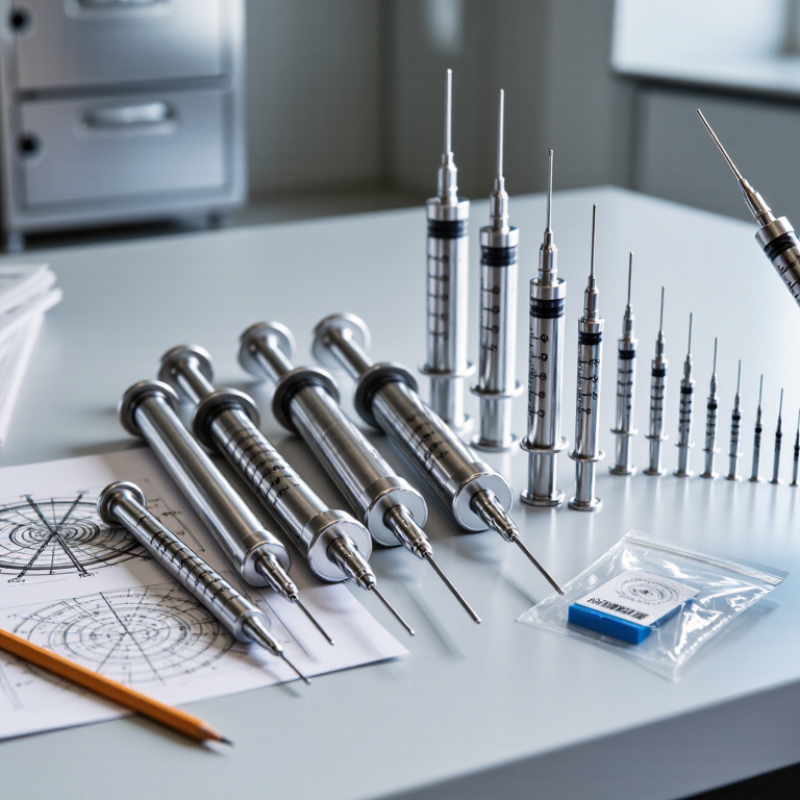
Stainless steel syringes are reusable instruments designed to draw in and dispense measured amounts of liquid. A typical model has a metal barrel, a closely fitted plunger, and a detachable or fixed needle. The smooth barrel helps the plunger move steadily, while clear volume markings support repeatable dosing. Small details matter: a sticky plunger can make careful measurements less reliable.
These syringes are used in laboratories, workshops, and some veterinary or industrial settings. They can apply lubricants, transfer samples, or dispense small quantities of compatible liquids. Not every model suits every fluid. Viscous liquids may move slowly, and corrosive substances can damage components unless the steel grade is appropriate. Check the instrument’s specifications and cleaning instructions before use.
Many stainless steel models can be cleaned and sterilized according to their intended use. That can make them practical where repeated use is appropriate, but reuse is not automatically safer or more economical. Inspection matters. Look for a bent needle, worn seals, corrosion, or a plunger that catches. For clinical applications, choose only equipment explicitly intended for that purpose and follow established hygiene procedures. A syringe that looks sturdy may still be unsuitable for a particular task.
Stainless steel syringes come in several constructions, and the right choice depends on the material being dispensed. All-metal models are used for repeated dosing in laboratory, veterinary, and industrial settings. Some designs pair a stainless-steel barrel with a glass measuring tube or replaceable seal. Small-capacity versions suit precise drops or samples; larger barrels handle thicker fluids. Check the intended application carefully.
Key specifications include capacity, graduation interval, barrel diameter, tip connection, and plunger design. Common tip options include blunt dispensing tips and compatible locking connections, but fittings vary between manufacturers. A smooth plunger should move evenly without excess play. Small details matter. Ask for dimensional drawings and sample measurements when fit is critical.
Material grade and surface finish also deserve attention. Request documentation identifying the steel grade, seal material, stated capacity tolerance, and cleaning or sterilization compatibility. These details can vary, even between syringes that look alike. A mirror finish may help with cleaning, yet it does not prove suitability for every fluid. I would verify chemical compatibility and test a sample before placing a large order. Specifications are not always presented consistently. Comparing written data, not product photos alone, makes supplier evaluation more reliable.
A reliable stainless steel syringe supplier should provide evidence, not just polished product photos. Start by matching the syringe to its intended use, cleaning method, and required sterilization process. Ask for the steel grade, material traceability, and inspection records. Check applicable standards, such as ISO 7886-1 for single-use hypodermic syringes, where relevant. Requirements can differ by product and destination, so confirm them with your quality team.
Inspect sample units for smooth plunger movement, clear graduations, secure fittings, and burr-free edges. Request documented tests for leakage, dose accuracy, corrosion resistance, and dimensional tolerances. If the syringes are supplied sterile, review sterilization validation and packaging integrity records. A certificate alone is not enough. Compare its scope and batch details with the product you are buying. Even experienced buyers can miss small differences between samples and mass-produced lots; keep that possibility in mind.
Tips: Ask for a recent batch report and a sample from the same production line. Confirm how changes in material or process are communicated. Record your acceptance criteria before ordering. Clear questions help reveal gaps.
Publication years of selected international standards relevant to supplier quality, risk management, and reusable-device processing.
Edition year is shown for reference, not as a quality rating. Buyers should confirm the current applicable editions and local regulatory requirements, and request relevant certificates, material-grade and traceability records, risk-management documentation, and validated cleaning or sterilization instructions for reusable syringes.
Choosing a Chinese stainless steel syringe supplier takes more than comparing unit prices. Ask for the steel grade, dimensional tolerances, plunger-fit data, and surface-finish specifications in writing. Compare those records with a physical sample. Look closely at the barrel seam, tip alignment, and how smoothly the plunger moves. Small defects can become obvious during repeated handling. Details matter. Request material certificates and batch-level traceability, and confirm how inspection results are recorded. For products intended for clinical settings, independently verify the supplier’s quality documents and intended-use claims. A certificate alone is not a substitute for testing.
Ask how incoming steel, machining, cleaning, and final inspection are controlled. Useful evidence includes inspection plans, calibration records, procedures for nonconforming products, and a clear process for handling complaints. Request samples from multiple production lots when consistency matters. Test fit, leakage, graduation readability, and cleaning performance against written requirements. An attractive sample can hide variation. Discuss order quantities, lead times, packaging, and change notifications before placing an order. Specific answers are more useful than broad promises. Buyers can still overlook details, so record open questions and revisit them after a pilot order.
A reliable sourcing process starts with a clear specification. Describe the syringe’s intended use, capacity, graduation interval, tip style, and required dimensions. Confirm the stainless steel grade and identify every material that contacts the liquid. Ask for technical drawings, material documentation, and stated dimensional tolerances. Small details matter. A plunger that feels smooth by hand may still need measured inspection.
Request a written quotation covering sample availability, minimum order quantity, customization costs, production lead time, packaging, and shipping terms. Evaluate a sample against agreed criteria, such as fit, finish, readability, and plunger movement. Then approve the final drawing and inspection plan before production begins. Ask how the supplier records batch details and handles defects. A neat sample is not proof that every production unit will match; that gap deserves attention.
Tips: Keep one approved sample and a signed specification for comparison. Clarify who pays for sample shipping, and get schedule changes in writing. If a detail seems minor, ask how it will be checked. That can prevent avoidable disputes later.
| Best Stainless Steel Syringes Supplier in China? - What Should the Sourcing and Ordering Process Include? | ||||
|---|---|---|---|---|
| Process Stage | Buyer’s Key Actions | Information to Confirm | Recommended Verification | Expected Output |
| 1. Define the application | Specify how the syringe will be used, who will operate it, and whether it is intended for repeated use. | Application, intended user, fluid or material, operating environment, and any applicable regulatory requirements. | Confirm that the product type and intended use match the requirements of the destination market. | A written product brief with clear use and compliance requirements. |
| 2. Set product specifications | Prepare a detailed specification before requesting quotations. | Capacity, graduations, barrel and plunger design, tip or nozzle configuration, seals, accessories, and material requirements. | Review drawings, product photographs, dimensional details, and the supplier’s material specifications. | An agreed specification that can be used for quotation and inspection. |
| 3. Assess the supplier | Compare suppliers using the same specification and questions. | Manufacturing capabilities, quality-control process, production capacity, experience with the product type, and export documentation support. | Request relevant facility or process information and verify certificates directly with the issuing organization where applicable. | A documented supplier shortlist based on verifiable evidence. |
| 4. Review materials and construction | Ask for precise material details for every component that contacts the product or user. | Stainless-steel grade, component materials, surface finish, corrosion resistance, and seal material. | Check material declarations and, where needed, request test reports or independent material verification. | Written confirmation of the agreed material and construction requirements. |
| 5. Request samples | Evaluate a sample before approving a production order. | Fit, finish, plunger movement, readability of graduations, leakage performance, and compatibility with the intended application. | Test samples using a documented procedure suitable for the intended use; retain an approved reference sample if practical. | Sample approval or a list of changes required before production. |
| 6. Confirm quality requirements | Agree on inspection criteria and how defects will be handled. | Critical dimensions, functional checks, appearance criteria, packaging condition, sampling plan, and acceptance limits. | Request a written inspection plan and clarify whether pre-shipment inspection or third-party inspection is needed. | Documented quality criteria linked to the approved specification. |
| 7. Finalize quotation and order terms | Compare total purchasing costs, not only the unit price. | Unit price, minimum order quantity, tooling or setup charges, sample charges, lead time, payment terms, shipping terms, and quotation validity. | Check that the quotation matches the approved specification and states responsibilities for packaging, freight, and export documents. | A complete quotation and purchase order with no unresolved commercial terms. |
| 8. Approve packaging and labeling | Confirm how products will be protected, identified, and packed for transport. | Individual and bulk packaging, protective materials, carton quantity, product identification, and any required language or symbols. | Review packaging samples or artwork and ensure all labeling claims are accurate and appropriate for the destination market. | Approved packaging and labeling instructions. |
| 9. Monitor production | Agree on production milestones and communication expectations. | Production start date, expected completion date, inspection timing, and process for reporting changes or delays. | Request progress updates and approval before any material, design, or process substitution. | A production schedule with a clear change-control process. |
| 10. Inspect and release the order | Review inspection results before authorizing shipment when agreed in the order terms. | Quantity, workmanship, dimensions, functionality, packaging, and order-specific records. | Compare inspection results with the purchase order and agreed acceptance criteria; document any nonconformities. | Shipment release approval or a documented corrective-action request. |
| 11. Confirm shipping documents | Check document requirements with the freight provider and destination-market importer before dispatch. | Commercial invoice, packing list, transport document, origin information, and any applicable product or customs documentation. | Verify that product descriptions, quantities, package counts, and consignee details are consistent across documents. | A complete and consistent shipping document set. |
| 12. Review delivery and follow-up | Inspect the delivered goods promptly and keep order records. | Received quantity, transit damage, product condition, lot or batch identification where provided, and any discrepancies. | Compare received goods with the approved sample, purchase order, and inspection records; report issues within the agreed period. | Order acceptance, a documented claim where needed, and feedback for future orders. |