
Top Sugar Syrup Filtration Systems for Global Buyers

Choosing the right system for sugar syrup filtration can determine product clarity, equipment life, and production consistency. Global buyers often compare filter presses, cartridge units, bag filters, and automated membrane systems. Each option responds differently to syrup viscosity, temperature, particle load, and cleaning routines. A clear beverage syrup may need fine polishing, while a darker syrup can require stronger prefiltration. Small details matter.

In real production environments, syrup may enter the filter at 60–80°C, carrying carbon fines, crystals, or trace processing debris. The selected system should match flow rate, pressure limits, food-contact materials, and cleaning requirements. Stainless steel 304 is common, while some demanding applications may justify 316L components. Filtration accuracy alone does not prove performance. Buyers should review test data, gasket specifications, pump compatibility, and maintenance access. A filter that looks efficient on paper may slow dramatically when viscosity changes.

This guide examines the top sugar syrup filtration systems for global buyers through a practical purchasing lens. It considers capacity, automation, energy use, sanitation, spare-part access, and supplier support. Certification documents can help, but they should not replace factory trials or reference checks. Ask for samples. Observe the change.

No system fits every plant. Budget pressure may encourage a smaller unit, yet frequent cartridge replacement can raise long-term costs. Conversely, advanced automation may exceed the needs of a modest facility. Some performance claims also deserve careful questioning. Reliable decisions come from comparing measured results, not attractive brochures. This article provides a grounded starting point for procurement teams seeking safer, cleaner, and more predictable syrup processing.
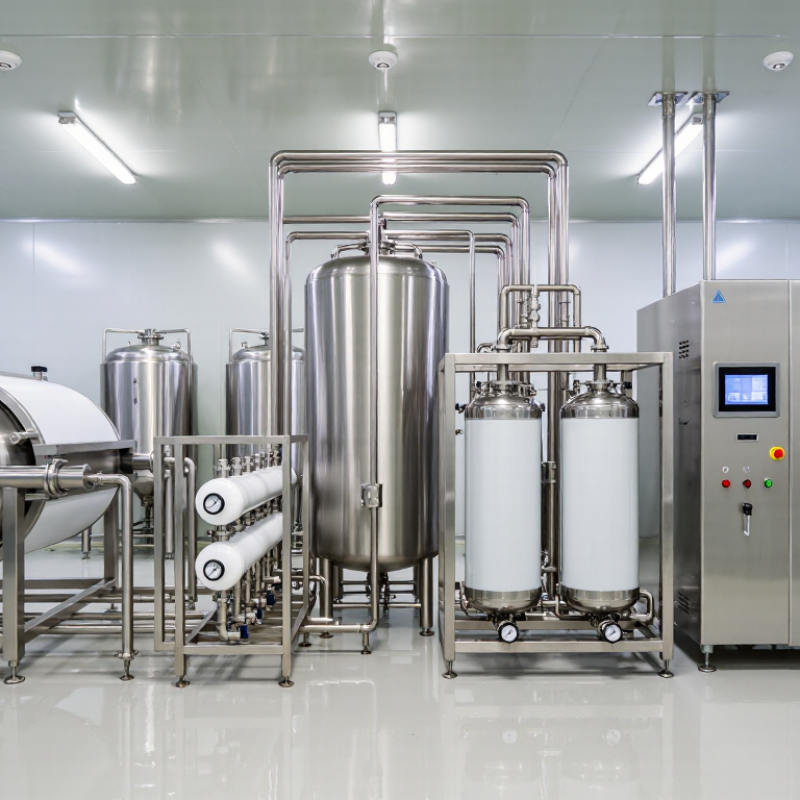
Top Sugar Syrup Filtration Systems for Global Buyers

Sugar Syrup Filtration Systems: Purpose, Types, and Core Functions

Sugar syrup filtration protects color, flavor, and equipment performance. USDA’s Sugar: World Markets and Trade report estimates 2024/25 global sugar production at about 186 million metric tons. At this scale, small filtration weaknesses can create costly batch variation. Filtration removes suspended crystals, carbon fines, rust, and pipe scale. It does not replace validated heat treatment or microbial controls.

Systems vary by syrup condition and production rate. Bag filters offer simple, economical removal of larger particles. Cartridge filters provide finer control, often before filling or crystallization.

Candle and leaf filters suit continuous clarification and higher flow volumes. Membrane systems can reduce very fine particles, but concentration polarization and cleaning demand careful management.

The right design considers viscosity, temperature, pressure drop, filter-area loading, and cleanability.

A practical system needs pressure gauges before and after the filter. Rising differential pressure signals loading. Not always failure. It may reveal useful solids capture. Food processing guidance from the International Society of Beverage Technologists emphasizes hygienic design, drainability, and controlled cleaning for liquid processing equipment.

Operators should record turbidity, color, flow rate, and replacement intervals. One overlooked issue is sugar loss inside filter housings. A technically efficient unit can still waste syrup during flushing.

Specifications also need challenge testing with real syrup, not only clean water. That is where many procurement decisions remain too optimistic.

Key Filtration Technologies Used in Sugar Syrup Processing

Top Sugar Syrup Filtration Systems for Global Buyers

Sugar syrup filtration depends on viscosity, temperature, crystal load, and final clarity targets. In practical processing reviews, these variables often matter more than a filter’s advertised micron rating. Hot syrup moves more easily, but excessive heat can affect color and product quality.

Bag filters provide economical prefiltration for suspended particles and undissolved crystals. Cartridge filters offer finer polishing before storage or filling. Depth media can capture particles throughout the filter structure, rather than only at the surface. This helps when syrup contains changing levels of sediment. However, filter blockage can occur quickly during unstable production.

Membrane filtration supports tighter separation and consistent clarity. Microfiltration is useful for removing fine solids, while ultrafiltration may reduce larger colloidal materials. Each system needs compatible seals, sanitary housings, and controlled pressure. A high differential pressure can indicate loading, but it may also reveal poor pump selection. Cleaning cycles should be verified with temperature, flow, and contact-time records. Do not rely on appearance alone.

Small details matter.

Operators should check samples before and after filtration. Turbidity, color, temperature, and pressure trends create stronger evidence than a single visual inspection. Some facilities choose extremely fine filters too early. That decision can increase replacement costs and reduce throughput. A staged system is often more practical, although real syrup behavior can still challenge the original design.

Top Sugar Syrup Filtration Systems for Global Buyers - Key Filtration Technologies Used in Sugar Syrup Processing

Filtration Technology Primary Function Typical Separation Range Typical Position in the Process Main Advantages Key Limitations Best-Suited Syrup Conditions
Coarse Screens and Strainers Remove large particles, fibers, scale, and foreign materials before fine filtration. Approximately 0.5–2 mm openings, depending on the screen design. Raw juice or dissolved-sugar preparation stage. Simple construction, low operating cost, and effective protection for downstream equipment. Does not remove fine suspended solids, colloids, or dissolved color bodies. Low-to-medium viscosity streams containing visible solids.
Bag Filtration Capture suspended particles through depth or surface filtration. Common nominal ratings from about 1–100 micrometres. After coarse screening and before polishing filtration. High dirt-holding capacity, quick element replacement, and flexible vessel configurations. Performance can decline as viscosity and particle loading increase; bags require disposal or cleaning. Clarified sugar liquor and medium-to-high flow applications.
Cartridge Filtration Polish syrup by removing fine suspended particles and protecting filling or crystallization equipment. Common nominal or absolute ratings from about 0.2–50 micrometres. Final clarification or prefiltration before membranes. Consistent filtration, compact footprint, and a wide choice of media and ratings. Higher pressure drop with fouling; replacement frequency depends on solids loading. Low-to-medium solids loading and products requiring clear visual appearance.
Pressure Leaf Filtration Remove suspended solids from syrup using filter leaves, often with a filter-aid precoat. Typically suitable for fine suspended solids in the low-micrometre range. Clarification of sugar liquor, melt, or process syrup. Large filtration area, enclosed operation, and good solids-holding capacity. Requires periodic cake discharge and careful control of filter-aid dosage. Industrial syrup streams with moderate solids loading and continuous production requirements.
Diatomaceous Earth Filtration Use a porous filter-aid cake to remove fine suspended solids and improve clarity. Often effective for particles of approximately 1–10 micrometres, depending on grade and process conditions. Primary clarification or polishing of sugar liquor. Good clarity improvement and adaptable performance through selection of filter-aid grade. Generates spent filter aid, requires handling of powder, and cannot remove dissolved impurities by itself. Syrups with fine suspended matter that require enhanced visual clarity.
Activated Carbon Filtration Adsorb selected color compounds, odor-causing substances, and some organic impurities. Adsorption process rather than a fixed particle-size separation. Decolorization stage, normally followed by solid–liquid separation. Can reduce color and certain organic contaminants when correctly selected and controlled. Carbon capacity is finite; operating conditions affect sugar loss, color removal, and regeneration or disposal needs. Refined sugar liquor requiring color reduction rather than particle removal alone.
Microfiltration Membranes Remove fine suspended solids, microbial cells, and some colloidal material by membrane sieving. Common pore sizes are approximately 0.1–1 micrometre. Fine clarification or pretreatment before tighter membrane processes. Produces consistent filtrate quality and can reduce the need for disposable depth media. Membrane fouling, cleaning requirements, and sensitivity to high-viscosity or high-solids feed. Well-pretreated, relatively low-solids syrup where stable filtrate quality is important.
Ultrafiltration Membranes Separate higher-molecular-weight colloids, proteins, gums, and macromolecular impurities. Typically specified by molecular-weight cut-off, commonly about 1–100 kDa. Specialized clarification or fractionation process. Can improve consistency while operating without filter-aid powder. Higher capital cost, concentration polarization, and cleaning demands; sugar passage depends on membrane selection. Applications containing colloids or macromolecules that are difficult to remove with conventional filters.
Sterile or Final Polishing Filtration Provide final microbial and particulate control before hygienic filling or sensitive downstream use. Often uses validated membrane ratings around 0.2–0.45 micrometres, depending on the product and validation target. Final stage immediately before storage, filling, or controlled transfer. Supports hygienic processing and protects finished-product quality. Requires effective upstream clarification, sanitary design, integrity testing, and controlled operating temperatures. Low-particle syrup intended for hygienically sensitive food and beverage applications.

Note: Actual filter ratings, flow capacity, temperature, pressure, and cleaning procedures should be selected according to syrup viscosity, solids loading, color target, hygiene requirements, and validated product-quality specifications.

How to Evaluate Filtration Capacity, Materials, and Performance

Top Sugar Syrup Filtration Systems for Global Buyers

Sugar syrup filtration should begin with flow data, not catalogue claims. The USDA Foreign Agricultural Service estimated 2024/25 global sugar production at about 186.6 million metric tons. This scale increases pressure on syrup clarification and stable production rates. Buyers should record hourly flow, syrup temperature, viscosity, suspended solids, and cleaning intervals. A system rated for 10,000 litres per hour may perform poorly when syrup cools and thickens. Real factory conditions matter more.

Filter capacity should include a safety margin, usually 20–30% above peak flow. This reduces pressure spikes and protects product consistency. For coarse crystals, stainless steel screens can provide durable pre-filtration. Fine particles may require depth media or cartridge filtration. Contact surfaces should use food-grade stainless steel, commonly 304 or 316L, with smooth welds and cleanable designs. The Codex General Principles of Food Hygiene emphasizes hygienic design, contamination control, and validated cleaning procedures.

Performance testing should measure pressure differential, turbidity, product loss, and cleaning-water consumption. A 2023 food and beverage filtration market analysis by Grand View Research identified process efficiency and hygiene requirements as major demand drivers. Yet published capacity figures can be optimistic. Test with actual syrup. Check the first and last hour. Some systems look efficient on paper but need frequent element replacement, creating hidden costs. Evaluate five operating cycles before approving the final configuration.

Selecting Systems for Different Sugar Syrup Grades and Production Scales

Choosing a sugar syrup filtration system starts with syrup grade, not catalog capacity. Refined syrups often need fine particle removal and a bright appearance. Dark syrups may contain more color bodies, minerals, and suspended solids. Their higher viscosity can quickly increase pressure drop. Temperature matters too. Warm syrup flows better, but excessive heat may affect color or product stability.

Small producers can use compact cartridge or bag-filter housings for seasonal batches. These systems are easier to inspect and change between recipes. Medium plants may need larger filter areas and parallel housings. This arrangement keeps production moving during element replacement. Large facilities usually require continuous filtration, automated pressure monitoring, and hygienic piping. Do not size equipment only for average flow. Peak demand exposes weak designs.

A practical selection should compare micron rating, syrup temperature, Brix, viscosity, and expected solids loading. Stainless steel construction, smooth welds, and complete drainability support sanitation. Confirm that seals and filter media suit sugar contact and cleaning chemicals. Keep records of inlet pressure, outlet pressure, flow rate, and filter-change frequency. These details reveal whether the system is truly efficient.

Small details matter. A smaller filter may appear cheaper, yet frequent replacement can raise labor costs. I have seen specifications overlook syrup crystallization near cold pipe sections. That mistake deserves review before purchasing. Performance trials with the actual syrup remain more reliable than laboratory water tests.

Top Sugar Syrup Filtration Systems for Global Buyers

Select filtration stages according to syrup clarity requirements and production scale. The chart shows typical nominal filtration targets used in sugar-syrup processing; lower micron values indicate finer filtration.

Production scale Typical throughput range Suitable system configuration
Pilot and small batch Below 1 tonne/hour Bag or cartridge housings with manual changeover
Medium production 1–10 tonnes/hour Multi-element cartridges or duplex housings for continuous operation
Large-scale production Above 10 tonnes/hour Parallel filter trains, automatic backwashing, and larger filtration area

Micron values are typical engineering targets rather than universal specifications. Final selection should consider syrup viscosity, temperature, suspended solids, crystallization risk, sanitation requirements, pressure drop, and required flow rate.

Global Buying Factors: Compliance, Installation, Maintenance, and Support

Top Sugar Syrup Filtration Systems for Global Buyers

Global buyers should verify compliance before comparing filtration capacity. Request food-contact declarations, material certificates, test records, and traceability documents. Local electrical, pressure, hygiene, and wastewater requirements may also affect approval. A supplier’s certificate is useful, but it may not cover every destination market. Confirm details with qualified local specialists.

Installation planning should match the syrup’s temperature, viscosity, flow rate, and crystallization risk. Measure the available floor space, pipe connections, drainage, and utility capacity before ordering. A practical system should allow safe access for filter changes and inspection. Short commissioning guides are not enough. Operators need clear procedures, training, and realistic start-up support.

Maintenance costs often decide long-term value. Check replacement intervals, seal compatibility, differential-pressure monitoring, and spare-part availability. Ask how quickly technical support responds across time zones. Remote troubleshooting can help, although it cannot replace trained local service. In plant assessments, overlooked cleaning connections have caused avoidable delays. That detail is easy to miss. Buyers should also review maintenance logs and define responsibilities in writing. A polished proposal can still leave important questions unanswered.

Back To Top