10 Best Trekking Shoes for Every Terrain?
Choosing the right Trekking Shoes can change a difficult route into a controlled, comfortable experience. A wet stone, loose gravel slope, or steep forest step exposes weaknesses quickly. Grip, heel stability, drainage, cushioning, and protection matter more than attractive colors or online ratings. Feet do the real work.
The Outdoor Industry Association’s 2024 Outdoor Participation Trends Report identifies hiking as one of America’s most widely practiced outdoor activities. That broad participation reflects growing demand for dependable footwear across city trails, alpine paths, and muddy woodland routes. Meanwhile, market research from Grand View Research reports continued growth in hiking footwear, driven by outdoor recreation and technical product development. However, market reports use different definitions. Their figures are useful, but not perfectly comparable.
Real-world testing still matters. A shoe that feels light on a dry trail may become unstable under a loaded backpack. Waterproof membranes can protect against shallow puddles, yet they may slow drying after a full crossing. Small details matter. Toe-box space matters too.
This guide examines ten strong options for varied terrain, not one universal winner. Selection considers outsole traction, construction, fit, weather resistance, weight, and long-term comfort. It also considers expert standards and manufacturer specifications, while recognizing their limits. Personal experience remains important. My own preference for firm heel support may not suit every hiker. That is worth admitting.
The best pair should match your route, pace, foot shape, and seasonal conditions. A rocky ridge demands different priorities from a humid valley trail. Read beyond the label. Test the fit before trusting the journey.
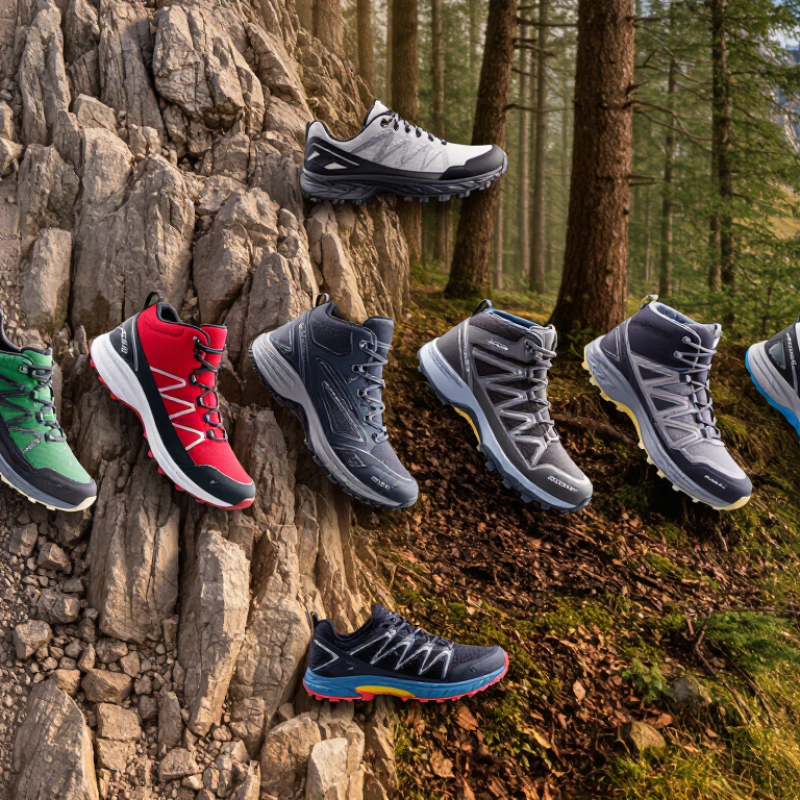
What Makes a Trekking Shoe Suitable for Different Terrains
10 Best Trekking Shoes for Every Terrain?
A suitable trekking shoe begins with terrain, not appearance. The Outdoor Industry Association’s 2024 participation report recorded 59.7 million U.S. hikers in 2023. That range includes muddy forest paths, dry gravel, and exposed alpine routes. Each surface demands a different balance of grip, protection, and flexibility.
On wet rock, choose rubber with closely spaced lugs and a stable heel counter. Deep, widely spaced lugs work better in soft mud. They shed soil faster. Scree requires a firm midsole, protective toe cap, and secure heel hold. On hard trails, excessive stiffness can create fatigue. I have made that mistake. My feet felt protected, but every step became mechanical.
Fit matters more than advertised technology. Leave roughly one thumb-width ahead of the longest toe, especially for downhill travel. A 2024 market analysis by Grand View Research projects hiking footwear growth at about 5.8% annually through 2030, reflecting wider use across varied environments. More choices do not guarantee better decisions. ASTM F2913 slip-resistance testing can offer useful laboratory evidence, but field conditions remain unpredictable. Waterproof membranes help in cold rain, while breathable uppers usually feel better in warm humidity. Try shoes with trekking socks, then walk downhill before buying. That small test exposes heel lift quickly.
Key Features to Compare in Trekking Shoes
10 Best Trekking Shoes for Every Terrain?
Key Features to Compare in Trekking Shoes
Terrain changes faster than many product descriptions suggest. The 2024 Outdoor Participation Trends Report recorded 175.8 million U.S. participants in outdoor recreation during 2023. That scale reflects varied needs, from wet forest paths to loose alpine scree. One pair rarely excels everywhere.
Start with outsole traction. Look for deep, spaced lugs on mud, while tighter patterns suit dry rock and packed trails. Rubber hardness also matters. Softer compounds usually grip smooth stone better, but they can wear faster on pavement. The European Committee for Standardization tests slip resistance under controlled conditions, yet laboratory results cannot fully copy wet roots or melting snow.
Midsole protection deserves equal attention. A firmer plate can reduce bruising from sharp gravel, while moderate cushioning limits fatigue on long descents. The World Footwear 2024 Statistical Toolkit reported global footwear production at about 23.9 billion pairs in 2023. More choices do not guarantee better fitting. Measure both feet late in the day, then test heel lock and toe movement with hiking socks. Your heel should stay stable.
Waterproof membranes help in rain, but they may feel warm during humid climbs. Breathable mesh dries faster, although it offers less protection. I once valued waterproofing too highly on dry routes. That choice felt heavy by afternoon. Recheck the shoe after several hours, not only in a store. TPU toe guards, stitched overlays, and a gusseted tongue can improve durability, but extra protection may reduce flexibility.
The 10 Best Trekking Shoes for Rocky and Mountain Trails
10 Best Trekking Shoes for Every Terrain?
The 10 Best Trekking Shoes for Rocky and Mountain Trails
Rocky mountain trails demand more than soft cushioning. I look for trekking shoes with firm midsoles, protective toe caps, and deep lugs that grip loose stone. A stiff heel counter helps control the foot on steep descents. It also reduces sliding inside the shoe. Look for shoes with ten to twelve millimetre lugs. Shallower patterns often struggle in wet gravel.
The best choices vary by terrain. Lightweight low-cut shoes suit dry, technical paths and experienced hikers. Mid-cut shoes offer better ankle coverage for uneven slopes. Waterproof models help in cold rain, but they can feel warm during long summer climbs. Breathable mesh dries faster. That trade-off matters. For snow, mud, or mixed alpine routes, choose a rigid sole with strong heel braking and a secure lace system.
I once chose a soft, comfortable pair for a rocky route. My feet felt fine at first. After several hours, my toes struck the front on every descent. It was a poor fit, not a poor shoe. Try trekking shoes with the socks you normally wear, and test them on stairs before buying. Leave a thumb’s width ahead of your longest toe. Check the sole after each trip. Worn lugs can look acceptable but lose traction quickly on polished rock. Even excellent footwear cannot replace careful footing, weather awareness, and realistic route planning.