China Best Glass Fiber Felt Aerogel Sheet Supplier
Choosing a China Best Glass Fiber Felt Aerogel Sheet Supplier means looking beyond a low quoted price. Buyers should examine the aerogel’s stated thermal conductivity, sheet thickness, density, and test conditions. Ask how the product performs after handling, compression, and exposure to moisture. Those details matter when a sheet must fit around pipes, equipment, or irregular surfaces. A sample cut with clean edges can reveal practical issues before a large order.
The Glass Fiber Felt Aerogel Pack Insulation Sheet combines a fibrous support with an aerogel-based insulating layer. It can offer useful insulation in a slim profile, but results depend on the full assembly and installation quality. Check product data sheets, batch consistency, available dimensions, and packaging protection. Request test reports that identify methods and conditions. Do not treat a single headline number as a guarantee. It is easy to overlook seams, fasteners, and compression. They can affect real-world performance.
Aerogel researcher Dr. Mary Ann Meador’s published work offers a useful reminder about material design. A concise paraphrase, not a verbatim quotation, is: “Aerogel performance depends on its structure, formulation, and conditions of use.” That principle is relevant here. A dependable supplier should answer technical questions clearly and provide traceable documentation. Still, specifications alone cannot predict every installation. Buyers should verify fit and handling with a representative sample before choosing a production quantity.
What Is a Glass Fiber Felt Aerogel Sheet?
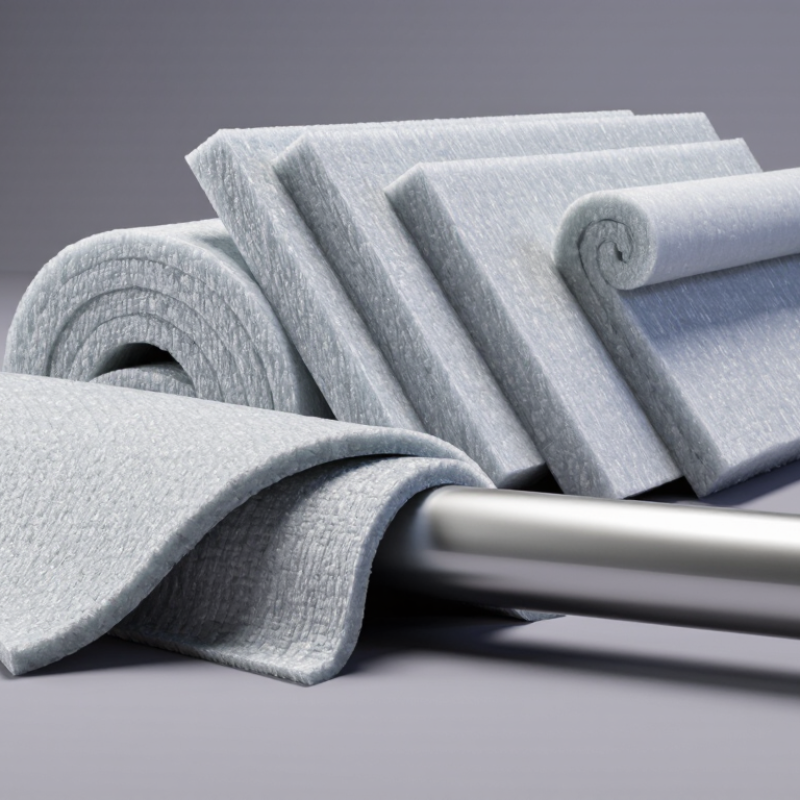
A glass fiber felt aerogel sheet is a lightweight insulation material made by reinforcing aerogel, usually silica-based, with a mat of glass fibers. The aerogel contains a network of tiny pores that slows heat transfer. The felt gives this delicate structure support and makes it easier to handle as a sheet. Think of a thin, soft panel rather than a rigid board. That distinction matters.
Its low thermal conductivity can help limit heat loss or heat gain in pipes, equipment housings, and building assemblies. The glass fibers also improve strength, but they do not make every sheet equally flexible or dust-free. Thickness, density, temperature limits, and facing materials vary by product. Check the technical data for the actual operating conditions.
Installation details still count. Gaps at joints can create paths for heat, even when the insulation itself performs well. Not a magic blanket. Cut edges may need protection, and workers should follow the supplier’s handling guidance to reduce irritation from loose fibers or dust. A careful fit is worth the extra minute. Performance depends on the whole assembly, not just the material name.
How Glass Fiber Felt Aerogel Sheets Are Manufactured
China Best Glass Fiber Felt Aerogel Sheet Supplier
Manufacturing starts with glass fiber felt, selected for its structure, thickness, and ability to hold a silica-based gel. The felt is inspected for uneven edges and loose fibers before processing. Small defects matter. A silica sol is prepared and applied so it can penetrate the felt’s open spaces. Workers monitor the liquid uptake to reduce dry patches and excess buildup.
The impregnated felt is held while the sol forms a gel around the fibers. Aging helps strengthen the gel network. Solvent exchange then removes much of the liquid inside that network, often replacing it with a fluid better suited to drying. The material may receive a hydrophobic treatment before drying. Drying can use supercritical carbon dioxide or an ambient-pressure process, depending on the production route. Each method has trade-offs in cost, time, and final structure.
After drying, sheets are cut to specified dimensions and checked for thickness, density, surface condition, and thermal performance. Measurements should come from documented test methods, not appearance alone. No sheet is perfectly uniform. That is worth remembering when comparing samples or planning installation. Inspecting edges and handling the material carefully can reveal issues that a single performance figure may miss.
Key Properties and Performance Factors
A glass fiber felt aerogel sheet combines a porous insulating core with a flexible reinforcing layer. Its thermal conductivity matters, but the reported value is meaningful only alongside test temperature, thickness, and conditioning. Ask for the method behind each figure. Small differences in testing can change the comparison.
Thickness and density affect both insulation and handling. A sheet that compresses easily may fit around a pipe, yet lose thickness under sustained pressure. Check recovery after compression, tensile strength, and edge shedding. Feel the cut edge. Loose fibers can complicate installation and require suitable handling precautions.
Moisture resistance also deserves attention. Hydrophobic treatment can limit water uptake, but seams and cut surfaces may still admit moisture. Fire performance, service temperature, and dimensional stability should be verified against the intended application, not assumed from the material name. Request current technical data and representative samples, then test them under realistic installation conditions. A datasheet can look convincing; performance in a cramped, damp enclosure may tell a less tidy story.
Key Properties and Performance Factors of Glass Fiber Felt Aerogel Sheets
Typical thermal conductivity ranges for common insulation materials at approximately 25°C
Lower thermal conductivity means less heat transfer for the same thickness. Silica aerogel blankets reinforced with glass fiber felt typically offer lower conductivity than conventional fibrous insulation. Values shown are indicative ranges; actual performance varies with product formulation, density, temperature, thickness, and test method. Check the relevant technical datasheet for project-specific selection.
Common Industrial Applications
China Best Glass Fiber Felt Aerogel Sheet Supplier
Common Industrial Applications
Glass fiber felt aerogel sheets are used where equipment needs insulation but space is limited. Their flexible, fiber-reinforced structure can suit curved surfaces and tight service areas. On steam or process-water pipes, installers wrap the sheet around elbows, valves, and straight runs, then secure it beneath a protective outer jacket.
Fit matters.
In factories, these sheets may insulate tanks, heat exchangers, ducts, and selected process equipment. In HVAC systems, they can help reduce heat transfer around pipework and air-handling components. A thinner insulation layer can be useful in crowded mechanical rooms, though the right thickness depends on operating temperature, surface conditions, and the project’s thermal requirements.
Check the data.
Industrial performance depends on more than the insulation material. Gaps at seams, compression around fittings, and damaged jacketing can weaken the overall installation. Moisture exposure and maintenance access also deserve attention, especially on equipment opened for inspection. It is easy to focus only on conductivity values; in practice, careful measurement and installation details matter just as much. Verify the product’s stated temperature range and application guidance before specifying it.
How to Evaluate a China-Based Aerogel Sheet Supplier
How to Evaluate a China-Based Aerogel Sheet Supplier
A supplier’s brochure is only a starting point. For glass fiber felt aerogel sheets, compare thermal conductivity at a stated test temperature, thickness, density, and moisture condition. Ask for reports showing the test method and sample preparation. ASTM C177 is one recognized method for measuring steady-state thermal transmission. Check whether reports come from an independent, competent laboratory, and confirm that the tested grade matches the production sample. Small differences matter.
Supplier quality also depends on repeatable manufacturing. Request batch-level inspection records, tolerances, packaging details, and a clear process for handling defects. Ask how sheets are protected from moisture and abrasion during shipment. The IEA’s 2023 buildings-sector reporting attributes roughly 30% of global final energy use and 26% of energy-related emissions to building operations. That context makes insulation performance relevant, but it does not prove a product’s real-world savings. Installation and operating conditions matter. No checklist is perfect.
Tips: Order samples from more than one production batch. Measure thickness at several points, inspect the cut edges, and compare the paperwork with the delivered material. Keep one sample for later checks. A tidy datasheet can still leave unanswered questions.