Why Choose Self Drilling Screws for Your Construction Needs?
In the construction industry, choosing the right fasteners is vital. Self Drilling Screws are becoming increasingly popular for their efficiency and reliability. According to a report by MarketsandMarkets, the global market for self drilling screws is projected to reach $1.2 billion by 2025, driven by rising construction activities.
Expert John Miller, a leading figure in fastening technology, emphasizes their importance: "Self drilling screws reduce installation time and labor costs significantly." This is crucial in a fast-paced environment where every minute counts. They offer numerous advantages, like eliminating the need for pre-drilling, ensuring a stronger hold in various materials.
However, not all self drilling screws are equal. Quality can vary significantly among manufacturers. Some may not provide sufficient holding power for heavy applications. It's vital to do thorough research before selecting the right self drilling screws, considering factors like material compatibility and corrosion resistance.
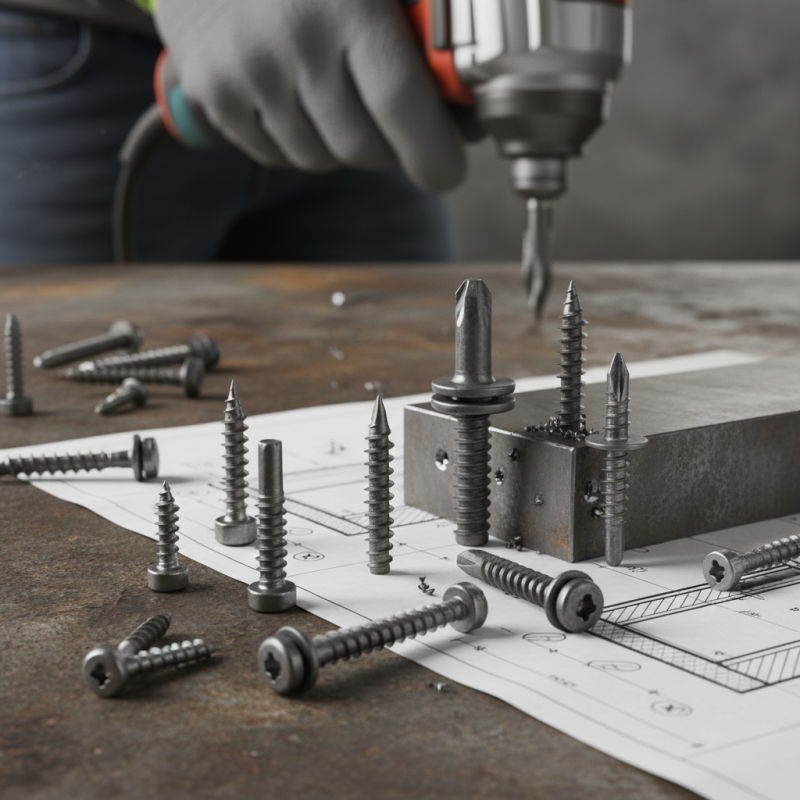
Benefits of Using Self Drilling Screws in Construction Projects
Self drilling screws have become increasingly popular in construction projects. Their ability to create their own hole simplifies the fastening process. This innovation reduces the need for pre-drilling, which can save significant time and labor costs. According to a recent industry report, using self drilling screws can cut installation time by up to 40%. This efficiency is crucial for tight project deadlines.
Moreover, self drilling screws are highly versatile. They can work with various materials, including metal and wood. This adaptability supports diverse construction applications. However, despite their benefits, some professionals caution against over-reliance. Not every project requires self drilling screws. In certain scenarios, traditional fasteners may provide a more secure hold.
The durability of self drilling screws is worth noting, too. They are designed to resist stripping and corrosion. In fact, data shows that using high-quality self drilling screws can extend a structure's lifespan significantly. Yet, quality control in sourcing these screws remains a concern. Inconsistent manufacturing can undermine their effectiveness. Experts advise careful selection based on project requirements to mitigate risks.
How Self Drilling Screws Enhance Efficiency and Speed in Assembly
Self drilling screws are revolutionizing construction assembly. They significantly enhance speed and efficiency. According to a report by the Fastener Industry Coalition, using these screws can reduce assembly time by up to 30%. This is vital in a fast-paced construction environment where time is money.
Self drilling screws eliminate the need for pre-drilling. This feature cuts down labor costs and increases productivity. Workers can easily install these screws in various materials, including metal and wood. The reduction in assembly time presents an opportunity for future projects. However, it's essential to ensure proper installation techniques to avoid potential structural issues that may arise.
Moreover, self drilling screws come with built-in threading. This design allows for better grip and holding power. A study by the American Institute of Steel Construction noted that the strength of connections made with self drilling screws is on par with traditional fastening methods. Yet there remains a learning curve for some workers. Adequate training and practice are necessary to maximize their benefits. As construction evolves, exploring these details becomes increasingly important.
Comparison of Self Drilling Screws to Traditional Fasteners
Self-drilling screws are increasingly favored in construction. They provide distinct advantages over traditional fasteners. One major benefit is their ability to cut and drill through material. This eliminates the need for pre-drilled holes, saving time and effort on job sites. According to a report by the Construction Industry Institute, using self-drilling screws can reduce installation time by up to 30%. This efficiency can significantly lower labor costs in large projects.
In contrast, traditional fasteners require careful alignment and drilling. This can lead to errors, especially in complex assemblies. Data from the National Bureau of Standards indicate that fasteners without self-drilling capabilities have a higher failure rate under high-stress conditions. Self-drilling screws create a more secure bond due to their design, which allows for deeper penetration into the material. However, improper installation can still lead to issues. It's crucial for workers to be trained, as misalignment can compromise strength.
While self-drilling screws are beneficial, they are not a one-size-fits-all solution. They may not work well in all materials, particularly very thin metals or softer substrates. Understanding the specific requirements of a project remains essential. Construction teams must weigh these considerations carefully to make informed choices for their fastening needs.
Factors to Consider When Choosing Self Drilling Screws
When selecting self-drilling screws, several factors come into play. The material of the screw is crucial. Steel screws are often favored for their strength. However, stainless steel options offer excellent corrosion resistance, ideal for outdoor projects. Studies indicate that selecting the appropriate material increases longevity by up to 60%.
The screw's tip design also matters. A sharp tip can penetrate various substrates without pre-drilling. This capability saves time and effort, especially in large-scale projects. Research suggests that using self-drilling screws can reduce installation time by 30% compared to traditional screws.
Additionally, the coating of the screws should not be overlooked. Coatings can enhance durability and resistance to rust. Some reports highlight that coated screws can last significantly longer in harsh environments. Inspecting the weather resistance of self-drilling screws is essential, particularly for structures exposed to the elements. Thus, understanding these features is vital for making informed choices.
Common Applications of Self Drilling Screws in the Construction Industry
Self drilling screws are gaining popularity in construction due to their efficiency and versatility. These screws eliminate the need for pre-drilling, making them ideal for fast-paced projects. According to a report by IBISWorld, the construction fasteners market reached $14 billion in 2022 and continues to grow. This growth is partly due to the rising demand for self drilling screws, which are essential for various construction applications.
In framing, self drilling screws secure metal studs and joists. They are particularly effective in lightweight steel framing systems. Construction professionals value the speed of installation and the reduced labor costs associated with self drilling screws. Furthermore, these screws are used in roofing, where they attach panels to steel or wood substrates. Their ability to create a strong bond ensures long-lasting durability and resistance to environmental factors.
Self drilling screws are also used in HVAC systems. They provide a robust connection for ductwork installation. However, the quality of installation can vary. In some cases, inadequate tightening may lead to failures. Addressing these potential issues is critical to maintaining structural integrity. Through proper training and experience, workers can achieve optimal results with self drilling screws. The construction industry must continuously evaluate best practices to ensure reliability in every project.
Common Applications of Self Drilling Screws in Construction