
Why Choose a Marine Trolling Motor Battery?

A Marine Trolling Motor Battery does more than start a motor. It must deliver steady power while you move quietly across the water. Choose poorly, and the motor may slow before the fishing day ends. Not ideal. The right battery helps maintain dependable thrust, supports repeated outings, and handles the demands of a wet, vibrating boat. But no battery can compensate for a system sized incorrectly.

Marine systems author Nigel Calder’s published guidance can be paraphrased this way: match the battery to the electrical load, charging system, and conditions aboard. That practical idea matters when comparing deep-cycle lead-acid and lithium options. Consider capacity, usable energy, weight, charging compatibility, and the space available under the deck. Picture lifting a battery into a cramped compartment after a long day; weight is not just a specification. Neither is runtime. Your motor’s draw, speed, water conditions, and trip length all affect how long power lasts. Check the manufacturer’s ratings and follow its charging instructions. A higher price alone does not guarantee a better fit. Nor does a larger capacity solve every problem. This guide explores why boaters choose a Marine Trolling Motor Battery, what trade-offs deserve attention, and how to select one for real-world use. Some details are easy to overlook. That is worth remembering. A careful choice starts with honest estimates of how you fish, not with the boldest label on the shelf.
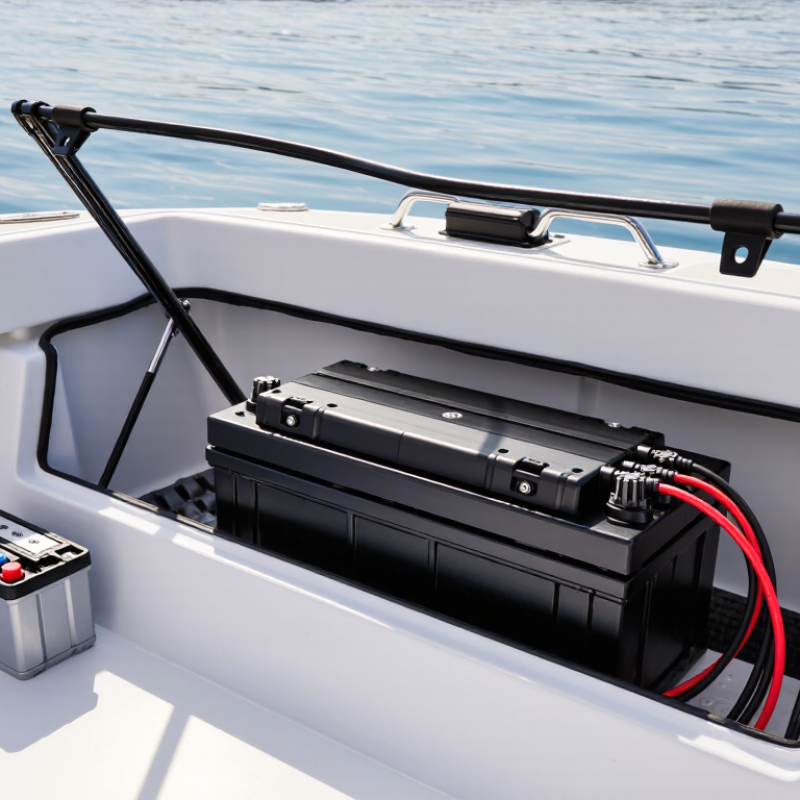
Why Choose a Marine Trolling Motor Battery?

How a Marine Trolling Motor Battery Powers a Boat

Why Choose a Marine Trolling Motor Battery?

A marine trolling motor battery supplies steady direct-current power while the boat moves quietly across the water. Unlike a starting battery, it is selected for sustained use and repeated discharge. Picture a slow pass along a reed bed: the motor keeps turning, even when the boat barely moves. A 12-volt battery rated at 100 amp-hours suggests five hours at a 20-amp draw. That is only an estimate. Speed, wind, weeds, water temperature, and battery age can all change consumption.

Battery Council International’s reserve-capacity test provides a useful comparison. It applies a 25-amp load at 80°F and records how many minutes pass before a fully charged 12-volt battery falls to 10.5 volts. That figure is not a runtime promise. A motor may draw more or less than 25 amps, depending on operating conditions. A 12-volt, 100-amp-hour rating represents roughly 1,200 watt-hours of nominal energy, but usable energy varies with battery chemistry and discharge rate. Measure current during a typical outing if possible. The neat calculation on paper can still miss what gusts and weeds demand.

Why Choose a Marine Trolling Motor Battery?

How rated battery capacity can affect trolling motor runtime

A trolling motor draws power from the battery, and greater amp-hour capacity can provide longer runtime. These ideal estimates use a constant 20-amp draw and the calculation: rated capacity (Ah) ÷ current draw (A). Actual runtime is often lower because motor speed, conditions, battery chemistry, usable capacity, and battery age affect performance.

The Electrical Demands of Trolling Motors

A trolling motor asks its battery for steady current, not just a brief burst. When a boat pushes into wind or holds position against a current, the motor may draw heavily for long stretches. That load can drain a small starting battery quickly. Deep-cycle batteries are designed for repeated, sustained discharge, making them a practical choice for this kind of use.

Match the battery’s voltage to the motor’s requirements, then consider its capacity in amp-hours. A simple estimate is to divide capacity by the motor’s average current draw, but real runtime varies with speed, propeller load, temperature, and battery condition. Treat that estimate as a guide, not a promise. Cold mornings can reduce available power. So can a weed-choked prop.

Wiring matters, too. Long or undersized cables can cause voltage drop, heat, and weaker motor performance. Follow the motor’s specifications for cable size and circuit protection, and secure connections against vibration and moisture. Recharge the battery after use, and avoid routinely draining it completely. Even careful planning has limits; rough water and changing wind can make one day’s power needs hard to predict.

Common Battery Types for Marine Use

Flooded lead-acid batteries remain common for trolling motors because they are widely available and tolerate routine marine use. They need upright installation, ventilation, and periodic electrolyte checks. Skip those checks, and capacity may fade sooner. AGM batteries also use lead-acid chemistry, but their sealed construction reduces spill concerns and routine upkeep. They still weigh heavily, and deep discharges can shorten service life. Lithium iron phosphate batteries offer lower weight and steady voltage as charge falls. They cost more upfront, and charging requires compatible settings, especially in cold weather.

Every pound counts. A heavy battery can affect trim, while a lighter pack may leave more room for tackle. Battery Council International’s 2022 National Recycling Rate Study reports that about 99% of lead batteries in the United States are recycled. That is useful context, not proof that lead-acid is automatically the best choice. Compare usable capacity, weight, charging requirements, and the motor’s recommended voltage. Also check the battery’s continuous discharge rating; a capacity figure alone does not show whether it can supply the motor’s current. One detail is easy to overlook: a battery that fits the compartment may still need extra clearance for cables and ventilation.

Benefits of Choosing a Marine-Grade Battery

A marine-grade battery is built for more than starting an engine. A trolling motor can draw power steadily for hours, so a suitable deep-cycle battery is designed to deliver sustained current. Its reinforced case and secure terminals also help it handle vibration, spray, and repeated movement across choppy water. That matters. A loose connection or corroded terminal can interrupt a quiet morning on the lake.

Battery chemistry and fit still matter. Sealed AGM models can reduce spill risk and routine maintenance, while lithium models are lighter; actual runtime depends on capacity, motor draw, temperature, and charging habits. No battery is magic. Check the manufacturer’s reserve-capacity and cycle-life ratings, and match the battery to the motor’s voltage and expected use. Battery Council International reports that about 99% of lead-acid batteries are recycled in the United States, a useful end-of-life consideration when comparing options. That figure concerns recycling, not battery performance, and local collection options can vary. A marine-grade choice offers a tougher design, but regular charging and clean, tight connections still make a difference.

Factors to Consider When Selecting a Battery

Why Choose a Marine Trolling Motor Battery?

Factors to Consider When Selecting a Battery

A trolling motor needs steady power over hours, not just a brief burst to start an engine. A suitable marine battery is designed for repeated discharge and can better handle the vibration and damp conditions found aboard a boat. The right choice depends on your motor, route, and charging setup.

Runtime matters.

Check the motor’s required voltage before comparing batteries. Capacity, measured in amp-hours, helps estimate how long a battery may run, but actual runtime changes with speed, current, boat load, and weather. Consider usable capacity, not just the number on the label.

Battery chemistry affects weight, charging needs, lifespan, and cost; confirm that your charger supports the type you choose. Weight adds up. Measure the battery compartment, too, and allow room for secure mounting and cable connections. A perfect specification on paper can still be a poor fit.

Tips: Note your usual hours on the water, then allow a practical reserve. Check the motor and charger manuals for compatibility. If unsure, ask a qualified marine technician before purchasing. Real conditions vary.

Back To Top