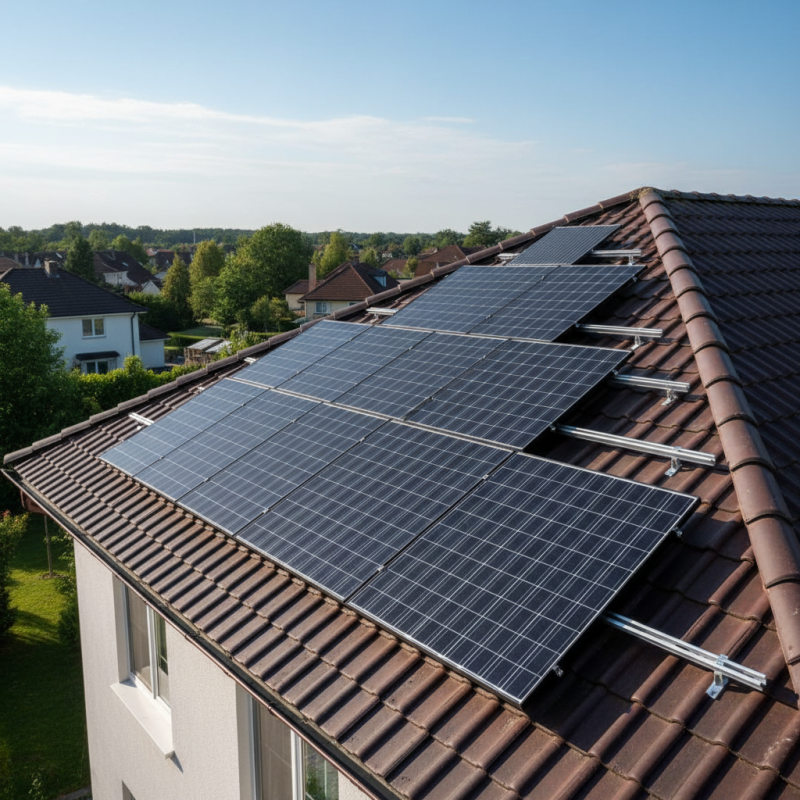
How to Choose the Best Solar Panel Roof Mount for Your Home?
Choosing the right solar panel roof mount is crucial for optimizing your renewable energy system. Every home has unique needs, and the mounting solution must fit those perfectly. A quality solar panel roof mount ensures stability and enhances energy efficiency.
When selecting a solar panel roof mount, consider factors like material, durability, and installation complexity. Some mounts perform better in high winds, while others suit different roofing types. It’s important to assess these characteristics to avoid unnecessary expenses in the future.
Engage with local experts to gather insights. Each installation might present unique challenges. A reliable solar panel roof mount can significantly affect system performance and lifespan. Make informed decisions, but be aware of your limitations. The right choice sets the stage for sustainable energy solutions in your home.
Understanding Different Types of Solar Panel Roof Mounts
When choosing a solar panel roof mount, it’s essential to understand the various types available. The main categories include fixed mounts, adjustable mounts, and tracking mounts. Fixed mounts are the most common. They offer a stable solution, anchoring panels at a specific angle. These are often the cost-effective choice for homes. They have an efficiency rate of about 80% to 90%, as reported by the National Renewable Energy Laboratory.
Adjustable mounts allow homeowners to change the panel angle seasonally. According to Solar Power World, these can boost energy production by 10% to 20%. However, they are often more complex to install and can require maintenance. Tracking mounts automatically adjust to follow the sun. Studies show they can increase output by 25% to 40%. But they come with higher costs and potential reliability issues.
Selecting the right mount depends on your solar goals, roof space, and budget. It's essential to reflect on your specific needs. Not all mounts fit every home, and some may require additional structural support. Weighing the benefits against the challenges is crucial for effective decision-making. Many homeowners overlook the importance of professional installation for certain systems. This oversight can lead to decreased performance and even damage over time. Choosing wisely ensures your solar investment yields fruitful returns.
Assessing Your Roof's Suitability for Solar Panel Installation
When considering solar panel installation, evaluating your roof's suitability is crucial. A study by the National Renewable Energy Laboratory found that about 50% of roofs in the U.S. are viable for solar use. Factors such as roof orientation, angle, and shading will heavily influence the efficiency of solar panels. South-facing roofs are typically the most effective, capturing maximum sunlight exposure throughout the day.
Your roof's material also plays a role in installation ease and durability. Asphalt shingles are often ideal, while older tile roofs may present challenges. An inspection is vital before proceeding. Consider if your shingles are nearing the end of their lifespan. If repairs are necessary, it may be wise to address these before installation. Solar panels typically last for 25 years, so ensuring a solid foundation is essential for long-term performance.
Additionally, local climate can affect solar energy output. Regions with consistent sunlight yield better performance compared to those with frequent overcast conditions. A report from the U.S. Department of Energy emphasizes that systems installed in sunnier areas can produce 20-30% more energy. Having a qualified solar installer assess your roof can provide insight into these variables, ensuring your investment is sound.
Evaluating Factors for Choosing the Right Mounting System
When selecting the best solar panel roof mount, evaluating key factors is crucial. One important consideration is your roof type. Different materials, like shingles or metal, require unique mounting solutions. Using the wrong mount can lead to leaks or structural damage. Understanding your roof’s specifics helps in making the right choice.
Another factor is your area’s climate. High winds or heavy snowfall may necessitate more robust mounting systems. It’s vital to ensure the mounts can withstand local weather conditions. Solar panels need safety and support under various circumstances. Ignoring this can result in performance issues.
Consider the ease of installation as well. Some systems require professional help, while others can be installed by homeowners. Knowing your skill level is essential. Sometimes, DIY kits can be tempting, but they also come with risks. Assessing these aspects will lead to a better investment in the long run. Taking the time to reflect on these points can improve overall satisfaction with your solar setup.
Comparing Fixed, Tilted, and Tracking Solar Mounts
When choosing solar panel roof mounts, understanding the differences between fixed, tilted, and tracking mounts is crucial. Fixed mounts are the simplest option. They hold panels at a specific angle, usually optimized for your geographical location. This approach is cost-effective and durable but may not capture maximum sunlight throughout the day.
Tilted mounts offer a versatile solution. They can be adjusted to different angles, allowing for better sunlight exposure during changing seasons. This kind of flexibility can greatly enhance energy production. However, additional costs and installation complexities may arise. Regular maintenance is necessary to ensure they function effectively and avoid issues like misalignment.
Tracking mounts are the most advanced option. They follow the sun’s movement throughout the day, maximizing solar energy capture. This can significantly increase efficiency and output. Yet, they come with higher costs, more moving parts, and require regular upkeep. Homeowners should consider the balance between energy needs and budgetary constraints when deciding.
Comparison of Different Solar Panel Mounts
Considering Local Regulations and Installation Costs
When considering solar panel roof mounts for your home, local regulations play a crucial role. Different areas have unique zoning laws and building codes, which can impact the installation process. According to a 2022 report from the Solar Energy Industries Association, 48% of homeowners faced regulatory hurdles when installing solar panels. Understanding these regulations can save time and prevent costly delays.
Installation costs can vary significantly based on location. A study by the National Renewable Energy Laboratory revealed that installation costs range from $2.50 to $3.50 per watt, depending on various factors. Local labor rates and material costs significantly influence this pricing. In urban areas, you might experience higher costs due to demand. Furthermore, incentives or rebates can reduce the overall financial burden. However, not all regions offer similar financial incentives, leading to disparities in total expenses.
Navigating local regulations and assessing installation costs can be challenging. It is essential to consult with experts or local authorities. Knowledge of your area's requirements is vital. This information can guide you to make informed decisions. Inadequate research might lead to unforeseen complications. Always consider these factors when selecting solar panel roof mounts to ensure a smooth installation process.
How to Choose the Best Solar Panel Roof Mount for Your Home? - Considering Local Regulations and Installation Costs
| Mount Type | Material | Weight Capacity (lbs) | Average Cost ($) | Installation Difficulty | Regulations |
| Flush Mount | Aluminum | 200 | 1000 | Easy | Minimal |
| Tilt Mount | Stainless Steel | 300 | 1200 | Moderate | Moderate |
| Pole Mount | Galvanized Steel | 400 | 1500 | Challenging | High Compliance |
| Ground Mount | Aluminum | 500 | 1400 | Moderate | Variable |
| Ballasted Mount | Concrete | 600 | 1600 | Easy | Low Compliance |