
Choosing the right Outdoor Flags can make your business visible before customers reach the entrance. A well-positioned flag moves naturally, catches attention, and communicates your brand from a distance. However, appearance alone should not guide the decision.
“Outdoor flags must be chosen for the environment, not only for the artwork,” says Richard H. Johnson, an outdoor-display consultant with more than twenty years of industry experience. His advice reflects a common mistake: selecting attractive fabric without considering wind, sunlight, rain, or mounting conditions. Polyester flags usually provide strong outdoor visibility and vivid color. Nylon flags offer a lighter, flowing appearance in moderate weather. The best option depends on your location, display duration, and maintenance routine.
Start by studying the site. Is the flag beside a busy road, near a building, or exposed to coastal wind? Measure the pole height and check whether nearby trees or signs block movement. A printed logo should remain readable from several metres away. Small lettering often disappears in passing traffic. Choose reinforced stitching, durable hems, and hardware suited to repeated use. Ask the supplier about UV resistance, washing instructions, and recommended wind limits.
No choice is perfect. I have seen businesses prioritize low prices, then replace faded flags within months. That experience can be costly, but it teaches an important lesson. A reliable Outdoor Flags supplier should explain material performance honestly, provide clear specifications, and recommend safe installation. Review the full environment before ordering. Your strongest design may still fail if the flag is poorly placed or neglected.
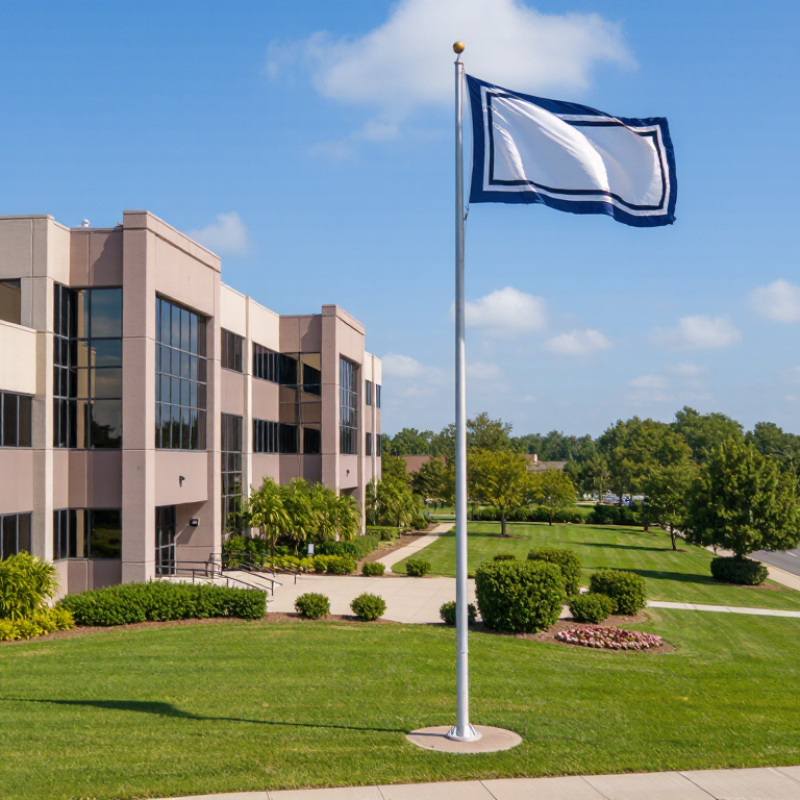
Before selecting an outdoor flag, define what your business needs it to achieve. A flag may attract passing drivers, guide visitors, or support a temporary promotion. These goals require different sizes, fabrics, and placements. A roadside retailer may need tall flags with bold lettering. A small office might prefer a compact entrance flag. Write down the intended audience, viewing distance, display period, and expected response. This simple step prevents attractive but unsuitable purchases.
Your site conditions matter just as much. Check wind exposure, ground surfaces, nearby buildings, and daily sunlight. A flag placed beside a busy driveway needs clear contrast and stable mounting. A fabric that looks excellent indoors may fade quickly outdoors. Weather-resistant materials usually offer better reliability, but they still need inspection. In practical site reviews, loose fittings and poor positioning cause more problems than design. I have seen well-made displays become ineffective because trees blocked their message. That detail is easy to miss.
Tips: Keep the message brief. Use large, readable lettering. Match the flag height to the viewing distance. Test a sample from several angles before ordering many units. Inspect stitching, poles, and bases regularly. If the display feels crowded, remove one message. Simpler usually works better, though not every location responds the same way. A short trial can reveal what assumptions got wrong.
How to Choose the Best Outdoor Flags for Your Business?
Outdoor flag material affects durability, movement, color, and overall presentation. Nylon is lightweight and catches even gentle wind, creating a lively, flowing display. Its bright surface can make printed colors look vivid. However, thin nylon may wear quickly in strong sunlight or frequent storms. It often suits short campaigns, seasonal events, and sheltered entrances.
Polyester is usually heavier and more resistant to stretching. A tightly woven polyester flag hangs with a fuller shape and remains readable during stronger wind. It also handles repeated washing better when the fabric is properly finished. I have found that dense polyester feels more professional beside busy roads. Still, it may not flutter as dramatically as nylon. That trade-off is easy to overlook.
Cotton offers a soft, traditional appearance, but it absorbs water and dries slowly. That can lead to mildew, staining, and extra maintenance outdoors. Mesh polyester can perform better in exposed areas because small openings reduce wind pressure. Yet the open texture may soften fine lettering and detailed graphics. Check the stitching, edge reinforcement, and attachment points, not only the fabric label. A durable material can still fail at a weak seam. I once chose a lighter flag for easier handling, but its corners frayed sooner than expected. Local weather, display duration, and cleaning habits should guide the final choice.
Compare common outdoor flag materials by typical service life and appearance retention. Acrylic generally offers the strongest long-term outdoor performance, while polyester provides a practical balance of durability, color quality, and cost.
Typical outdoor service-life ranges vary with sunlight, wind, moisture, cleaning, and installation conditions. Appearance retention is rated on a 1–10 comparative scale, with higher scores indicating better resistance to fading and a cleaner visual appearance over time.
Choosing an outdoor flag begins with viewing distance, not artwork. A small storefront flag may need a compact 2-by-5-foot format. Larger sites usually benefit from taller flags visible above parked cars. Measure the entrance, sidewalk, and nearby signs before ordering. Leave clear space for doors, vehicles, and pedestrians. A crowded frontage weakens even a strong message.
Shape changes how people read your business. Feather and teardrop flags guide the eye upward and suit narrow walkways. Rectangle flags provide more writing space and look steadier beside a building. Keep the main message near eye level. From practical site checks, high contrast and fewer words perform better than detailed graphics. That is not universal. A design that looks perfect on a screen can disappear in bright afternoon glare.
Tips: Match the mounting style to the surface and weather. Use a ground spike for soft soil, a weighted cross base for pavement, and a wall bracket for fixed facades. Check wind exposure before selecting a base. Tall flags need stronger support. Inspect stitching, pole joints, and fading each week during busy seasons. I have seen attractive flags fail because the base was too light. Test one position for a day, then adjust its angle, height, or spacing.
| Flag Type | Typical Flag Size | Common Shape | Recommended Mounting Style | Typical Pole or Mount Height | Best Outdoor Application | Selection Considerations |
|---|---|---|---|---|---|---|
| Feather Flag | Approximately 2.5 × 8 ft to 3.5 × 14 ft (0.8 × 2.4 m to 1.1 × 4.3 m) | Tall, curved, feather-like profile | Ground spike, cross base, or weighted base | Approximately 8–16 ft (2.4–4.9 m) | Sidewalks, entrances, event areas, and roadside promotions | Provides strong vertical visibility but has a narrower printing area. Use a weighted base on hard surfaces. |
| Teardrop Flag | Approximately 2.5 × 7 ft to 4 × 17 ft (0.8 × 2.1 m to 1.2 × 5.2 m) | Rounded top with a tapered lower section | Ground spike, cross base, or weighted base | Approximately 7–17 ft (2.1–5.2 m) | Retail storefronts, sports areas, exhibitions, and temporary promotions | The curved pole keeps the graphic visible even when wind changes direction. Check the fabric tension before outdoor use. |
| Rectangle Flag | Common sizes include 3 × 5 ft, 4 × 6 ft, and 5 × 8 ft (0.9 × 1.5 m, 1.2 × 1.8 m, and 1.5 × 2.4 m) | Traditional horizontal rectangle | Wall bracket, ground-mounted pole, or in-ground flagpole | Approximately 6–30 ft (1.8–9.1 m), depending on installation | Building fronts, parking lots, dealerships, and permanent outdoor displays | Offers a large printable area and a familiar appearance. Select reinforced headings and secure hardware for exposed locations. |
| Vertical Banner Flag | Common sizes include 2 × 6 ft, 3 × 8 ft, and 4 × 10 ft (0.6 × 1.8 m, 0.9 × 2.4 m, and 1.2 × 3.0 m) | Tall rectangular banner | Wall-mounted banner bracket, telescopic pole, or weighted base | Approximately 6–14 ft (1.8–4.3 m) | Store entrances, fences, trade shows, and pedestrian walkways | Works well where vertical space is available. Keep the lower edge clear of vehicles, doors, and pedestrian traffic. |
| Square Flag | Common sizes include 3 × 3 ft, 4 × 4 ft, and 5 × 5 ft (0.9 × 0.9 m, 1.2 × 1.2 m, and 1.5 × 1.5 m) | Compact square profile | Wall bracket, short pole, or portable base | Approximately 5–12 ft (1.5–3.7 m) | Patios, cafés, small storefronts, and limited display areas | A practical choice where space is restricted. Use high-contrast lettering because the viewing area is smaller. |
| Wall-Mounted Flag | Common sizes include 2 × 3 ft, 3 × 5 ft, and 4 × 6 ft (0.6 × 0.9 m, 0.9 × 1.5 m, and 1.2 × 1.8 m) | Horizontal or vertical rectangle | Fixed wall bracket, façade arm, or banner rail | Mount high enough to avoid contact with people and vehicles | Building façades, balconies, shopping centers, and entryways | Saves ground space, but the wall and fasteners must be suitable for the combined load of the bracket and wind-exposed fabric. |
| Promotional Sail Flag | Approximately 3 × 8 ft to 5 × 15 ft (0.9 × 2.4 m to 1.5 × 4.6 m) | Curved sail or asymmetrical banner | Ground spike, water-filled base, or weighted cross base | Approximately 8–15 ft (2.4–4.6 m) | Outdoor sales events, festivals, car parks, and temporary campaigns | Creates a large visual impression. Choose the base according to the surface, expected wind, and required portability. |
Outdoor flags often work at eye level, in wind, glare, and passing traffic. That makes printing quality a visibility issue, not merely a design choice. Check fabric density, edge stitching, and ink penetration before ordering. A practical test is simple: hold the flag against daylight and inspect both sides. Weak coverage creates pale logos and uneven color fields. ISO 12647-2 provides recognized process-control guidance for color consistency, although outdoor fabrics still require supplier testing.
Color selection should support quick recognition. High contrast usually performs better than subtle gradients on moving flags. The Outdoor Advertising Association of America reported that out-of-home media reached 80% of adults monthly in 2023. Your flag may have only a few seconds to communicate. Use one dominant color, one supporting color, and clear spacing around the message. Pantone references can help, but fabric, sunlight, and ink chemistry may shift the final result. Request a physical proof, not only a digital preview.
Brand visibility also depends on placement and movement. Keep essential text above pedestrian height, and avoid thin lettering near stitched edges. The Promotional Products Association International has reported that useful promotional products can generate repeated brand exposure, but exposure is not guaranteed. A flag hidden behind a vehicle fails, even with excellent printing. I have seen attractive designs lose impact because the logo was too small. That mistake is easy to make. Review the flag from 10 metres away, then test it outdoors for one windy day before approving a larger order.
How to Choose the Best Outdoor Flags for Your Business?
Outdoor flags must survive more than occasional rain. Wind, ultraviolet radiation, dust, and temperature changes gradually weaken fabric and stitching. The World Meteorological Organization reported that 2023 was the warmest year on record, at about 1.45°C above the pre-industrial average. More heat can mean faster fading and greater material stress. Select solution-dyed polyester, reinforced hems, corrosion-resistant hardware, and a base suited to local wind conditions. A beautiful flag is not enough.
Tips: Ask for fabric weight, UV testing, colorfastness data, and wind-rating guidance. Inspect the flag weekly during harsh seasons. Remove it before severe storms. Small tears rarely stay small.
Maintenance affects the real purchase price. Clean fabric with mild soap, allow it to dry fully, and avoid folding it while damp. Check clips, seams, poles, and ground fittings during every inspection. Aon’s 2024 Climate and Catastrophe Insight report estimated global natural-disaster losses at about 380 billion dollars in 2023. Weather planning is not theoretical. It protects visibility and reduces avoidable replacement costs. Still, replacement timing remains uncertain. A shaded storefront may keep a flag attractive for years, while a coastal site may not. I would budget for spare flags, but not assume a fixed lifespan. Compare total ownership cost, including cleaning, storage, labor, and replacement frequency. The cheapest fabric can become the expensive choice.