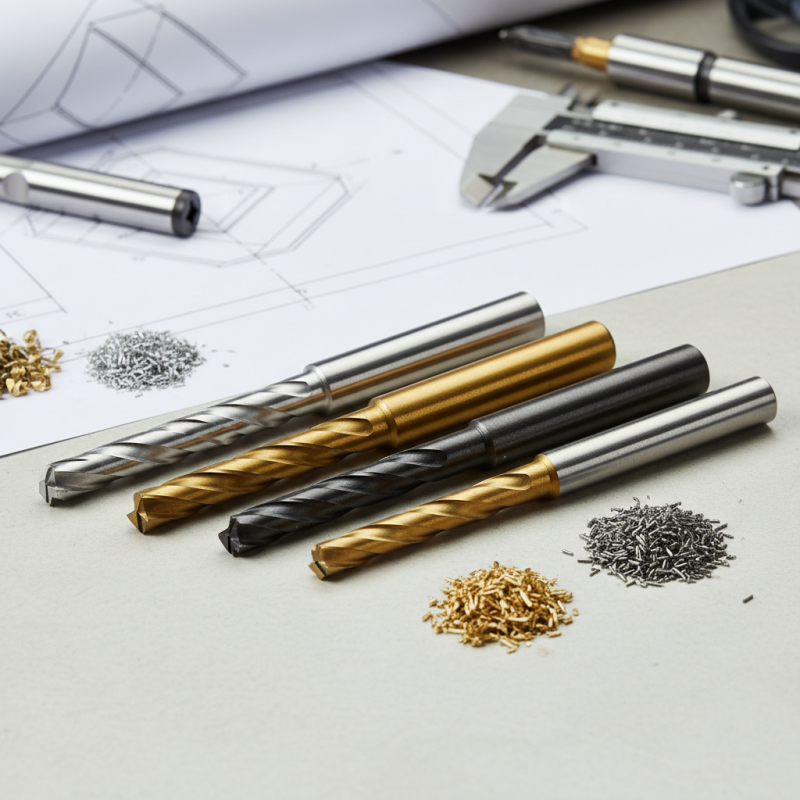
How to Choose the Right Ball End Mill for Your Projects?
Choosing the right Ball End Mill is crucial for achieving optimal results in machining projects. These specialized tools create smooth contours and intricate designs. However, the selection process can be confusing due to the variety of options available.
When selecting a Ball End Mill, consider the material you are working with. Different materials require different tool features. The diameter of the end mill also plays a key role in determining your cut's precision and finish. It’s important to avoid making impulsive decisions based solely on brand or price. Reflect on the specific needs of your project.
Occasionally, beginners may overlook the importance of tool coatings or geometry. These elements can significantly influence the tool's performance. Don’t rush your choice; the right Ball End Mill can make or break your project. Take your time to evaluate and understand your options better.
Understanding Ball End Mills and Their Applications
Ball end mills are essential tools in various machining applications. Their unique design allows for intricate contouring and 3D shaping. These mills can create complex shapes that flat end mills cannot achieve. According to a report by Grand View Research, the global end mill market size was valued at $2.45 billion in 2020, underscoring the importance of selecting the right tool for specific tasks.
Understanding the applications of ball end mills can significantly enhance project outcomes. For example, in die-making and mold-making, precision is crucial. The ability to create smooth curves and fine details can impact the final product. However, it's crucial to note that using the wrong diameter or type may lead to issues like poor surface finish or incorrect dimensions. Such mistakes could mean wasted time and materials, prompting reflection on tool selection processes.
Choosing the right ball end mill also involves considering the material being machined. Harder materials may require different coatings or geometries. In some cases, users may discover that an alternative tool performs better. The learning process is ongoing, as each project presents unique challenges that alter the choice of end mill. As industry reports indicate, adapting to these variables is vital for success in precise machining.
How to Choose the Right Ball End Mill for Your Projects?
| Material | Diameter (mm) | Length of Cut (mm) | Coating | Typical Applications |
| Aluminum | 6 | 12 | ZrN | Detailing, Engraving |
| Steel | 10 | 25 | TiN | 3D Contouring, Slotting |
| Titanium | 8 | 20 | AlTiN | Aerospace Components |
| Brass | 5 | 10 | Uncoated | Finishing, Decorative Parts |
| Plastic | 4 | 15 | Uncoated | Prototyping, Model Making |
Types of Ball End Mills and Their Specific Uses
When selecting a ball end mill, it’s crucial to understand the different types available. Each type serves unique purposes, impacting the outcome of your project. For example, standard ball end mills are ideal for creating contoured surfaces. They excel at machining complex geometries that require a smooth finish.
For those focused on deep pocketing, a tapered ball end mill may be the better choice. Its design allows for better chip removal. This can significantly improve efficiency in deeper cuts. Other variations include finishing mills. These are perfect for achieving precision on curved surfaces. However, they may not be suitable for all materials, leading to potential pitfalls.
Consider the material you’ll be working with. Certain end mills work better on softer metals while others shine with hardened materials. It’s important to evaluate tool life and performance too. Investing time in research can lead to the right choice. But even with careful selection, you might end up facing challenges unexpectedly. Learning from these instances will sharpen your decision-making for future projects.
Types of Ball End Mills and Their Specific Uses
Factors to Consider When Choosing a Ball End Mill
When selecting a ball end mill, several factors come into play. First, consider the diameter of the mill. A larger diameter allows for deeper cuts, but it may lack the precision needed for intricate designs. Small diameters, on the other hand, are great for detailed work but can wear down faster. Think about your project’s complexity before making a choice.
Another important factor is the material of the ball end mill. Different materials, such as high-speed steel or carbide, offer various benefits. High-speed steel is affordable and suitable for softer materials. Carbide is more expensive but lasts longer and handles tougher materials well. Reflect on the materials you work with often and choose accordingly.
Don't forget about coating options. Coating can enhance performance and tool life. However, it adds cost. While some coatings may improve non-stick properties, they can limit versatility. Assess your priorities—durability versus cost. It’s a balancing act that may require adjustments with each project.
Engage with your needs and preferences as you navigate these choices.
How to Select the Right Size and Diameter for Your Project
When selecting the right size and diameter for a ball end mill, several factors come into play. For instance, a recent report from a leading machining industry organization highlighted that tool diameter significantly affects the cut's accuracy and finish. Smaller diameters, like 1/16 inch, are ideal for intricate shapes and fine details. Conversely, larger diameters, such as 1 inch, work best for broader cuts and can handle more material removal efficiently.
Matching the tool size to your project requirements is crucial. A study indicated that using the correct diameter can improve machining efficiency by up to 30%. This means more productivity and less downtime. However, some machinists opt for larger bits even when not necessary. This can lead to poor surface finishes and increased wear on the equipment. Finding the balance is not always easy. Tiny errors in tool selection can cause longer-term issues down the line.
When choosing a diameter, consider the material you are cutting. Harder materials often require a larger diameter to maintain stability during cuts. Also, ensure that your machine allows for the selected tool size. Remember that each project may require a unique approach. It's common to experiment with different sizes to find what works best for your specific needs. Keep refining your choice as you gather more data from each project.
Maintenance Tips for Prolonging Ball End Mill Lifespan
Maintaining a ball end mill is crucial for achieving optimal performance. Regular inspection is essential. Look for signs of wear, like dull edges or visible damage. A worn tool can lead to poor finishes and increased machining time. It’s disappointing when a project takes longer due to a simple oversight.
Proper cleaning is equally important. After use, remove any debris or build-up. A brush or compressed air works well for this. Don't let dust accumulate. It can impact future performance. Also, store the tool in a protective case. This helps prevent accidental damage. Sometimes, we overlook the importance of storage. An unprotected tool can suffer from rust or chipping.
Lubrication also plays a key role. Using the right lubricant reduces friction and heat. Overheating can ruin even the best tools. Not everyone checks lubrication regularly. This can lead to significant wear and decreased tool life. Remember, investing time in maintenance pays off. It's a small price for long-lasting performance.