
How to Choose a Custom Religious Pendant?

Choosing a Custom Religious Pendant involves more than selecting a beautiful shape. It means carrying a symbol of faith, heritage, memory, or personal commitment close to the heart. The right piece should feel meaningful, comfortable, and respectful of its religious tradition. A small cross, star, dove, or engraved prayer can communicate deeply without appearing excessive.

I have learned that details matter. A pendant may look perfect online, yet feel too heavy after several hours of wear. A polished photograph can also hide shallow engraving, weak clasps, or an unsuitable chain. Consider the pendant’s size, metal, finish, and daily use. Ask the maker about material quality, production methods, care instructions, and customization limits. Reliable jewelers should explain these points clearly and provide realistic images or measurements. Their work history, customer feedback, and transparent policies also deserve attention.

Speak with a trusted religious leader if the design includes sacred text or specific symbols. Small wording errors can change meaning. Cultural context matters too. A professional artisan can recommend lettering that remains readable on a compact surface, especially around curved edges. However, expert advice cannot replace personal reflection. The most expensive option may not be the most suitable one. Nor is every handmade piece automatically superior.

Think about the story behind the pendant. Perhaps it marks a baptism, wedding, pilgrimage, or private promise. Let that story guide the design. Choose carefully, but leave room for honest imperfection. A meaningful pendant should not only look refined; it should remain authentic, wearable, and trustworthy for years.
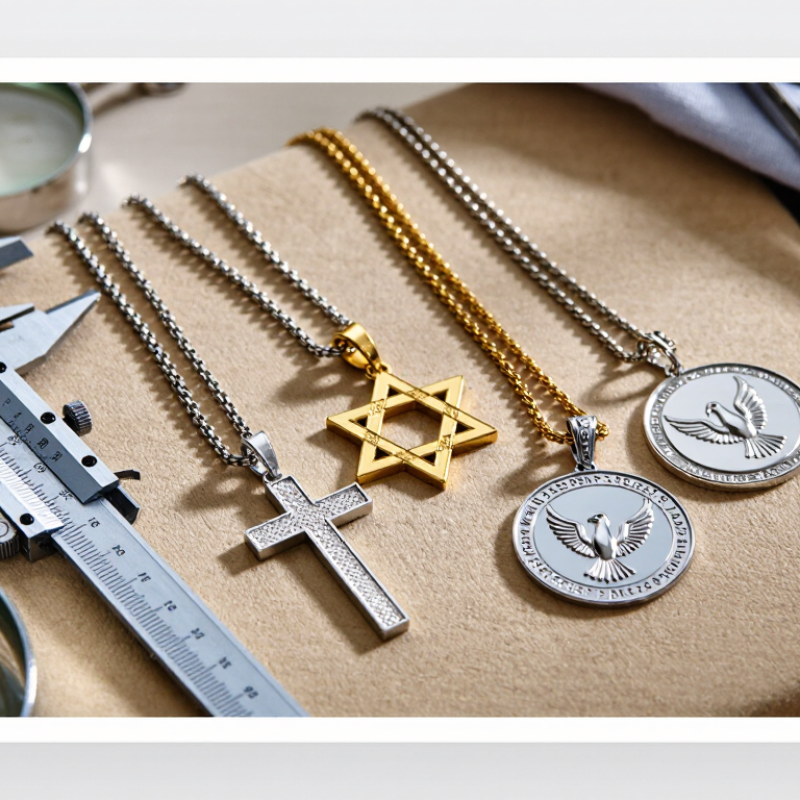
How to Choose a Custom Religious Pendant?

Understanding the Purpose and Meaning of a Custom Religious Pendant

A custom religious pendant is more than a decorative accessory. Its purpose may be private, spiritual, cultural, or connected to family history. For some wearers, it supports prayer during a difficult day. For others, it marks a baptism, wedding, pilgrimage, or personal promise. The intended meaning should guide every design choice.

Start by identifying the symbol’s significance within its tradition. A cross, verse, star, or sacred figure may carry different meanings across communities. Ask a trusted religious advisor when the symbolism feels uncertain. That small conversation can prevent an attractive but insensitive design. Consider who will wear the pendant and when. A discreet piece may suit daily reflection, while a larger pendant may represent a visible family tradition. The message matters more than size.

Personal details can make the pendant feel honest. An engraved date, initials, or short prayer may connect it to one specific memory. Choose materials that match real use, such as a durable metal for daily wear. Check the engraving carefully, especially unfamiliar names or religious words. Small errors can change the meaning. Comfort also matters; sharp edges and heavy designs may discourage regular use.

There is no perfect formula. Meaning can change over time. A pendant chosen during grief may later represent healing, not only sadness. It is also acceptable to admit uncertainty. A respectful design leaves room for reflection, rather than forcing a dramatic message.

Choosing the Religious Symbol, Materials, and Pendant Style

A custom religious pendant begins with the symbol, not the metal. Choose a cross, crescent, Star of David, Om, or another sign with personal meaning. Confirm its proportions and details with a trusted religious adviser when needed. Pew Research Center’s 2023–24 Religious Landscape Study reports that 62% of U.S. adults identify as Christian, while 29% are religiously unaffiliated. This diversity makes respectful interpretation essential. A symbol should feel sincere, not merely decorative.

Material affects comfort, durability, and cost. Sterling silver offers crisp engraving and a cooler tone. Gold provides warmth and lasting value, but purity changes its hardness and price. The World Gold Council’s Gold Demand Trends 2024 recorded 4,974.5 tonnes of total gold demand, including over-the-counter investment. High demand can influence pricing. Ask for metal purity, plating details, and allergy information. Stainless steel may suit daily wear, although some finishes feel less ceremonial. There is no perfect material. That is worth admitting.

Tips: Match the pendant style to real use. A small medallion suits office wear. A deeper relief design creates stronger texture. Choose a smooth bail for easy chain movement. Check the back, too. It should not scratch the skin. Test the pendant with the intended chain length before final approval. A 16-inch chain looks close to the collarbone, while 20 inches creates a quieter, more visible drop. Leave room for revision. Custom work sometimes looks different in a sketch than in the hand.

How to Choose a Custom Religious Pendant? - Choosing the Religious Symbol, Materials, and Pendant Style

Religious Symbol Common Meaning Recommended Materials Suitable Pendant Styles Durability and Care Best Customization Options
Cross In Christianity, the cross commonly represents faith, sacrifice, redemption, and hope. Stainless steel, sterling silver, gold, or titanium Classic cross, crucifix, Latin cross, Celtic cross, or minimalist cross Gold and titanium offer strong everyday performance. Sterling silver can tarnish and should be stored dry and polished periodically. Engraved names, dates, short scripture references, gemstone accents, or openwork details
Ichthys Fish A traditional Christian symbol associated with Jesus Christ and Christian identity. Sterling silver, stainless steel, gold, or enamel-finished metal Flat emblem, curved fish outline, or small everyday pendant Enamel can chip if struck. Metal surfaces should be protected from harsh chemicals and abrasive cleaners. Subtle engraving, contrasting finish, colored enamel, or a small birthstone
Star of David A widely recognized Jewish symbol connected with Jewish identity, heritage, and community. Gold, sterling silver, stainless steel, or titanium Six-point star, layered star, geometric outline, or round medallion Stainless steel and titanium are resistant to corrosion. Silver benefits from regular polishing to reduce tarnish. Hebrew lettering, family initials, dates, textured surfaces, or a meaningful gemstone
Hamsa A hand-shaped symbol used in several Middle Eastern and North African traditions and often associated with protection. Brass, sterling silver, gold, stainless steel, or ceramic accents Detailed hand, open hand, gemstone-centered, or symmetrical ornamental design Brass may develop a natural patina. Keep porous stones and decorative finishes away from perfumes and prolonged moisture. Eye motif, engraved prayer, filigree, colored stones, or symbolic inscriptions
Om A sacred syllable and spiritual symbol in Hindu traditions, also used in some Buddhist contexts. Gold, sterling silver, brass, bronze, or stainless steel Traditional Om character, circular medallion, calligraphic design, or layered pendant Fine lettering and raised details should be protected from impact. Silver and copper-based alloys may oxidize over time. Devanagari lettering, lotus motifs, satin finishing, or a personalized mantra where appropriate
Lotus Often associated with purity, spiritual awakening, renewal, and enlightenment in several Asian religious traditions. Gold, sterling silver, stainless steel, or rose gold Open lotus, blooming flower, layered petals, or lotus-and-stone pendant Petal details can catch on clothing. Choose a smooth profile for frequent wear and clean gently with a soft cloth. Number of petals, birthstone center, polished or matte finish, and symbolic inscriptions
Wheel of Dharma In Buddhism, the dharma wheel represents the Buddha's teachings and the path toward understanding and liberation. Bronze, brass, sterling silver, gold, or stainless steel Eight-spoke wheel, circular medallion, layered wheel, or minimalist outline Relief details should be cleaned with a soft brush. Bronze and brass may darken naturally and can be polished when desired. Eight-spoke configuration, lotus border, mantra engraving, or antiqued relief finish
Khanda A principal Sikh symbol representing spiritual principles, courage, and the relationship between temporal and spiritual life. Stainless steel, sterling silver, gold, or titanium Traditional Khanda, shield-shaped pendant, circular emblem, or simplified outline Durable metals are suitable for regular wear. Polished silver should be kept away from chlorine and household chemicals. Relief engraving, two-tone finish, polished edges, or a discreet inscription on the reverse
Star and Crescent A commonly recognized symbol associated with Islam in modern cultural contexts, although it is not a universal religious requirement. Gold, sterling silver, stainless steel, or titanium Star-and-crescent outline, crescent-only design, geometric pendant, or medallion Smooth outlines are comfortable for daily wear. Avoid direct contact with chlorine, abrasive products, and strong fragrances. Arabic calligraphy, geometric patterns, crescent orientation, or discreet date engraving
Personal Scripture or Prayer Pendant Uses text, prayer, or a sacred phrase to express personal devotion and remembrance. Gold, sterling silver, stainless steel, titanium, or durable ceramic Engraved bar, round medallion, rectangular plate, or layered charm Legibility depends on engraving depth and font size. A smooth surface generally offers better long-term readability. Short text, language or script selection, font style, coordinates, initials, and meaningful dates

Selecting the Right Size, Shape, and Personal Design Details

How to Choose a Custom Religious Pendant?

Selecting the right size begins with daily wear, not a ruler. A 20-millimeter pendant may look balanced on paper, yet feel too small against a heavy sweater. For a delicate chain, 15–20 millimeters usually creates a quiet, wearable presence. Larger pendants need stronger chains and more visual space. The World Gold Council’s Gold Demand Trends: Full Year 2024 recorded 1,877 tonnes of global gold jewellery demand, showing that material choice remains commercially significant. However, weight can become uncomfortable quickly. A beautiful pendant should not pull the neckline downward.

Shape should support the religious meaning and the wearer’s proportions. Rounded edges feel softer, while geometric outlines appear more formal. Consider how the pendant rotates. A flat back, slightly curved profile, or discreet bail can keep the symbol facing forward. My first sketch is often wrong. A paper cutout worn for one day reveals awkward movement better than a screen preview. The Silver Institute’s World Silver Survey 2025 reported a 3% rise in global silver jewellery demand during 2024, making silver a practical option for testing larger silhouettes.

Personal details should feel intentional, not crowded. Engrave a short date, a meaningful word, or a discreet pattern on the reverse. Handwritten lettering adds warmth, though tiny scripts may lose clarity over time. Ask for a scale drawing before production. Check chain length, edge comfort, clasp strength, and symbolism. Small imperfections can matter. A slightly uneven texture may feel human, but unclear lettering suggests poor planning.

Evaluating Craftsmanship, Comfort, Durability, and Ethical Sourcing

A custom religious pendant should feel meaningful, but symbolism cannot excuse weak workmanship. In my experience, examine the setting under bright light before approving a design. Edges should feel smooth against a fingertip. Engraving must look even, without collapsed letters or shallow corners. Ask how the pendant is finished, tested, and corrected. A maker who explains these steps clearly usually inspires more confidence. I still check twice. Small flaws are easy to miss in photographs.

Comfort matters during ordinary hours, not only at a ceremony. Choose a balanced shape that rests flat rather than twisting on the chain. Rounded edges reduce scratching and skin irritation. Consider weight, thickness, and the pendant’s contact with clothing. For sensitive skin, request clear information about metal composition and plating. Durability also depends on daily habits. A delicate loop may fail when pulled by a scarf or bag strap. Ask about care instructions and repair options. “Waterproof” is not always precise.

Tips: Request close-up images of the bail, clasp, and engraving. Confirm dimensions in millimeters before ordering. For ethical sourcing, ask where the metal and stones originate, whether recycled materials are used, and how suppliers are reviewed. Written answers are stronger than vague promises. Yet no questionnaire proves everything. Keep invoices and specifications. They make future repairs easier and expose misunderstandings early.

Comparing Customization Options, Costs, and Order Requirements

Choosing a custom religious pendant starts with the design brief, not the metal. Decide the symbol, inscription, chain length, and intended wearer. A raised relief gives stronger detail, while engraving creates a quieter appearance. Gold, sterling silver, and platinum change both weight and cost. According to Grand View Research, the global jewelry market reached about $353.26 billion in 2023, with growth projected through 2030. That scale supports wider customization, but it does not guarantee affordable craftsmanship.

Request a written quotation with metal purity, pendant dimensions, finish, chain specifications, mold fees, and shipping charges. Small pendants may cost less, yet intricate lettering often requires more production time. Ask whether digital previews, revisions, and one physical sample are included. Order requirements commonly include a high-resolution reference image, confirmed measurements, payment approval, and a production lead time of several weeks. The Jewelers of America emphasizes clear descriptions and documentation when evaluating jewelry quality. My cost estimate is only a starting point; local labor and metal prices can shift quickly.

Tip: Compare three itemized quotes, not three headline prices. Check the maker’s portfolio for tiny lettering and recessed details. Confirm return limits before production begins, because personalized pieces may have restricted returns. Leave space for human error. Even a carefully approved preview can feel different when the pendant rests against skin. Ask for a final measurement confirmation before casting.

Back To Top