
How to Choose the Right Rubber Oil Seals?

A leaking seal can leave a thin oil ring around a shaft, stain nearby parts, and bring an otherwise reliable machine to a halt. Choosing Rubber Oil Seals is therefore more than matching a part number. The right choice depends on the shaft diameter, housing dimensions, operating speed, pressure, and the fluid the seal must contain. Temperature matters, too: a material that performs well in a cool workshop may behave differently beside a hot bearing. Small details count.

This guide explains how to compare seal materials, profiles, and dimensions against real operating conditions. It also covers practical checks, such as inspecting the shaft surface for grooves and confirming that the seal fits squarely in its housing. A seal that is forced into place can be damaged before the machine even starts. Fit matters. So does installation.

No single rubber compound or seal design suits every application. Nitrile, silicone, and fluorocarbon materials, for example, have different strengths and limitations, so fluid compatibility should be verified with reliable product data. Consider the full working environment, not just the purchase price. It is easy to overlook startup conditions or occasional temperature spikes; those details may explain a failure that looked mysterious at first. Even careful selection cannot compensate for a worn shaft or poor alignment. Use the equipment specifications and, when conditions are unclear, consult a qualified seal supplier or engineer.
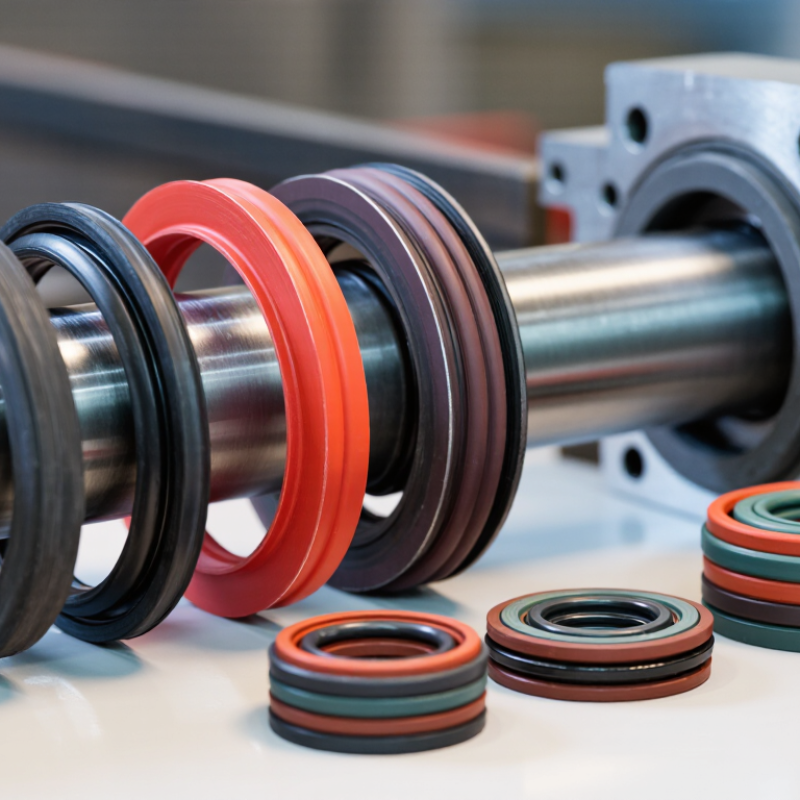
How to Choose the Right Rubber Oil Seals?

Define the Operating Conditions for the Rubber Oil Seal

Before selecting a rubber oil seal, describe the conditions it will actually face. Record the minimum and maximum temperatures, including brief heat spikes during startup or shutdown. Identify the fluid by type and, where possible, its additives. A seal that tolerates engine oil may respond differently to a cleaning fluid or a changed lubricant.

Measure shaft speed and note whether rotation is continuous, intermittent, or reversing. Check pressure levels and possible pressure surges; even modest pressure can affect a seal designed mainly for splash lubrication. Also inspect the shaft surface, runout, and alignment. A polished shaft with visible grooves tells a different story from a new, smooth one. Small details matter.

Include dust, moisture, vibration, and available installation space in the specification. These conditions can change the seal’s performance, even when temperature and fluid seem suitable. In practice, operating records are sometimes incomplete. That is a problem worth admitting, not guessing around. Where data is uncertain, measure the equipment during a representative operating cycle and compare the results with the seal’s published limits. Allow for startup peaks and aging, rather than choosing a seal that only just meets normal readings. A short trial under monitored conditions may reveal issues that a parts list cannot.

Identify the Seal Type and Installation Requirements

Identify the motion and sealing point before choosing a rubber oil seal. A radial lip seal suits a rotating shaft; an O-ring is generally used for static joints or limited movement. Match the elastomer to the oil, operating temperature, and exposure to additives. Nitrile rubber is common for many mineral oils, while higher temperatures or different fluids may require another compound. Check the equipment drawing and the relevant ISO 6194 or ISO 3601 dimensions rather than relying on appearance alone. A few millimeters matter.

Installation can undo a good material choice. Face the sealing lip and garter spring toward the oil, protect the lip from shaft splines and sharp edges, and press the seal evenly into its bore. Lightly lubricate the lip with compatible oil; keep dirt and metal chips away. Confirm shaft finish, runout, and alignment against the equipment maker’s limits. I still check twice. The U.S. Department of Energy’s 2006 Improving Pumping System Performance sourcebook reports that pumping can account for 25–50% of electricity use at some industrial facilities. That figure is not a seal-performance claim, but it shows why small leaks and avoidable friction deserve attention. A seal may look seated while its lip is already damaged.

Compare Rubber Materials for Oil and Temperature Compatibility

Choosing a rubber oil seal starts with the actual fluid and temperature, not just the engine or machine label. Nitrile rubber (NBR) is a common choice for mineral oils, with typical service ranges around -40°C to 120°C. Hydrogenated nitrile (HNBR) often handles heat and aging better, while fluorocarbon rubber (FKM) commonly serves higher-temperature applications, roughly -20°C to 200°C. These are representative ranges from elastomer technical data, not guarantees for every compound.

Oil compatibility can change with additives, pressure, and exposure time. EPDM can tolerate hot water and some chemical fluids, but mineral oil can cause swelling and loss of strength. That matters. ASTM D471 and ISO 1817 describe methods for measuring how liquids affect rubber, including changes in volume, mass, and hardness. Ask for test results using the actual oil and temperature where possible; a generic compatibility chart may miss additive effects.

Check the seal’s real operating conditions: a housing near an exhaust manifold may see heat spikes beyond the fluid’s normal temperature. A seal that looks suitable on paper can still harden or swell in service. Not a small detail. Leave room for uncertainty, especially when oil formulations change or startup temperatures fall below the stated range.

How to Choose the Right Rubber Oil Seals? — Compare Rubber Materials for Oil and Temperature Compatibility

Elastomer Typical Service Temperature* Mineral Oil Compatibility Hot Engine Oil Compatibility Key Strengths Common Limitations Typical Selection Use
NBR
(Nitrile)
About −40 to +100°C; some compounds are rated to approximately +120°C Good Good; compound and oil additives matter Good resistance to many petroleum-based oils and practical general-purpose sealing performance. Heat, ozone, and weather resistance are generally lower than HNBR or FKM. General-purpose seals operating in mineral oil at moderate temperatures.
HNBR
(Hydrogenated Nitrile)
About −30 to +150°C, depending on compound Very good Very good Improved heat, ozone, and aging resistance compared with standard NBR while retaining good oil resistance. Low-temperature flexibility and chemical compatibility vary by formulation; usually costs more than NBR. Automotive and industrial oil seals exposed to higher temperatures or demanding service conditions.
FKM
(Fluoroelastomer)
About −20 to +200°C; some compounds allow higher temperatures Excellent Excellent Strong heat and chemical resistance, with good compatibility with many oils, fuels, and fluids. Standard grades can be less suitable for very low temperatures; confirm compatibility with specific fluids. High-temperature or chemically demanding oil-seal applications.
ACM
(Acrylic Rubber)
About −20 to +150°C, depending on compound Good Very good Good resistance to hot engine oils and oxidation in many automotive applications. Generally less suitable for water, steam, and some fuels; low-temperature flexibility is limited. Automotive seals exposed to hot lubricating oil but not severe water exposure.
VMQ
(Silicone Rubber)
About −60 to +200°C, depending on compound Poor to limited Limited; verify the exact oil and grade Broad temperature capability and excellent flexibility at low temperatures. Often has poor resistance to petroleum oils, abrasion, and tear; not a default choice for oil seals. Applications where temperature flexibility is essential and fluid compatibility has been confirmed.
EPDM
(Ethylene Propylene Diene)
About −50 to +150°C, depending on compound Poor Poor Good resistance to weathering, ozone, hot water, and many water-glycol fluids. Generally incompatible with petroleum-based oils and fuels. Water, coolant, or weather-exposed seals where petroleum-oil contact is absent.

Selection note: Temperature ranges are typical screening values, not guaranteed operating limits. Actual performance depends on the compound, seal design, pressure, speed, exposure time, and fluid formulation. Check the seal supplier’s compatibility data for the exact oil, additives, and operating conditions before selecting a material.

Check Shaft Dimensions, Speed, and Surface Finish

How to Choose the Right Rubber Oil Seals?
Check Shaft Dimensions, Speed, and Surface Finish

A seal can look correct on paper and still leak when installed. Measure the shaft diameter at several points, including near the seal’s running track. Check for wear, taper, and out-of-roundness. A small size difference can affect sealing pressure and friction. Use the equipment drawing or seal specification as your reference, rather than relying on a worn shaft alone.

Speed matters, too. Record the shaft’s operating speed and consider its diameter, since these together determine surface speed. Higher surface speeds can increase heat at the sealing lip. Also note whether the shaft starts and stops often, or runs continuously. Those details may change the demands on the seal. Small details matter. I have seen speed treated as a single number, when the operating pattern deserved attention as well.

Inspect the shaft finish where the lip will contact it. Rough marks can wear the lip, while an unsuitable finish may not retain enough lubricant. Follow the finish range specified for the seal material and application; there is no universal value that fits every setup. Look for a spiral machining pattern, too. It can move oil along the shaft and contribute to leakage. A surface may feel smooth by hand and still be unsuitable, so use a proper measuring method when the specification is critical.

Verify Seal Performance Under Expected Operating Conditions

An oil seal that fits on the bench may behave differently once the machine is hot, pressurized, or vibrating. Check shaft speed, oil type, temperature range, pressure, and runout before choosing a compound or profile. Compare these conditions with the seal’s documented limits, including brief start-up peaks, not just steady operation. Small details matter. Measure the shaft diameter at several points, since wear or taper can create a leak path. Inspect the housing bore and confirm the seal sits square.

Where possible, test a sample assembly with the intended lubricant and a realistic duty cycle. Include cold starts, sustained heat, pressure changes, and expected pauses. Record leakage, lip wear, hardening, and temperature near the contact area; a clean exterior alone proves little. Allow conditions to stabilize. Field experience can reveal what a catalog cannot, though one short trial does not prove long-term reliability. No test perfectly recreates years of service. Repeat checks when materials, tolerances, or maintenance practices change. If a seal fails early, inspect installation alignment and lubrication before blaming the rubber. That diagnosis is easy to miss.

Article Source:

Back To Top