
The search phrase “Copeland Scroll Compfressor” usually refers to a Copeland scroll compressor, a positive-displacement machine used in many heating, ventilation, air-conditioning, and refrigeration systems. Inside the sealed housing, two spiral-shaped elements work together. One stays fixed while the other orbits, drawing refrigerant inward and compressing it through smaller pockets toward the discharge port. No pistons. No dramatic motion.
This design can provide smooth operation and relatively low vibration, but actual performance depends on the model, system design, refrigerant, and operating conditions. Copeland offers different scroll technologies and configurations, so one description does not fit every compressor. That detail is easy to overlook. A nameplate, model number, and manufacturer documentation matter when identifying equipment or planning service.
Understanding the operating cycle helps explain why scroll compressors are common in residential and commercial HVAC applications. It also helps readers recognize what the compressor does—and what it does not do alone. Coils, fans, controls, refrigerant charge, and airflow all affect system performance. A quiet compressor is not automatically a healthy system. This guide examines the basic mechanism, common applications, practical advantages, and limits of Copeland scroll compressors. Some specifications vary by product family, and that uncertainty deserves attention rather than guesswork.
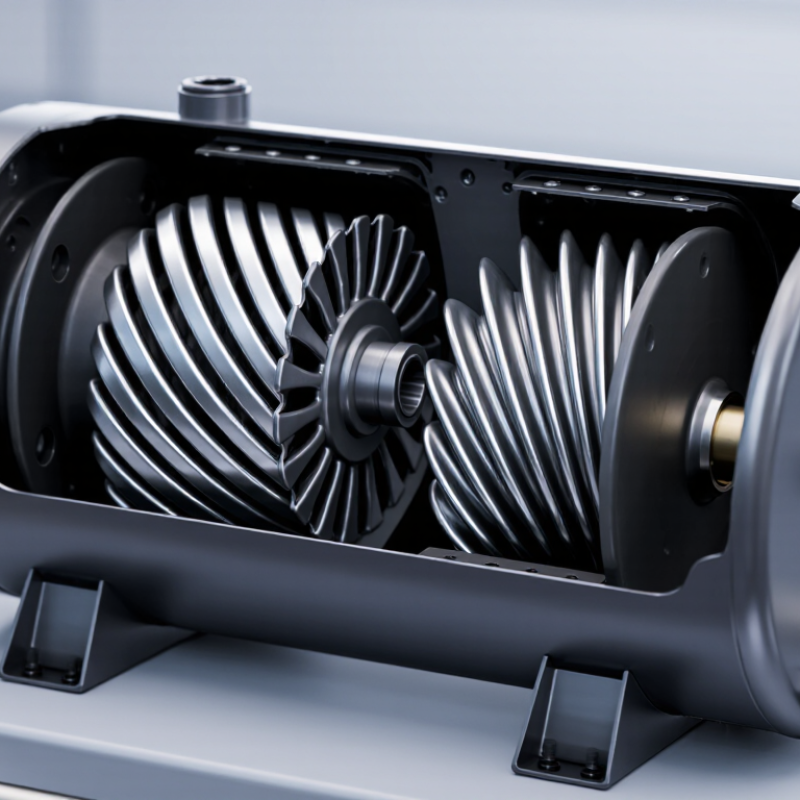
A scroll compressor is a positive-displacement machine that raises refrigerant pressure using two spiral-shaped elements. One scroll stays fixed, while the other orbits around it without spinning freely. Their curved walls form small pockets that trap refrigerant vapor near the outer edge. As the orbiting scroll moves, those pockets travel inward and shrink. That motion matters. The vapor becomes compressed before reaching a central discharge opening.
The basic assembly includes the scroll pair, an electric motor, a drive shaft, bearings, and a sealed housing. Refrigerant enters through a suction connection, while compressed gas leaves through a discharge port. The motor turns the shaft, and an eccentric drive makes the moving scroll orbit. A technician may also find an oil sump and passages that help lubricate bearings and manage internal heat. The exact layout varies by model, so a diagram is useful but not complete. It can hide clearances, seals, and the way pressure loads the scrolls together. Scroll compressors have relatively few moving parts, yet alignment and clean lubrication still matter. Small details, big consequences.
A scroll compressor compresses refrigerant between two interleaved spiral elements. One stays fixed; the other moves in a small orbit, driven by an eccentric shaft. Refrigerant enters at the outer edge and becomes trapped in crescent-shaped pockets. As those pockets travel inward, their volume shrinks and pressure rises. The compressed gas exits through a central discharge port. There is no piston repeatedly striking a cylinder, so operation is typically smooth and relatively quiet. Real systems are less tidy: refrigerant flow, lubrication, and installation all affect performance.
This mechanism is common in heat pumps and air-conditioning equipment. The International Energy Agency’s 2022 report, The Future of Heat Pumps, says heat pumps can be three to five times more energy-efficient than gas boilers. That figure describes heat-pump systems, not scroll compressors alone. A compressor’s actual performance depends on operating conditions, equipment design, and maintenance. The distinction matters.
Tips: Keep coils clean and airflow unobstructed. Watch for unusual vibration or repeated start-stop cycles; both can signal a system problem. Don’t ignore small changes. A little efficiency can be lost before a failure becomes obvious.
A scroll compressor uses two interleaved spiral elements to trap and compress refrigerant. One scroll stays fixed; the other orbits on an eccentric crankshaft. The moving spiral carries refrigerant pockets inward, shrinking their volume before discharge. No dramatic piston stroke occurs. The electric motor drives the shaft, while bearings support its rotation and reduce friction. Suction enters at the outer edge, and compressed gas exits near the center.
Several smaller parts protect this cycle. Tip seals limit leakage between scroll surfaces, while a check valve helps prevent reverse flow after shutdown. Lubricating oil supports the bearings and can help remove heat, though excess oil circulation may reduce performance. One detail is easy to overlook. The IEA’s 2018 report, The Future of Cooling, estimated that cooling uses about 10% of global electricity. That figure makes careful compressor design important, but it does not mean every scroll unit performs equally. Wear, refrigerant charge, airflow, and installation conditions all affect real operation. During inspection, oil staining near joints or unusual vibration can point to trouble, but neither sign alone proves a compressor failure.
Scroll compressors are common in residential air conditioners, small commercial rooftop units, and heat pumps. Their orbiting and fixed scrolls compress refrigerant with relatively few moving parts. In practice, that can mean steady operation and compact equipment, useful above a shop ceiling or beside a home. Some designs also serve commercial refrigeration, but not every scroll compressor suits every duty.
The International Energy Agency’s 2018 report, The Future of Cooling, projected that global energy demand for space cooling could more than triple by 2050 under its stated-policies scenario. That growth makes equipment efficiency and refrigerant choice increasingly important.
Older systems may use R-22 or R-410A; newer equipment may be designed for lower-global-warming-potential options such as R-32 or R-454B. Fit matters.
Refrigerants differ in pressure, lubricant needs, and safety classification, so a compressor must be approved for the specific refrigerant and system. The awkward part is that “scroll” alone tells you little about compatibility. Check the equipment data plate and technical documentation before selecting a replacement.
A scroll compressor uses two spiral-shaped elements to compress refrigerant. One stays fixed while the other orbits, moving small refrigerant pockets toward the center. This continuous action can reduce vibration and produce a quieter operating sound than some other compressor designs. With fewer moving parts, there may also be fewer wear points. That matters.
Efficiency is a key benefit, but it depends on the system around the compressor. Correct sizing, clean coils, steady airflow, and suitable operating conditions all play a role. A scroll unit may perform poorly if it is forced outside its designed pressure or temperature range. Efficiency claims need context. Real buildings rarely operate under perfect test conditions.
There are limitations. Liquid refrigerant returning to the compressor can damage internal parts, while dirt or moisture in a sealed system can cause trouble. Many units are not practical to repair internally, so diagnosis may require a qualified refrigeration technician and specialized tools. Routine care is mostly system care: replace filters as specified, keep outdoor coils clear, and watch for changing noise, cycling, or cooling performance. Don’t ignore a new rattle. These signs do not prove compressor failure, though; airflow, controls, or refrigerant issues can look similar. A careful diagnosis is worth the time.
A typical scroll compression set contains two interleaved scrolls: one stationary and one orbiting.
How it works: The orbiting scroll moves around the stationary scroll, forming pockets that carry refrigerant inward and compress it toward the discharge. This design has few moving parts and generally runs smoothly. Performance depends on the specific compressor and operating conditions; liquid refrigerant, contamination, or poor lubrication can cause damage. Follow the equipment manufacturer’s service instructions, and have a qualified technician check refrigerant charge, electrical connections, leaks, and unusual noise.