
10 Fountains Fireworks Buying Tips for Safe Sourcing

Buying Fountains Fireworks safely requires more than comparing prices or colorful product photos. A reliable purchase begins with a licensed supplier, clear product documentation, and strict compliance with local regulations. Check the seller’s business credentials, safety certifications, labeling, and customer support before placing an order. Ask where the products were manufactured and whether independent testing supports the safety claims. Vague answers are a warning sign.

Experienced buyers also examine practical details. Product packaging should be sealed, dry, undamaged, and easy to identify. Labels should explain safe use, required distances, noise levels, age restrictions, and disposal guidance. Confirm that delivery follows legal transport rules and that the products arrive in suitable protective packaging. Never accept items with missing instructions, leaking materials, crushed cartons, or unclear markings. Keep receipts and batch information for future reference.

A trustworthy supplier will not pressure you into rushed decisions or recommend unsafe modifications. They should explain proper storage, outdoor placement, supervision, and emergency planning in plain language. Local authorities or qualified fire-safety professionals can provide advice when requirements seem unclear. No checklist is perfect. Product names can change, and online reviews may be incomplete. Recheck important details before every purchase, especially when ordering from a new source. Safe sourcing protects families, event guests, workers, and nearby property. The best choice is rarely the cheapest one; it is the product supported by transparent information, responsible service, and verifiable safety practices.
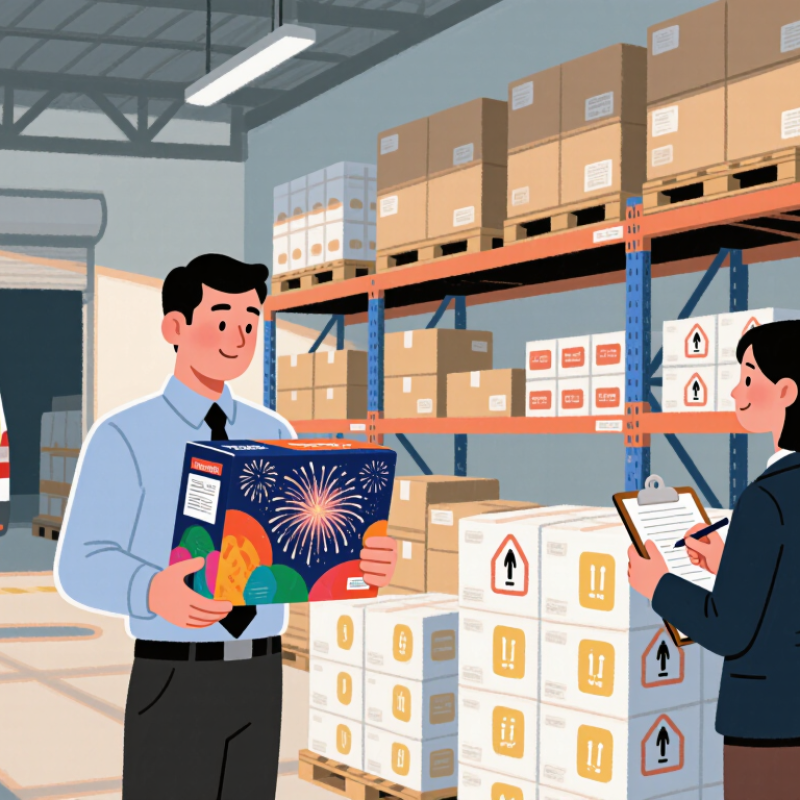
10 Fountains Fireworks Buying Tips for Safe Sourcing

Define Fountain Fireworks by Effect, Age Rating, and Hazard Class

A fountain firework is defined by its effect: a ground-based device that projects sparks, color, or crackling effects upward without launching an aerial shell. Its height and duration still matter. A compact fountain may reach knee level, while a larger unit can produce a wide, bright plume near eye height. Never judge safety by appearance alone. A fountain is not harmless.

Age rating is a purchasing control, not a suggestion. In the United States, federal consumer-firework rules commonly set 16 as the minimum purchase age, but state and local requirements may be stricter. Check the printed label, seller authorization, and local fire restrictions before buying. The U.S. Consumer Product Safety Commission reported 9,700 fireworks-related injuries in 2023, including eight deaths. That number makes “small” a poor safety argument.

Hazard class provides another screening layer. Many consumer fireworks use the UN 0336, 1.4G classification, but the exact classification must appear on compliant packaging or shipping documents. Do not accept loose items, damaged cartons, missing instructions, or unclear origin. NFPA research attributes an average of 31,302 fires annually to fireworks during 2014–2018. Keep fountains on a stable, nonflammable surface, follow the stated distance, and keep water nearby. I still think labels can be confusing. That is a sourcing problem, not a user failure. Choose transparent documentation over impressive effects.

Verify Local Laws, Permits, and CPSC’s 9,700 U.S. Injuries in 2023

Safe fountain fireworks buying begins before you enter a store. In 2023, the U.S. Consumer Product Safety Commission estimated 9,700 fireworks-related injuries nationwide. Many incidents involved burns, hand injuries, and children. A fountain may look calm, but it still produces heat, sparks, and unstable debris.

Check your city, county, and state rules before purchasing. Laws may restrict product types, sale dates, use locations, or required permits. Contact the local fire department or permitting office when information seems unclear. Do not rely only on a seller’s verbal assurance. Rules can change between neighboring communities.

Buying tips: Choose a licensed retailer with clear receipts and sealed packaging. Read the age requirements and safety instructions before payment. Confirm that the product is legal for consumer use in your location. Avoid damaged packaging, loose fuses, missing warnings, or vague labels. Keep the receipt and photograph the instructions.

At home, store fireworks in a cool, dry place away from children and ignition sources. Never buy from anonymous online listings or informal roadside sellers. A low price is not proof of safety. I have learned that rushed purchases create avoidable mistakes, especially when buyers skip the permit question. Even official-looking packaging deserves a careful check. Candles, dry grass, and crowded patios should not be nearby. Use only the distance and setup directions printed on the product.

Screen Suppliers Using UN 0336/0337 Shipping and Compliance Records

Safe fountain fireworks sourcing begins with the shipping classification, not a polished catalogue. Request the supplier’s UN test approval, packing certificate, and current transport documentation. UN 0336 identifies fireworks in hazard division 1.4G. UN 0337 identifies articles in 1.4S. The distinction affects packaging, handling, storage, and carrier acceptance.

Check whether documents match the exact product, net explosive content, carton design, and production site. Ask for recent inspection records, batch traceability, and corrective-action reports. A certificate copied from another shipment is a warning sign. Paperwork alone is not proof. In practice, small label errors can delay a container or trigger costly rework. I have seen how rushed document checks create avoidable risk.

Independent data supports stricter screening. The U.S. Consumer Product Safety Commission’s Fireworks Annual Report 2023 estimated 9,700 fireworks-related injuries and eight deaths in the United States. That figure does not prove a supplier caused each incident. It does show why compliance records deserve close attention. Compare the supplier’s UN classification with the Safety Data Sheet and transport declaration. Confirm that the freight forwarder accepts the stated classification before payment. The United Nations Recommendations on the Transport of Dangerous Goods provide the technical framework, but local authorities still control enforcement. A supplier should explain those differences clearly. If explanations remain vague, pause the order. Safety decisions should survive an audit, not only a sales conversation.

Check Labels, Fuse Specifications, and ASTM F2226 Test Evidence

Buying fountains safely starts with the label, not the product photo. Check the item name, net explosive content, warnings, instructions, and intended use. The label should be clear, durable, and consistent with the shipping documents. Missing information is a warning sign.

Pay close attention to the fuse specification. Confirm its location, ignition instructions, and protection from accidental contact. Ask whether the fuse details match the tested product configuration. Request ASTM F2226 test evidence, not just a printed claim. Review the report number, test date, product description, laboratory identity, and tested model. A certificate may cover one variation only. That detail is easy to miss.

Tips: Buy only through authorized, compliant channels. Verify the seller’s credentials and local requirements. Keep the original packaging. Reject damaged, damp, altered, or poorly sealed items. Do not combine products or modify fuses. Store them in a cool, dry place away from ignition sources. If the paperwork feels vague, pause the purchase. I have found that a polished label can create false confidence. Rechecking every detail may feel excessive, but small inconsistencies matter. When evidence cannot be independently verified, choose a different compliant source.

Compare Total Cost, Recall Status, Storage Rules, and Delivery Controls

10 Fountains Fireworks Buying Tips for Safe Sourcing

Compare the complete cost, not only the shelf price. Add delivery fees, taxes, permits, compliant storage, and disposal costs. A low quote can become expensive after safety controls are included. The U.S. Consumer Product Safety Commission reported an estimated 9,700 fireworks-related injuries in 2023, including eight deaths. That figure makes quality checks more important than a discount. Buy only legal consumer products from properly authorized sellers in your area. Verify labels, instructions, batch details, and age restrictions before payment.

Check recall databases before ordering. A product with damaged packaging, missing instructions, or unclear sourcing should be rejected. The CPSC’s annual fireworks reports show that hands, fingers, and legs remain frequent injury locations, so predictable performance matters. Storage also needs attention. Keep fountains cool, dry, locked, and away from heat, ignition sources, children, and pets. Follow local fire-code limits, because rules differ by jurisdiction. I still find storage planning easy to overlook.

Delivery controls deserve the same scrutiny. Ask how products are packaged, tracked, and handed over. Confirm that transport follows applicable hazardous-material requirements and that someone responsible will receive the shipment. Do not accept wet, crushed, leaking, or unusually warm packages. The National Fire Protection Association links fireworks incidents with fires, injuries, and property damage in its fire-experience reporting. A careful supplier should provide clear documentation, responsive support, and a practical refusal process when packaging looks unsafe.

10 Fountains Fireworks Buying Tips for Safe Sourcing - Compare Total Cost, Recall Status, Storage Rules, and Delivery Controls

No. Buying Tip What to Check Reliable Evidence or Benchmark Safety and Cost Impact
1 Confirm local legality before ordering Verify whether fountains are permitted for consumer use, the allowed dates and hours, minimum age, site restrictions, and any permit requirements. Use current local fire, police, municipal, or emergency-management rules. Requirements can differ by country, state, province, county, or city. Prevents unlawful purchases, confiscation, fines, and cancellation costs.
2 Compare the total delivered cost Add item price, tax, mandatory fees, hazardous-goods charges, residential surcharges, permit costs, and disposal expenses. Total cost = product price + tax + delivery and handling + permits + required safety equipment − disclosed discounts. A low advertised price may become more expensive after regulated transport and local compliance costs.
3 Check product identification and labeling Look for a legible product name, lot or batch reference, safety instructions, age warning, operating directions, and manufacturer or importer contact details. Do not buy items with missing, damaged, altered, or unreadable labels, or with instructions that are not in a language you understand. Traceable labeling supports safe use, customer support, and recall verification.
4 Verify recall status before purchase Search official government recall notices and the seller’s safety notices using the product name, model, lot, or batch information. A product should be treated as unsuitable if it matches an active recall, has an uncertain identity, or lacks traceable batch information. Reduces the risk of using products linked to ignition, stability, labeling, or packaging defects.
5 Assess seller and supply-chain controls Confirm that the seller is legally authorized, provides a physical contact address, issues a dated receipt, and can answer questions about storage and transport. Avoid anonymous listings, unsealed packages, cash-only arrangements without receipts, and products described only by photographs. Traceable sourcing improves accountability and makes returns or safety notifications possible.
6 Review storage rules before taking delivery Keep products in their original packaging, dry, cool, secured from children and unauthorized users, and away from heat, flames, fuel, and ignition sources. Follow the product label and local fire-code limits. Never store damaged, wet, leaking, or partly used items unless authorities provide specific instructions. Correct storage limits moisture damage, accidental ignition, and unauthorized access.
7 Use compliant delivery controls Check that the carrier is authorized for regulated or hazardous goods, requires appropriate adult receipt where applicable, and supplies tracking and damage-reporting procedures. Do not accept parcels that are crushed, wet, punctured, leaking, unusually warm, or missing required markings. Controlled delivery reduces transport damage, theft, misdelivery, and unsafe unattended drop-offs.
8 Check condition and quantity on arrival Compare the shipment with the invoice, inspect packaging without opening or modifying the product, and photograph visible damage before signing acceptance. Report shortages, damaged packaging, incorrect items, or missing instructions to the seller and carrier promptly. Early documentation supports refunds or replacements and prevents damaged items from entering storage.
9 Budget for a safe use area Allow for a stable, level, open location, a clear audience area, suitable weather conditions, protective eyewear for operators, and a water source or extinguisher where appropriate. Follow the label’s clearance distances and local fire guidance; postpone use during strong wind, drought restrictions, or unsuitable weather. The real purchase cost includes site preparation and safety equipment, not only the product price.
10 Plan unused-product and disposal procedures Ask local authorities or the seller how to handle unused, damaged, misfired, or expired items. Do not place fireworks in ordinary rubbish or recycling unless local guidance explicitly permits it. Keep misfired items isolated and follow official disposal instructions; never dismantle, burn, dry, or alter them. Safe disposal prevents delayed ignition, waste fires, injuries, and environmental hazards.

Note: Firework laws, storage limits, transport requirements, and disposal procedures vary by jurisdiction. Always follow current local regulations and the product’s official safety instructions.

Back To Top