
How to Choose a Montessori Low Chair in 2026?

In 2026, choosing a Montessori Low Chair means looking beyond its low profile and natural-wood appearance. The chair should let a child sit down, stand up, and reach a child-sized table with less adult help. Fit comes first. Compare the seat height with the child’s knee height and the table, then check the chair’s listed age and weight guidance. A chair that looks charming in a product photo may feel too wide, high, or slippery at home. Measure the actual space, including room to pull the chair out. If possible, let your child try the chair before buying.

Material and construction deserve equal attention. Look for a steady base, smooth edges, secure joints, and a finish that can be cleaned without special care. Ask what wood or board is used, how the chair is assembled, and whether care instructions are available. Small details matter. Adjustable models may last longer, but their mechanisms also need regular checks. This guide explains how to compare dimensions, stability, materials, comfort, and everyday usability, while weighing price against durability. Read product details carefully, and treat repeated customer complaints as useful signals rather than proof. No single chair suits every child or home. A slightly imperfect fit can happen as children grow, so reassess the setup instead of assuming one purchase will work unchanged for years. The goal is a practical seat that supports independence without sacrificing stability or comfort.

How to Choose a Montessori Low Chair in 2026?

Understanding the Role of a Montessori Low Chair

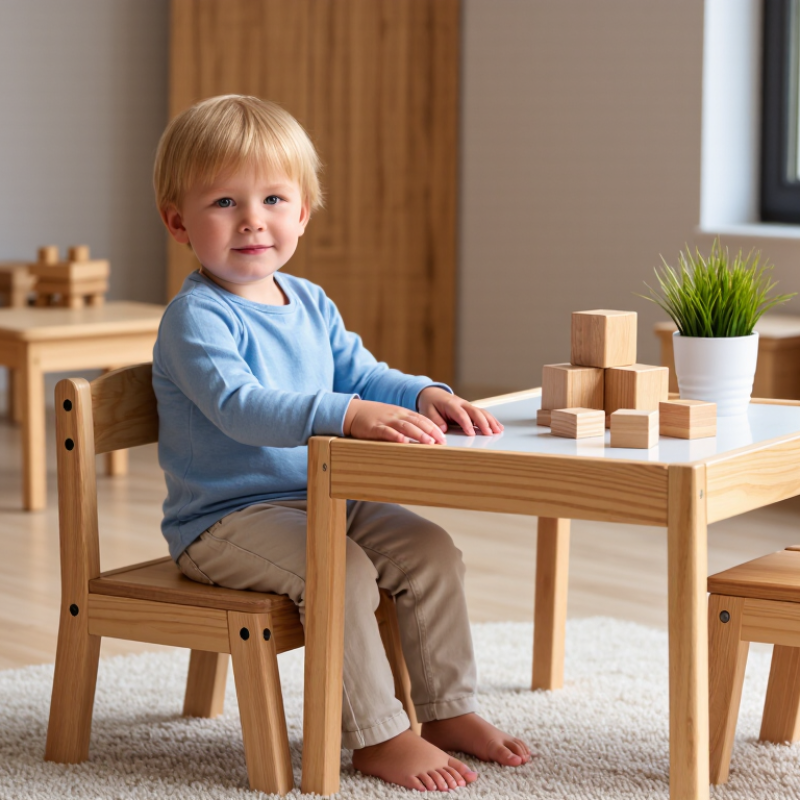
A Montessori low chair is more than a smaller version of an adult seat. Its purpose is to let a child sit down and stand up with less help during everyday activities. At a low table, a child might turn a board-book page, fit puzzle pieces, or draw with a short crayon. The chair supports participation rather than simply keeping a child seated. Small details matter: feet should rest comfortably on the floor, and the seat should not press sharply behind the knees.

Fit depends on the child, not just their age. Before choosing, observe how they approach a chair and get up again. Do they climb awkwardly, slide forward, or steady themselves on the table? These signs can help you judge whether the seat height and shape suit them. Stability matters too; check for wobbling, sharp edges, and a finish that is easy to wipe after spills. Keep the chair on a level surface and stay nearby, especially with a young child.

A low chair cannot create independence by itself. The surrounding space needs to be reachable and calm, with room to move without bumping into shelves. And children vary. A chair that works beautifully at home may feel uncomfortable elsewhere. That is worth remembering. Comfort, safety, and the child’s changing needs should guide the choice more than a perfect-looking setup.

Measuring Your Child and Available Space

How to Choose a Montessori Low Chair in 2026?
Measuring Your Child and Available Space

Measure your child, not just their age. With shoes off, sit them on a firm surface and measure from the floor to the back of the knee. Choose a chair with a seat close to or slightly below that height, so both feet rest flat. Check that the seat is not so deep that its front edge presses behind the knees. A small gap matters. Children grow quickly, and a fit that works today may not work next season.

For a useful comparison, the U.S. National Center for Health Statistics’ 2015–2018 anthropometric report provides child stature percentiles, illustrating how much sizes can vary at the same age. Height alone still cannot determine chair fit; measure your child directly. Then measure the chair’s footprint and leave room to pull it out, turn, and walk past it. A chair that fits beneath a table may still crowd the doorway. I would recheck the layout with the chair in place; floor plans can be misleading.

Tips: Try a short sit before buying. Look for relaxed shoulders, stable feet, and knees that bend comfortably. Measure the table too. If the chair is slightly imperfect, note where it feels awkward rather than assuming your child will adjust.

How to Choose a Montessori Low Chair in 2026? - Measuring Your Child and Available Space

Measure your child and the intended area before shopping. The fit checks below are practical starting points; children’s proportions and chair designs vary, so prioritize a comfortable seated trial whenever possible.

What to Measure How to Measure Useful Fit Check What to Look For
Seat height With your child seated upright, measure from the floor to the crease behind the knee. Keep shoes or usual indoor footwear consistent with how the chair will be used. The child should be able to rest both feet flat on the floor. The seat should not press into the backs of the knees. Compare the chair’s floor-to-seat measurement with your child’s seated leg measurement. Avoid choosing by age alone.
Seat depth Measure from the back of the child’s bottom to the crease behind the knee while seated. When sitting back, leave a small gap—about two to three finger widths—between the seat edge and the back of the knees. A seat that is too deep can make it harder to sit back with feet supported; one that is too shallow may feel unstable.
Seat width Measure across the widest part of the child’s hips while seated. Allow room to sit down and stand up comfortably without the sides pressing against the hips. Check the usable seat width, not just the chair’s outside width. Consider clothing and natural movement.
Table or work-surface height Measure from the floor to the underside and top of the table or activity surface. The child should be able to reach the surface without shrugging the shoulders or leaning far forward. Check the chair and table together. A well-fitting chair may still be uncomfortable with a surface that is too high or low.
Available floor space Measure the intended chair footprint and the clear area in front of it. Leave enough space to pull the chair out, sit down, stand up, and walk around safely. Include nearby walls, shelves, table legs, doors, and the route the child uses to reach the chair.
Storage and carrying space Measure the doorway, storage opening, or shelf where the chair will be moved or kept. Confirm the chair can pass through the route and be stored without blocking exits or walkways. Check the chair’s overall width, depth, and height, including any arms or projecting parts.
Stability and floor surface Place the chair on the floor where it will be used and check that all feet sit evenly. The chair should remain stable during ordinary sitting and standing, without rocking or sliding easily. Use on a level surface and follow the maker’s age, weight, assembly, and supervision guidance.

Quick checklist: Record your child’s measurements in centimetres or inches, then compare them with the chair’s actual seat dimensions. Recheck fit as your child grows, and supervise young children during use.

Evaluating Height, Stability, Materials, and Safety

How to Choose a Montessori Low Chair in 2026?

A good fit starts with the child, not the product label. Measure from the floor to the child’s knee while seated, then compare that height with the chair’s seat. Feet should rest flat, with knees comfortably bent and thighs supported. Check the chair beside the child’s table, too; a seat that fits alone may still leave the tabletop awkwardly high. Too tall gets tiring.

Stability deserves a hands-on check. Set the chair on a level floor and press gently on the seat’s front and back edges. It should not rock or tip easily. Look for secure joints, a broad enough base, and no sharp corners or splinters. I would not treat a heavy chair as automatically safer; shape and construction matter as well.

Materials affect daily care and long-term use. Smooth, well-finished wood can be durable, while lightweight materials may be easier to move but need careful stability checks. Inspect edges and joints regularly, especially after the chair has been dragged across the floor. Check the maker’s care and finish details rather than assuming a surface is child-safe. Small details count.

A low chair still needs supervision, and no single size will suit every growing child.

Comparing Adjustability and Everyday Use

How to Choose a Montessori Low Chair in 2026?

Comparing Adjustability and Everyday Use

A low chair should fit the child, not just the room. The CDC’s stature-for-age charts place median height around 86–87 cm at age two and 95–96 cm at age three. That rapid change makes adjustability useful, especially when a chair will serve through several growth stages. Check that the child can sit with feet supported and knees comfortably bent. A tall seat can turn a simple snack into a constant climb.

Adjustable chairs can extend their useful life, but moving parts need regular checks. Tighten fittings as directed, and make sure the chair stays steady on your floor. A fixed-height chair is simpler to inspect and move between a table and reading corner. It may also be easier for a young child to use independently. In daily use, look for smooth edges, a manageable weight, and a seat that does not slide when the child shifts.

Safety deserves equal attention. ASTM F2613-22 covers consumer safety requirements for children’s chairs and stools; check whether a chair has been tested to this standard. Still, standards cannot tell you whether a particular seat suits your child’s proportions. That takes observation. Watch how the child gets on and off, reaches the table, and sits after a few minutes. The perfect fit will change. So will your routine.

Checking Quality, Care Requirements, and Value in 2026

How to Choose a Montessori Low Chair in 2026?
Checking Quality, Care Requirements, and Value in 2026

A low chair should let a child sit with feet supported and knees comfortably bent. Measure your child’s seated height, then compare it with the chair’s seat height; age labels alone can mislead. Check for a stable base, smooth edges, tight joints, and a finish that does not peel when wiped. ASTM F2613 covers safety requirements for children’s chairs and stools, so ask whether a chair is designed to meet that standard. Details matter.

Care affects value. A sealed surface is usually easier to wipe after paint, crumbs, or a small spill, while unfinished wood may need gentler cleaning and more attention to stains. Follow the maker’s care instructions, and check screws and joints periodically. A chair that can be repaired may serve longer than one with glued parts that cannot be tightened. That is not guaranteed, though.

The U.S. Environmental Protection Agency’s 2018 Advancing Sustainable Materials Management report estimated that furniture made up 12.1 million tons of U.S. municipal solid waste. That broad figure is not specific to children’s chairs, but it makes durability worth considering. Compare construction, repairability, cleaning needs, and the likely years of use—not just the purchase price. A beautiful chair can still be the wrong fit.

Back To Top