
How to Choose the Right Spray Nozzle?

Choosing the right Spray Nozzle is not a simple catalog decision. It is a process decision.

A nozzle shapes droplet size, spray angle, flow rate, coverage, and drift. These details affect product quality, water use, energy demand, and maintenance. Arthur H. Lefebvre, a leading authority on atomization, wrote, “Atomization is the conversion of a bulk liquid into a spray of droplets.” His explanation remains practical: nozzle selection begins with understanding the droplets required by the application.

Recent industry research supports this view. Grand View Research’s Spray Nozzle Market Size, Share & Trends Analysis Report identifies agriculture, industrial processing, and cleaning as major application areas. MarketsandMarkets also highlights pressure, flow control, material durability, and automation as important market drivers. However, market reports often use different definitions and forecast periods. Their figures should guide research, not replace testing.

Experience matters here.

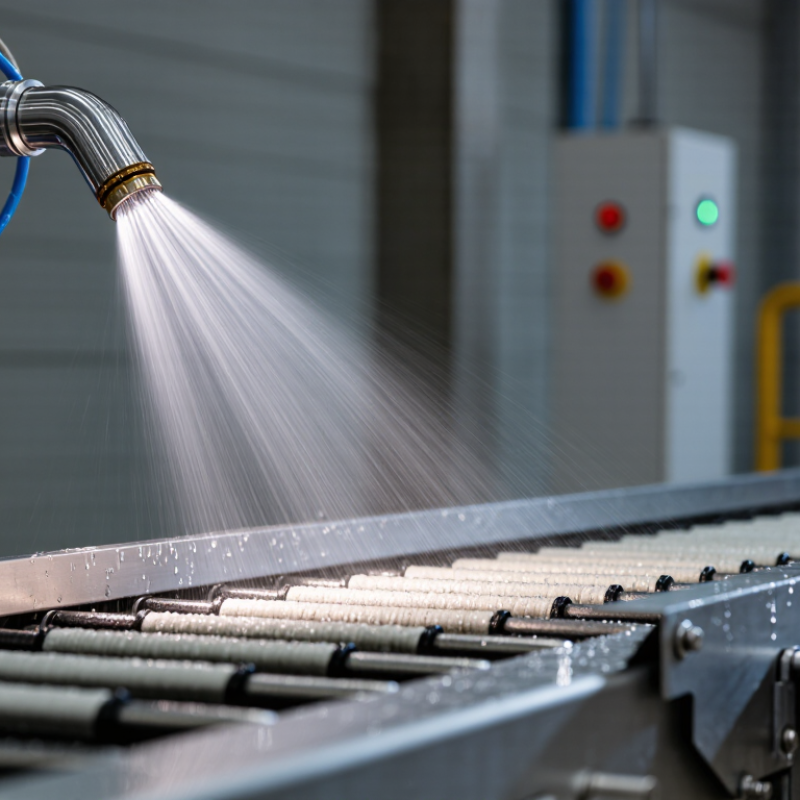
A nozzle that performs well on a test bench may struggle with hard water, abrasive particles, unstable pressure, or changing temperatures. Imagine a stainless-steel nozzle spraying a narrow fan across a moving conveyor. A small pressure change can create uneven coverage, visible striping, and wasted liquid.

This guide compares nozzle types, materials, spray patterns, and operating conditions. It also considers maintenance, safety, and total operating cost. The “best” nozzle may not be the most expensive one. It may be the model that delivers stable performance after months of real use.

That conclusion deserves testing.

Measure flow rate. Check spray distribution. Inspect wear. Then question the result.
How to Choose the Right Spray Nozzle?

Identify the Spraying Task and Required Performance

Choosing a spray nozzle starts with the task, not the nozzle shape. Define the required result: coating, cleaning, cooling, rinsing, or controlled application. Each task needs a specific coverage pattern, droplet size, impact level, and flow rate. A narrow stream can deliver strong cleaning force. A fine mist can cover a wide surface. Fine mist works differently.

Measure the liquid’s viscosity, temperature, solids content, and sensitivity to shear. These details affect atomization and blockage risk. I once selected a nozzle by pressure alone. The spray looked acceptable, but coverage became uneven after several minutes. That experience taught me to check flow rate and liquid behavior together. Confirm that the pump can maintain the required pressure during continuous operation. Too little pressure may produce large droplets and weak coverage. Excessive pressure can create unwanted mist and accelerate wear.

Test the nozzle at the real distance, angle, speed, and temperature. Watch the edges of the spray pattern, not only its center. Small changes matter. Compare actual output with the process target, then record pressure, flow, and coverage results. A simple collection test can reveal performance differences that visual inspection misses. I still allow room for adjustment, because field conditions rarely match laboratory assumptions perfectly. If the pattern changes during testing, inspect filtration, liquid temperature, and nozzle wear before changing the nozzle size.

Match Nozzle Type to Spray Pattern and Coverage Needs

Choosing a spray nozzle starts with the coverage you need, not the nozzle’s appearance. A flat-fan nozzle creates a broad, even strip for overlapping passes. A full-cone nozzle delivers a round pattern with stronger central coverage. Hollow-cone models produce fine droplets around an open center, which can suit cooling or light coating tasks. Pattern comes first.

I usually compare the target surface, liquid thickness, operating pressure, and desired flow rate. A narrow angle concentrates liquid and may reach difficult areas, but it can leave stripes when the spacing is wrong. A wider angle covers more surface with fewer passes. That sounds efficient. However, excessive width can reduce impact and create thin edges. Hold the nozzle at a consistent height, then overlap each pass according to the pattern’s tested edge coverage.

A simple spray test reveals more than a catalog chart. Spray onto cardboard or a clean test panel, then inspect the wet shape, edge density, and droplet size. Test it wet. Adjust pressure carefully, because higher pressure may create finer droplets but can increase drift and wear. Viscous liquids may need a larger orifice, while low-viscosity liquids can overapply through an oversized opening. I once judged coverage by the center alone and missed weak edges. That mistake reminded me to measure the full pattern, not just its brightest area. Check worn tips regularly, since small changes can alter flow and coverage.

Select Flow Rate, Pressure, and Droplet Size

How to Choose the Right Spray Nozzle?

Select Flow Rate, Pressure, and Droplet Size

Flow Rate

Choosing a spray nozzle starts with the required flow rate. Flow rate controls how much liquid reaches each target area. Check the application rate, travel speed, and nozzle spacing before selecting an orifice. A simple collection test can reveal more than a chart. Place containers under several nozzles for one minute. Measure each sample carefully. Uneven volumes often indicate wear, blockage, or unstable pressure.

Pressure

Pressure changes both flow and droplet size. When pressure rises, flow usually increases, but not in a straight line. It also creates finer droplets, which may drift more easily. Use a calibrated gauge near the nozzle body. Read pressure while spraying, not while the system is idle. I have seen operators trust the pump setting, only to find a significant pressure loss through the plumbing.

Droplet Size

Droplet size must match the target and surrounding conditions. Fine droplets can cover small surfaces evenly. Medium droplets usually offer a practical balance. Coarse droplets resist wind better, but may leave less uniform coverage. Liquid temperature and viscosity can also alter the spray pattern. Do not select a nozzle from flow rate alone. Test the pattern at working pressure and inspect the edges for gaps. The first choice may be wrong. A short field trial can expose that mistake before it affects an entire application.

Check Material Compatibility and Operating Conditions

How to Choose the Right Spray Nozzle?

Check Material Compatibility and Operating Conditions

Material compatibility should guide every nozzle decision. A nozzle exposed to aggressive chemicals may crack, swell, or lose its spray pattern. Stainless steel suits many applications, while ceramic can handle severe abrasion. Plastic options may perform well with certain chemicals and lower temperatures. Always compare the liquid’s composition, concentration, and temperature with verified compatibility data.

Operating conditions matter just as much. Check pressure, flow rate, viscosity, and required droplet size before choosing a design. A nozzle that works at 3 bar may perform poorly at 8 bar. Excessive pressure can create mist, waste liquid, and increase wear. In field testing, blocked passages often result from overlooked viscosity or suspended particles. The selection looked correct on paper, but the process was not.

Tips: Test a small sample first. Observe the spray pattern for several minutes. Record pressure, flow, temperature, and visible wear. Clean the nozzle after testing. Fit matters. Also inspect seals and connections, because the nozzle material may be compatible while the seal fails. Recheck performance after real operating cycles, not only during a brief trial. No chart replaces practical testing.

Evaluate Maintenance, Replacement, and Total Cost

How to Choose the Right Spray Nozzle?

Evaluate Maintenance, Replacement, and Total Cost

Choosing a spray nozzle requires more than matching spray angle and flow rate. Maintenance can determine whether the nozzle performs reliably after installation. In field inspections, I check for clogging, uneven patterns, pressure changes, and difficult access. A nozzle that requires frequent removal can increase labor costs quickly. Small details matter.

Select materials that suit the liquid, temperature, and operating pressure. Fine filtration may reduce blockage, but it also needs regular cleaning. Keep a simple maintenance record. Note cleaning dates, pressure readings, spray quality, and visible wear. A two-minute inspection can reveal a damaged or partially blocked orifice. Do not trust appearance alone. Performance data is stronger evidence.

Replacement planning should include spare parts, delivery time, and production downtime. Worn nozzles may use excess liquid while producing weaker coverage. That creates hidden costs through waste, rework, and inconsistent results. Compare purchase price with labor, energy, fluid use, and replacement frequency. My early estimates focused too much on the unit price. That assumption was wrong. Verify performance claims with technical datasheets and controlled tests. Measure actual flow before approving a large order. Real conditions can expose problems that calculations miss.

Back To Top