
Choosing a dependable supplier is about more than comparing prices or browsing a polished catalog. Work gloves must suit the task, fit comfortably, and hold up under real working conditions. A coated palm, reinforced thumb seam, or breathable liner can make a noticeable difference during a long shift. Details matter.
Reliable Work Glove Manufacturers should be able to explain their materials, construction methods, quality checks, and product limitations in clear terms. Ask how they test grip, abrasion resistance, sizing consistency, and seam strength. Request samples and examine them closely: stretch the cuff, inspect the stitching, and compare several pairs for consistency. One sample is useful, but it cannot show every production variation.
Look for relevant test reports and certifications, checking that they apply to the specific glove and intended market. A supplier’s production capacity, lead times, and response to technical questions also deserve attention. A quick reply is reassuring, though it is not proof of reliable quality. That takes patience. In practice, buyers may need to compare samples, documents, and communication side by side before making a decision. Some details can remain uncertain until an order is produced, so clear specifications and agreed inspection steps help reduce surprises. This guide outlines practical ways to assess manufacturers, ask sharper questions, and choose a supplier with evidence rather than promises.
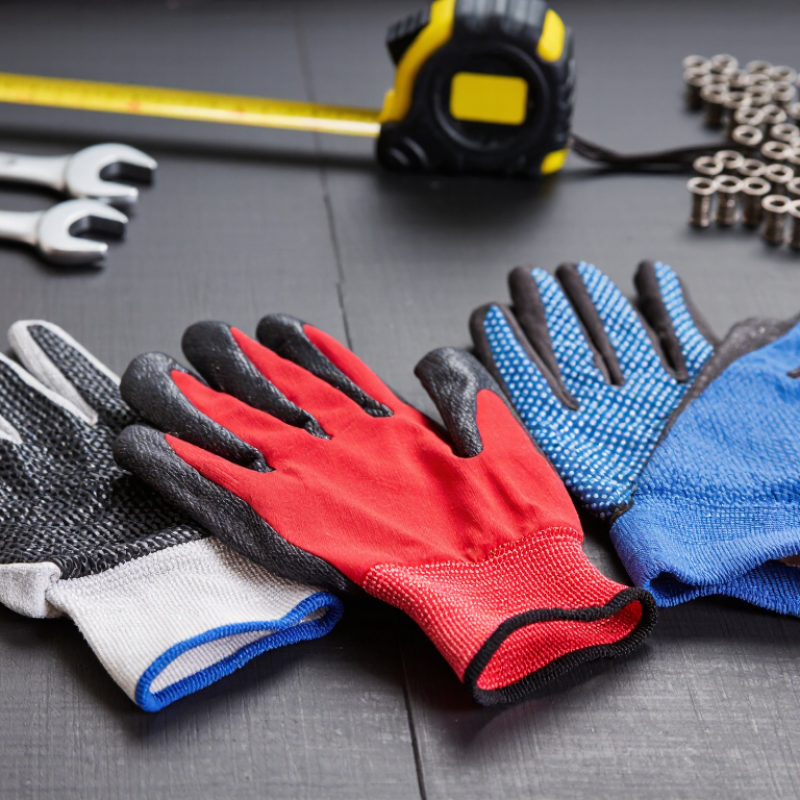
Start with the sharp edge, not the glove catalogue. A carton knife, stamped sheet metal, and glass present different cut hazards. The U.S. Bureau of Labor Statistics reported 2.6 million nonfatal workplace injuries and illnesses in private industry in 2023. That figure covers many injury types, not cuts alone, so assess the actual task and exposure.
ANSI/ISEA 105-2016 rates cut resistance from A1 to A9 using ASTM F2992 test results. A1 represents 200–499 grams of force; A4, 1,500–2,199; A6, 3,000–3,999; and A9, 6,000 or more. These are laboratory ratings, not promises against every blade or cutting motion. That distinction matters. A higher level may reduce dexterity, making small fasteners harder to handle. I would question any recommendation based only on the highest number.
Ask manufacturers for current, traceable test reports showing the standard, cut level, and glove model. Then trial the glove on the real task: note whether workers can grip oily parts, maintain control, and replace damaged pairs promptly. Check other hazards too. Cut resistance does not establish protection from punctures, heat, or chemicals. A neat specification sheet helps, but it cannot replace a fit and task review.
| ANSI/ISEA 105 Cut Level | TDM Cut-Force Range | Illustrative Job Hazards and Tasks | What to Verify with a Manufacturer |
|---|---|---|---|
| A1 | 200–499 g | Light handling with occasional contact with mildly sharp edges, such as general assembly or packaging. | Request test results for the exact glove model and confirm that the tested construction matches the supplied glove. |
| A2 | 500–999 g | Routine handling of components with somewhat sharper edges, such as light-duty warehouse or parts work. | Ask for the standard and test method used, the test date, and the report identifying the glove model and tested material. |
| A3 | 1,000–1,499 g | Moderate cut exposure during tasks such as handling sheet materials or parts with exposed edges. | Check that the report covers the palm and any other areas relied upon for protection; confirm sizes and construction are consistent. |
| A4 | 1,500–2,199 g | Frequent handling of sharp-edged materials, including some metal fabrication or glass-handling tasks. | Request a complete test report from a competent laboratory and ask how production checks are linked to the tested specification. |
| A5 | 2,200–2,999 g | Higher cut exposure when regularly handling sharp sheet stock, glass, or components with pronounced edges. | Verify the exact model, materials, coating, and design in the report; ask how changes to these are reviewed and retested. |
| A6 | 3,000–3,999 g | Substantial cut exposure in tasks involving sharp metal, glass, or other materials where cuts are a foreseeable risk. | Ask for traceable test documentation and written quality-control procedures for incoming materials and finished gloves. |
| A7 | 4,000–4,999 g | Very high cut exposure, such as some demanding metal-processing or sharp-material handling operations. | Confirm that the reported level applies to the glove as supplied, not merely to a fiber or material sample, and request lot identification. |
| A8 | 5,000–5,999 g | Extremely high cut exposure in selected applications with severe sharp-edge hazards. | Review current, model-specific test evidence and ask how the manufacturer controls production variation across batches and sizes. |
| A9 | 6,000 g or more | Highest cut-resistance classification in this scale; may be considered for exceptionally severe cut hazards after a full risk assessment. | Require clear, traceable test documentation for the supplied design and evaluate dexterity, fit, durability, and task suitability alongside the rating. |
The force ranges shown are ANSI/ISEA 105 cut-level bands measured using the TDM cut test. Task examples are general guidance, not prescribed level assignments: conduct a workplace risk assessment before selecting gloves. Cut resistance does not establish protection against punctures, impacts, chemicals, heat, or all types of blade contact. When comparing manufacturers, check that test reports identify the exact glove model and construction, and ask about production traceability and quality controls.