How to Source Quality Clogs Shoes Worldwide?
Sourcing quality Clogs Shoes worldwide requires more than comparing prices on a supplier platform. Buyers need a repeatable process that connects materials, factory capability, product safety, and delivery performance. A reliable sourcing journey usually begins with a clear specification sheet. Include sole density, upper material, heel height, sizing tolerance, color standards, packaging details, and expected order volume. Small details matter. A loose strap can create returns. An uneven footbed can damage customer trust.
Experienced buyers inspect supplier records, production samples, and quality-control procedures before placing large orders. Request recent factory photographs, business credentials, material declarations, and independent test reports where appropriate. A video call can reveal useful details, such as crowded workstations or inconsistent storage. However, remote checks have limits. They are helpful, not perfect. An in-person audit or trusted third-party inspection may provide stronger evidence before shipment.
Quality should be tested at several stages. Check stitching, bonding, odor, flexibility, weight, surface finish, and carton strength. Compare the approved sample with random production pairs. Record defects with photographs and measurable descriptions. Do not rely on verbal promises alone. A written agreement should define inspection standards, acceptable defect levels, lead times, payment milestones, and corrective actions. Logistics also deserve attention, including moisture protection and realistic transit buffers. Even a well-made pair can arrive damaged. That part is often underestimated.
This guide explains how to evaluate international suppliers, control product quality, reduce sourcing risks, and build dependable partnerships. It also examines common mistakes, because no sourcing method is flawless.
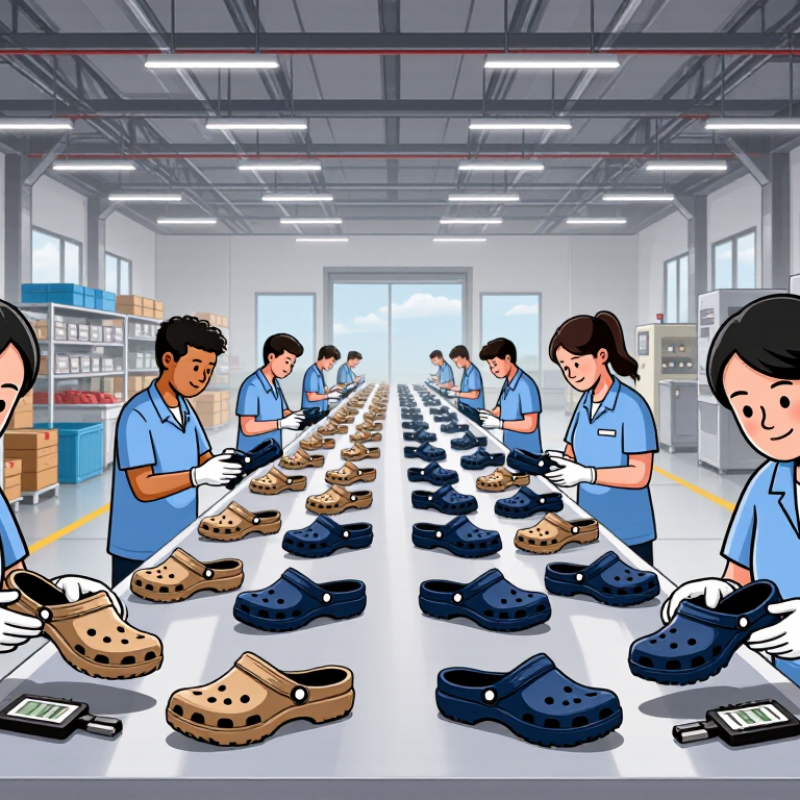
Understanding Clogs Shoes and Their Key Quality Indicators
Clogs shoes combine a roomy upper, a structured sole, and easy slip-on comfort. Quality begins with the materials, not the product photos. Full-grain leather should feel supple, while responsibly sourced textile uppers need even weaving and clean edges. Smell the material. An intense chemical odor can signal poor finishing, although odor alone is not proof. Wooden or molded footbeds should support the arch without creating hard pressure points.
During supplier evaluation, I request samples in multiple sizes and wear them on concrete, tile, and stairs. That practical test reveals loose straps, noisy soles, uneven balance, and weak bonding. Stitching should be tight and regular, with no skipped threads around stress areas. The outsole needs dependable grip, especially when the tread meets wet flooring. Flex the sole carefully. If it bends too easily, long-term stability may suffer. Yet an extremely rigid sole can cause discomfort.
Reliable suppliers provide measurable specifications, inspection records, material details, and consistent sizing data. I compare every sample with the approved specification before discussing larger orders. Small differences matter. One supplier once sent attractive samples, but later pairs showed rough edges and uneven dye. That mistake taught me to inspect production pairs, not only the first sample. Independent testing can check abrasion, slip resistance, color transfer, and component safety where required. Quality is rarely perfect. Clear communication and repeat inspections make weaknesses visible before they become customer complaints.
Defining Sourcing Goals, Specifications, and Target Markets
Sourcing quality clogs shoes worldwide starts with a clear purchasing goal. Decide whether you need everyday comfort, work durability, or seasonal fashion appeal. Define the target market before contacting suppliers. Customers in warm regions may prefer ventilated uppers, while colder markets may value lined interiors. These assumptions need checking.
Write measurable specifications. Include upper material, outsole hardness, heel height, footbed shape, color tolerance, and size range. For example, request a lightweight clog with a 25-millimeter heel and a slip-resistant outsole. Confirm packaging, labeling, and applicable product requirements for each destination. Quality should be documented, not promised.
Tips: Ask for several samples from different production batches. Walk in them for a full day. Check pressure points, odor, stitching, outsole bonding, and noise on smooth floors. Request material information and inspection records. A factory photograph cannot prove long-term comfort. Small details matter.
Keep a target landed cost, minimum order quantity, and delivery window beside your specifications. A low unit price may become expensive after inspections, freight, or returns. Use a written scorecard for comfort, appearance, durability, and communication speed. I have seen sourcing teams reject a strong sample because the size grading was inconsistent. That mistake is easy to miss. It is also expensive. Review the specification after customer feedback, because the first version will rarely be perfect.
Finding and Screening Reliable Clogs Shoe Manufacturers
Finding reliable clogs shoe manufacturers requires more than comparing catalog prices. The World Footwear Yearbook 2024 reports that global footwear production reached about 23.9 billion pairs in 2023, with Asia producing roughly 87% of the total. This concentration offers sourcing depth, but it also creates uneven factory quality. Shortlist manufacturers with proven clogs experience, stable export records, and documented production capacity. Request business licenses, factory addresses, audit reports, and recent shipment references. Verify each detail independently.
Ask for physical samples, not only polished photographs. Inspect the clog’s upper, footbed, outsole bonding, heel stability, and odor after storage. Measure several pairs from the same batch. Small differences can expose weak process control.
For molded materials, request test results for flexing, abrasion, slip resistance, colorfastness, and restricted substances. ISO 20344 provides recognized methods for testing footwear performance, although not every clog needs certified protective-footwear status. Clarify which tests match the intended market.
A dependable supplier should explain its material sources, mold maintenance, inspection points, and corrective-action process. Bureau Veritas’ consumer-products guidance emphasizes traceability and risk-based testing, useful principles for footwear screening. Ask how defects are recorded before shipment. Can the factory show dated inspection photos? Can it repeat the sample specification during mass production?
A pre-production meeting helps, but it is not proof. I once underestimated packaging compression; the shoes arrived with distorted straps. That mistake reminded me to test carton stacking and humidity conditions, not just product appearance.
Keep payment milestones linked to approved samples and independent pre-shipment inspection. Loose promises are not evidence.
Evaluating Materials, Craftsmanship, Testing, and Compliance
Sourcing quality clogs worldwide starts with evidence, not attractive samples. Ask suppliers to identify every material: upper, footbed, outsole, adhesive, lining, and packaging. Material choice affects comfort, odor, flex, repairability, and disposal. Textile Exchange’s Materials Market Report 2024 reported polyester at roughly 57% of global fiber production in 2023. This is not a footwear verdict. It is a warning to question synthetic-heavy designs. For leather, request thickness records, finish details, origin documentation, and restricted-substance tests. For EVA or rubber, inspect density consistency and compression-set performance across several production batches. Small cracks matter.
Craftsmanship needs measurable checks. Compare left-right weight, footbed alignment, edge finishing, bonding width, seam tension, and heel stability. The World Footwear Yearbook 2024 reported that Asia produced 87.4% of global footwear in 2023. This concentration makes supplier control and batch traceability essential. Use a pre-shipment plan covering AQL limits, carton drops, flexing, abrasion, slip resistance, and colorfastness. An independent ISO/IEC 17025-accredited laboratory should verify chemicals and physical performance. Check destination-market requirements for labeling, packaging, chemical restrictions, and children’s products. “Compliant” is not universal. Requirements vary. A checklist can still miss production drift, especially after a material substitution. Ask for change-notification procedures, then repeat critical tests when specifications change.
Managing Samples, Orders, Quality Control, and Global Shipping
Sourcing quality clogs worldwide starts with a controlled sample process, not a low factory quote. Request material swatches, outsole drawings, size grading, and factory photos before approving prototypes. A useful sample should show more than appearance. Walk in it. Check heel stability, toe room, strap strength, odor, and surface consistency. Record measurements in millimeters and photograph each defect. Keep one approved sample sealed for later comparison. It feels slow, but unclear samples create expensive arguments.
When placing an order, convert the sample into a measurable specification sheet. Include colors, tolerances, carton dimensions, pair counts, labeling, and acceptable defect limits. Confirm production capacity and payment milestones in writing. During production, inspect raw materials, first-off pairs, and packed cartons. A third-party inspection can verify random pairs, sizing, stitching, bonding, and moisture protection. Do not rely only on final photos. Pictures can hide uneven soles. I once accepted a visually clean batch too quickly; several pairs later showed loose footbeds. That mistake changed my inspection checklist.
Global shipping needs the same discipline. Confirm the commercial invoice, packing list, product description, origin details, and transport terms before dispatch. Use packaging that prevents crushed uppers and trapped moisture during long sea routes. Compare air, sea, and rail options against urgency and landed cost. Track carton counts at handover and request loading evidence. Build time for customs questions and port delays. Perfect planning is impossible. Clear records make corrections faster.