
What Is an Ion Tester and How Does It Work?

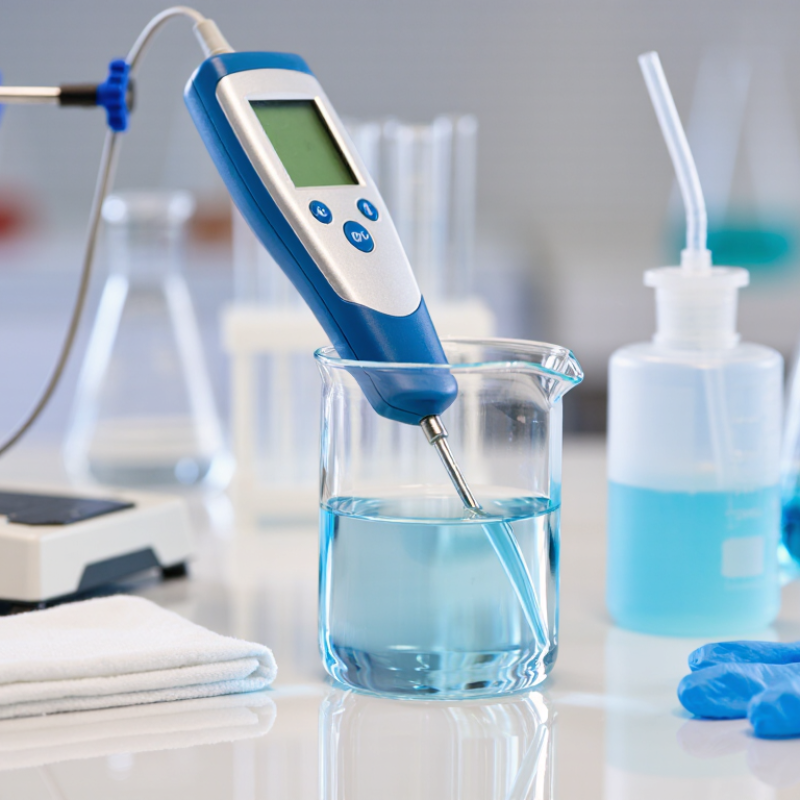
When a liquid behaves unpredictably, an Ion Tester can provide a useful first look at its ionic condition. This device measures electrical conductivity caused by dissolved ions. A sensor touches the sample, applies a controlled electrical signal, and records how easily current moves through the liquid. The result may appear as conductivity, total dissolved solids, or another related value.

The basic process sounds simple, but accurate testing requires care. Temperature can change conductivity significantly, so many modern testers include automatic temperature compensation. Clean probes also matter. A thin residue from a previous sample may distort the next reading. In practical use, I would rinse the probe with clean water, gently dry it, and wait for the display to stabilize before recording the value.

Small details matter.

An Ion Tester is useful in water treatment, aquaculture, laboratories, hydroponics, and routine quality checks. However, it does not identify every substance in a sample. Two liquids can show similar conductivity while containing different ions. This limitation is easy to overlook. Reliable interpretation depends on calibration, suitable reference solutions, proper storage, and comparison with established testing methods. Manufacturers provide technical specifications, yet real-world handling still affects performance. Understanding both the instrument and its limitations creates more trustworthy results. This article explains the sensor, measurement process, calibration steps, and practical factors that can influence readings.
What Is an Ion Tester and How Does It Work?

What Is an Ion Tester?

What Is an Ion Tester and How Does It Work?

What Is an Ion Tester?

An ion tester is a handheld instrument that measures charged particles in air. It typically detects positive and negative ions, then displays their concentration, polarity, or electrical balance. In controlled environments, it may also assess ionizer decay time and offset voltage. These readings help technicians check whether an ionization system neutralizes static charge effectively.

The sensor usually responds to airflow carrying charged particles across an electric field. A processor converts that signal into a numerical reading. Some models include a small fan, while others depend on natural airflow. Measurement distance matters. So does humidity. A reading taken beside a running vent may differ sharply from one taken at a workbench.

ANSI/ESD S3.1 identifies ionizer test methods involving discharge time and offset voltage for static-control applications. This gives technicians a practical reference, but one measurement cannot describe an entire room.

The U.S. Environmental Protection Agency reports that indoor pollutant levels can be two to five times higher than outdoor levels, while the World Health Organization’s 2021 guidelines set an annual PM2.5 guideline of 5 µg/m³. An ion tester does not measure PM2.5. That distinction is easy to miss.

Use the tester at fixed points, record humidity, and repeat readings after equipment warms up. Clean sensors carefully. Small errors matter. In practice, the display may look precise, yet airflow, calibration, and operator position can distort the result. A sensible report should show the method, not just the number.

Key Components and Measurement Principles

What Is an Ion Tester and How Does It Work?

Key Components and Measurement Principles

An ion tester is a portable instrument for estimating a specific ion in water or another liquid. It uses an ion-selective electrode to detect chemical activity, not simply the liquid’s appearance. The main components include a sensing membrane, a reference electrode, a high-impedance meter, and a display. Some models also include temperature sensors and automatic calibration functions. Each part affects the final reading.

The sensing membrane responds mainly to the target ion. For example, a membrane designed for fluoride should respond differently from one designed for nitrate. The reference electrode provides a stable electrical potential. The meter measures the voltage difference between both electrodes. It then applies the Nernst relationship to convert that voltage into an estimated concentration. This conversion is not magic. It depends on calibration, temperature, sample condition, and electrode cleanliness.

Before testing, users should rinse the sensor with suitable water and remove visible droplets gently. Calibration normally uses standard solutions with known concentrations. A single-point calibration may be convenient, but multiple points often reveal slope errors. Temperature compensation helps, though it cannot correct every chemical interference. A clean-looking number can still be wrong. Dirty membranes, expired standards, air bubbles, or poor mixing may distort results. In practical work, repeating a measurement and checking the calibration record is worthwhile. I have found that rushing this step creates more doubt than the test itself. Even careful users should question unusually stable or unusually sudden readings.

How an Ion Tester Works Step by Step

What Is an Ion Tester and How Does It Work?

An ion tester measures charged particles in air or on a surface. It may detect positive ions, negative ions, or both. Some models also show electric field strength, voltage, or particle concentration. The exact reading depends on the sensor design and measurement range. In practical testing, the device helps technicians check whether an ion source is active and producing a measurable effect.

How an Ion Tester Works Step by Step

The process begins with checking the tester’s battery, sensor opening, and measurement mode. A zero adjustment may remove background readings from the surrounding air. The tester is then placed at a fixed distance from the target. Distance matters. The sensor detects electrical changes and converts them into a number on the display. After several seconds, the reading should become more stable. A careful operator records the result, changes the distance, and repeats the measurement. If the values change sharply, airflow, humidity, or nearby electrical equipment may be influencing the test.

Tips: Keep the sensor clean and avoid touching its opening. Test in a calm room, away from fans and strong cables. Compare several readings instead of trusting one number. One imperfect habit is accepting the first stable result too quickly. Testing conditions are rarely perfect, so notes about distance, temperature, and humidity make the data more reliable.

Common Types of Ion Testers

What Is an Ion Tester and How Does It Work?

Common Types of Ion Testers

An ion tester measures charged particles or static conditions in a controlled area. Technicians use it to check whether an ionizer reduces unwanted electrical charge. The instrument usually detects positive and negative ions near a test point. Some models also measure voltage, discharge time, and ion balance. Results can change with distance, airflow, humidity, and nearby equipment.

A charge plate monitor is common in electronics workspaces. It uses a metal plate with a known electrical charge. The tester records how quickly ionized air neutralizes that charge. A faster decay time often indicates stronger static control. An ion balance tester checks whether positive and negative ions remain reasonably even. Excessive imbalance may create a new charge instead of removing one. This detail is easy to overlook.

A static field meter measures electrical fields on surfaces and materials. It helps locate charged packaging, workbenches, clothing, or tools. Some technicians also use handheld ion detectors for quick checks around air outlets. These devices are convenient, but their readings may be affected by hand position and nearby metal. No tester tells the whole story. For dependable results, follow a fixed test distance, allow the instrument to stabilize, and record environmental conditions. Regular calibration matters. In practice, repeating the test is wise, because one clean reading can still be misleading.

What Is an Ion Tester and How Does It Work? - Common Types of Ion Testers

Ion Tester Type How It Works Common Ions or Parameters Typical Measurement Range Main Advantages Key Limitations
Ion-Selective Electrode Meter Uses an ion-selective membrane that develops a potential related to the activity of a target ion. The meter converts this electrical signal into concentration after calibration. Fluoride, chloride, nitrate, ammonium, calcium, potassium, sodium, hydrogen ions, and other selected ions. Often from low milligram-per-liter levels to grams per liter, depending on the electrode, sample matrix, and calibration method. Portable options are available; direct measurements can be relatively fast; suitable for field and laboratory testing. Requires correct calibration, conditioning, temperature control, and maintenance. Interfering ions and high ionic strength can affect results.
pH Meter Measures the potential difference between a glass electrode and a reference electrode. The signal is related to hydrogen-ion activity and is displayed as pH. Hydrogen ions in aqueous solutions. Commonly pH 0 to 14, although specialized electrodes may cover a narrower or wider usable range. Fast, widely used, and useful for water treatment, laboratories, agriculture, food processing, and environmental testing. The electrode must remain properly hydrated and clean. Temperature and sample composition influence the reading.
Ion Test Strip A chemical reagent on the strip reacts with a target ion and changes color. The color is compared with a printed reference scale or read by an optical device. Nitrate, nitrite, chloride, hardness-related ions, ammonium, phosphate, and other test-specific analytes. Usually designed for screening ranges, commonly from low parts-per-million levels to several hundred or thousand milligrams per liter. Low cost, lightweight, simple to use, and requires little equipment or training. Visual color matching is less precise than instrumental analysis. Shelf life, lighting, timing, and sample color can affect results.
Colorimetric Ion Tester A reagent forms a colored compound with the target ion. The instrument measures absorbance or color intensity and calculates concentration using a calibration relationship. Ammonium, phosphate, iron, copper, nitrate, residual chlorine, and other reagent-compatible analytes. Commonly covers low microgram-per-liter to milligram-per-liter concentrations, depending on the chemistry and optical path. More objective and often more sensitive than visual test strips; useful for routine water analysis. Reagents have expiration dates. Turbidity, sample color, reaction time, and incorrect dosing can cause errors.
Ion Chromatograph Separates ions in a chromatography column and detects them, commonly through conductivity after suppression or through another selective detector. Fluoride, chloride, bromide, nitrate, sulfate, phosphate, lithium, sodium, ammonium, potassium, magnesium, and calcium. Frequently used from low microgram-per-liter levels to tens or hundreds of milligrams per liter, depending on the method and dilution. Can identify and quantify multiple ions in one run with strong selectivity and sensitivity. Higher purchase and operating cost; requires trained operators, controlled methods, clean eluent, and regular maintenance.
Conductivity or TDS Tester Applies an electrical signal between electrodes and measures how readily the solution conducts electricity. TDS is estimated from conductivity using a conversion factor. Total dissolved ionic material rather than a specific ion; temperature-compensated conductivity and estimated total dissolved solids. Conductivity may span approximately 0.05 microsiemens per centimeter to hundreds of millisiemens per centimeter, depending on the instrument. Very fast and convenient for checking water purity, rinsing quality, and changes in dissolved ionic content. Cannot identify individual ions. TDS values are estimates and depend on the selected conversion factor and solution composition.
Static Ion Balance Tester Measures electrostatic voltage, decay time, or ion balance near a surface. Some models use an internal sensor or a controlled ion source to evaluate charge neutralization. Positive and negative air ions, surface voltage, charge decay, and ionizer balance. Voltage ranges commonly extend from a few volts to several kilovolts; ion balance is often reported in volts and decay in seconds. Useful for evaluating electrostatic discharge risks in electronics manufacturing, cleanrooms, and material-handling areas. Readings depend strongly on distance, airflow, humidity, grounding, and measurement geometry. It does not measure dissolved ions in water.

Important: An ion tester is selected according to the sample and the required result. Ion-selective and colorimetric instruments target specific ions, conductivity testers estimate the total ionic content, and static ion testers evaluate electrical charge in air or on surfaces.

Applications, Accuracy, and Limitations

What Is an Ion Tester and How Does It Work?

Applications, Accuracy, and Limitations

An ion tester detects and measures charged particles in air, water, or a surface sample. Its exact method depends on the instrument type. Some meters count airborne positive and negative ions, while others use selective electrodes to estimate a specific ion in liquid. Inside the device, a sensor receives the sample and produces an electrical signal. The meter then converts that signal into a reading, often shown as ions per cubic centimeter, concentration, or voltage. The display looks simple. The measurement is not.

Ion testers support practical checks in laboratories, water treatment, manufacturing, and electrostatic control. Technicians may use them to compare readings near ventilation outlets or inspect a liquid sample after preparation. Accuracy depends on calibration, temperature, humidity, airflow, and sensor condition. Nearby electrical fields can also disturb results. A reading may change when a window opens. That does not always mean the instrument failed. It may reveal a real environmental change, or a limitation in the test setup. Results should be compared with certified standards and repeated under controlled conditions.

Tips: Read the operating range before testing. Calibrate as instructed, and record temperature and humidity. Keep sensors clean and allow readings to stabilize. Take several measurements from the same position. Do not treat one number as absolute truth. I have found that careless sampling often creates larger errors than the meter itself. When results seem unusual, check the sample, wiring, airflow, and calibration record before drawing conclusions.

Article Source:

Back To Top