Top Ceramic Chips Manufacturers and Suppliers Worldwide
Choosing the right Ceramic Chips manufacturer requires more than comparing product photographs or headline prices. Buyers must examine material composition, dimensional tolerance, electrical performance, packaging quality, and production consistency. These details influence reliability inside circuit boards, sensors, power modules, and demanding industrial equipment.
This guide reviews leading Ceramic Chips manufacturers and suppliers worldwide through practical procurement criteria. It considers manufacturing experience, testing capability, certifications, customization support, minimum order quantities, delivery performance, and technical communication. A supplier may offer excellent samples but struggle with volume production. That difference matters.
Ceramic chips can vary significantly in alumina content, dielectric behavior, thermal resistance, and surface finish. Engineers should request datasheets, inspection reports, and representative samples before approving a supplier. Factory audits can also reveal useful details, including cleanroom controls, calibration practices, storage conditions, and traceability systems. Small inconsistencies often appear during this stage.
No list is perfect. Supplier rankings change with technology, capacity, regional demand, and customer requirements. Some companies excel in standard components, while others perform better with custom geometries or high-temperature applications. This overview therefore avoids treating one manufacturer as universally superior. Instead, it offers a structured starting point for technical buyers, distributors, and project teams.
The strongest suppliers usually communicate clearly when specifications are incomplete. That is a valuable sign of professional judgment. Buyers should still verify every claim independently. A careful comparison can reduce qualification delays, prevent costly redesigns, and support stable long-term sourcing. Industry reputation helps, but documented performance remains more dependable.
Ceramic Chips: Definition, Types, and Key Applications
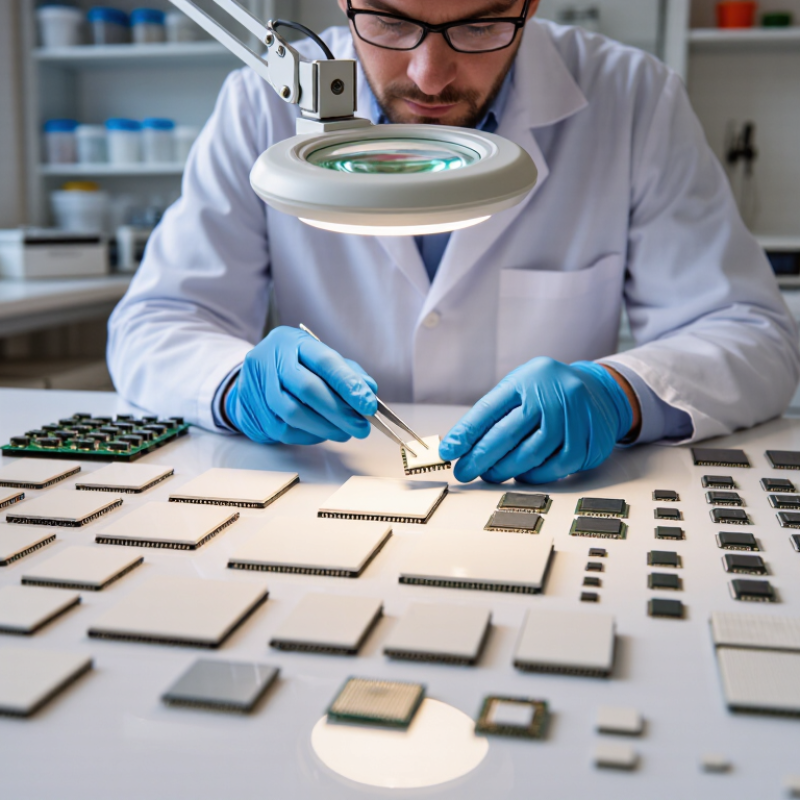
Ceramic chips are compact electronic components or semiconductor packages built with ceramic bodies, substrates, or insulating layers. Unlike silicon dies, they often use alumina, aluminum nitride, or low-temperature co-fired ceramic materials. These materials tolerate heat, moisture, and electrical stress. A ceramic chip may contain a resistor, capacitor, sensor circuit, or power device. The term is broad, and that can create confusion.
Common types include ceramic chip capacitors, chip resistors, multilayer ceramic substrates, and high-temperature ceramic packages. Alumina offers reliable insulation at controlled cost. Aluminum nitride provides stronger thermal conductivity for power electronics. LTCC and HTCC structures support dense wiring inside compact modules. According to MarketsandMarkets, the ceramic substrates market is projected to grow from about USD 7.6 billion in 2023 to USD 12.6 billion by 2028. That equals a reported compound annual growth rate near 10%. The figure is useful, but forecasts can shift with vehicle production and semiconductor investment.
Key applications include automotive control units, 5G radio modules, industrial sensors, medical instruments, and renewable-energy inverters. Ceramic chips help manage heat in narrow spaces, especially near motors and power converters. In practice, engineers inspect thermal cycling, solder strength, warpage, and insulation resistance before approval. Grand View Research reports continued growth in advanced ceramics, driven by electronics, transportation, and energy systems. Field experience still matters. A datasheet cannot fully predict cracking after repeated temperature changes. Supplier selection should therefore include traceability, batch testing, dimensional control, and application-specific reliability evidence.
How to Evaluate Ceramic Chip Manufacturers and Suppliers
Evaluating ceramic chip manufacturers requires more than comparing unit prices. According to Fortune Business Insights’ 2024 Ceramic Capacitors Market report, the market is projected to grow steadily through 2032, driven by automotive electronics, telecommunications, and industrial controls. However, market growth does not prove supplier reliability. Ask for recent audit records, production capacity, defect rates, and process capability data. A supplier should provide lot-level traceability, not vague claims about quality.
Check the ceramic formulation, electrode system, dimensions, capacitance stability, and voltage derating. Request test results for thermal cycling, humidity, vibration, and solderability. IEC 60384 and AEC-Q200 are useful reference points for qualification, although neither replaces independent verification. Look for ISO 9001 certification and, for vehicle applications, IATF 16949 compliance. These documents matter.
Small details expose weak controls.
Inspect packaging labels, moisture protection, and date-code consistency. Ask how the supplier manages material changes and production transfers. A serious manufacturer can explain its corrective-action process with evidence. The 2023 Global Electronics Association quality survey reported that supply-chain disruption remains a major electronics concern, so second-source planning deserves attention. Still, dual sourcing may introduce different ceramic behavior. I learned that the hard way: two parts with identical markings performed differently after thermal aging. Test both. Supplier websites are helpful, but factory audits, sample testing, and transparent failure data are more reliable. Ceramic chips are small; their qualification work is not.
Leading Ceramic Chip Manufacturers Across Global Markets
Global ceramic chip manufacturers serve diverse markets, including automotive, telecommunications, medical equipment, and industrial controls. Their products support compact circuits, stable signal transmission, and demanding thermal conditions. Leading suppliers usually provide multilayer ceramic chips, resistive components, filters, and customized assemblies. Selection should depend on electrical performance, package size, operating temperature, and supply continuity. A datasheet is useful, but it never tells the whole story.
Experienced buyers should examine tolerance control, dielectric stability, moisture resistance, and thermal cycling results. Factory audits can reveal process discipline, inspection equipment, and operator training. Traceability also matters when components enter safety-sensitive systems. Suppliers with regional warehouses may reduce delays across global markets, yet local stock does not guarantee consistent quality. I have seen polished documentation hide weak change-control practices. That deserves careful questioning.
Tips: Request recent test reports. Compare samples from different lots. Ask how failures are handled. Check production capacity before approval. Do not judge suppliers by price alone. A low quote can create expensive redesign work. Confirm compliance documents and material declarations before purchase. Keep written records of technical agreements. Small details matter. One limitation remains: published performance data may reflect ideal laboratory conditions, not every real installation. Independent validation is still wise.
Regional Supplier Networks and Manufacturing Capabilities
Ceramic chip sourcing depends on regional supplier networks, not factory capacity alone. Mature clusters often place powder preparation, tape casting, printing, firing, and testing within one logistics corridor. This shortens transport time and protects fragile wafers from repeated handling. In East Asia, dense electronics ecosystems support rapid engineering changes and high-volume multilayer production. European networks often emphasize traceability, specialized materials, and qualification for industrial applications. North American suppliers may provide strong design support, prototyping, and domestic customer service. These patterns vary by product and cannot be treated as fixed rules.
A capable supplier should show more than a polished production line. Ask for process-control records, lot genealogy, equipment maintenance intervals, and representative yield data. Inspectors should compare incoming powder, dielectric thickness, electrode alignment, and sintering profiles. Small deviations can change capacitance, insulation resistance, or thermal behavior. Regional partners also need reliable freight routes and backup utilities. A second site can reduce disruption, but it may not share identical tooling or personnel. That difference deserves a practical audit.
Manufacturing scale matters when demand rises, yet pilot capability matters earlier. Some suppliers promise quick samples but lack stable transition plans for mass production. Request sample quantities, change-control procedures, failure-analysis reports, and realistic lead times. Technical meetings should include process engineers, not only sales representatives. In my experience, transparent limitations build more trust than perfect claims. Still, supplier information can be incomplete across language and documentation systems. Independent testing remains wise for safety-critical or high-temperature designs.
Top Ceramic Chip Manufacturing Regions and Material Capabilities
Ceramic chip supply networks are concentrated across East Asia, Europe, and North America. The chart compares typical thermal conductivity ranges of widely used ceramic substrate materials, a key indicator of heat-dissipation capability in power modules, RF devices, LEDs, and advanced semiconductor packages.
Regional sourcing context: East Asian supplier networks generally provide broad-volume ceramic processing and semiconductor packaging capacity, while European and North American networks are strongly represented in specialized power electronics, RF, aerospace, medical, and high-reliability applications. Actual performance varies with purity, density, metallization, thickness, and processing technology.
Quality Standards, Customization, and Procurement Considerations
Choosing ceramic chip manufacturers requires more than comparing unit prices. Alumina suits cost-sensitive insulation, while aluminum nitride offers stronger heat dissipation. Low-temperature co-fired ceramics support compact, multilayer designs. Each material changes thermal expansion, dielectric strength, machining tolerance, and final reliability.
SEMI reported global semiconductor-materials sales of about US$67 billion in 2023. That figure shows the scale of a demanding supply chain, but it does not guarantee ceramic quality. Buyers should request ISO 9001 certification, lot traceability, and documented testing.
Key data includes thermal conductivity, coefficient of thermal expansion, surface flatness, metallization adhesion, and dielectric breakdown strength. Automotive projects may also require IATF 16949 controls.
Customization should begin with drawings, operating temperature, frequency, power density, and annual volume. Ask for pilot samples before approving mass production. A supplier that reports only average values is not providing enough evidence. Require minimum and maximum limits instead. Custom holes, edge profiles, thick-film circuits, or plated surfaces can improve assembly, but they may increase inspection time and lead time.
A perfect specification is often a fiction. Engineers sometimes overstate thermal performance while overlooking warpage during soldering. I would compare test methods, not just numbers. SEMI data also indicates persistent cost pressure across semiconductor materials, making transparent yield data essential during procurement. A cheaper ceramic chip can become expensive after rework, delayed qualification, or inconsistent batches.