What is a Packaging Box Manufacturer and How Do They Operate?
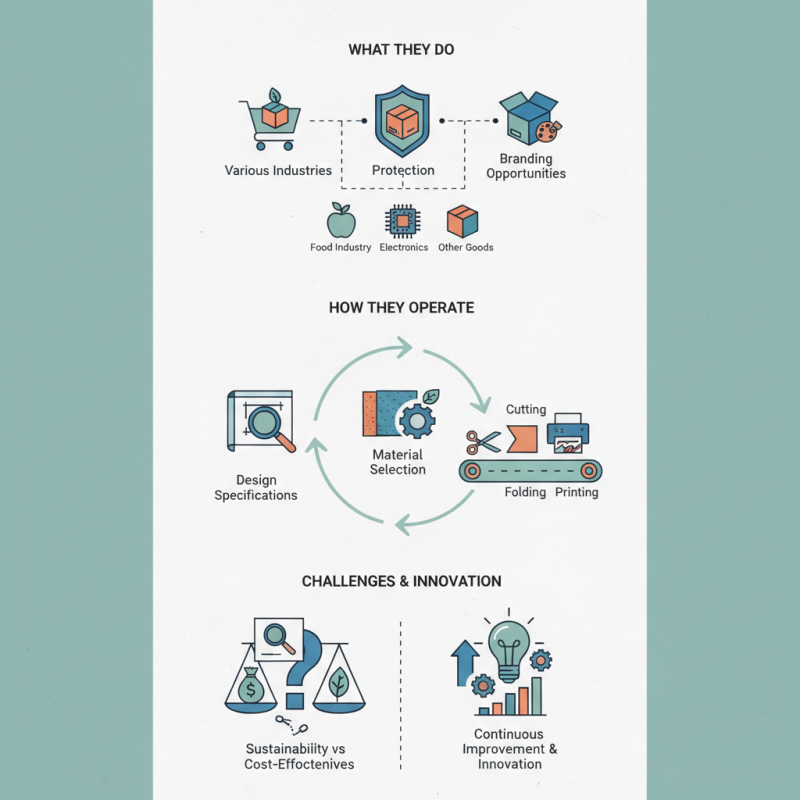
A Packaging Box Manufacturer is crucial in today’s production landscape. They create custom boxes for various industries, from food to electronics. Each box serves a unique purpose, offering protection and branding opportunities.
These manufacturers operate through a well-defined process. They begin with design specifications from clients. Then, they select materials that meet durability and aesthetic requirements. The production involves cutting, folding, and printing, all tailored to client needs.
However, challenges exist in maintaining quality and efficiency. Many manufacturers struggle to balance the demand for sustainability with cost-effectiveness. This ongoing tension highlights the need for continuous improvement in operations. A focus on innovation could enhance their offerings and sustainability practices.
Definition of a Packaging Box Manufacturer
A packaging box manufacturer is a company that specializes in creating packaging solutions for various products. This industry is vital for retail, e-commerce, and logistics sectors. Packaging ensures products arrive safely and appeal to consumers. In 2021, the global packaging market was valued at approximately $1 trillion, highlighting its significance.
Manufacturers design boxes in different shapes and sizes. They use materials like cardboard, paper, and plastics. The choice of material influences strength and cost. Reports show that eco-friendly packaging is gaining traction. About 70% of consumers prefer sustainable options. This demand drives manufacturers to innovate. However, balancing cost and sustainability can be challenging.
Production involves several steps. First, designers create prototypes. Then, machines cut and fold materials. Quality control is essential throughout the process. Often, manufacturers face delays or issues with supplies. Adjusting to these can be tough. Despite these hurdles, packaging box manufacturers play a critical role in the supply chain.
Key Processes in Packaging Box Manufacturing
The process of packaging box manufacturing is intricate and vital in various industries. Typically, it begins with material selection. Cardboard, paperboard, and corrugated materials are popular due to their durability and cost-effectiveness. In recent years, the global market for packaging boxes has been projected to reach over $400 billion by 2025, driven by increasing e-commerce demands.
Box design is another crucial aspect. Designers utilize software tools to create both functional and aesthetic packaging. Their aim is to ensure the boxes protect the contents while appealing to consumers. It’s worth noting that a poorly designed box can lead to product damage and dissatisfaction. In fact, reports indicate that about 25% of products are returned due to packaging failures.
After design, the manufacturing phase commences. This includes printing, cutting, and folding processes. Automation is becoming more common, yet many factories still rely on manual labor for specific tasks. While automation boosts efficiency, human error can occur. Issues such as misalignment or color discrepancies can happen even in automated settings. Quality control steps are crucial to mitigate these risks.
Types of Materials Used in Packaging Boxes
Packaging boxes are essential for various industries, including food, electronics, and cosmetics. The materials used in packaging boxes significantly impact product safety and presentation. Common materials include corrugated cardboard, paper, plastic, and wood. Each material has its unique properties and benefits, catering to different packaging needs.
Corrugated cardboard is widely used due to its strength and lightweight nature. According to a report from Smithers Pira, the global demand for corrugated packaging is expected to reach 250 million tons by 2024. Paper-based packaging is favored for its recyclability, making it an eco-friendly choice for brands looking to reduce their environmental footprint. Plastic materials, although less environmentally friendly, remain popular for their durability. They can be molded into various shapes, making them versatile for different products.
Tip: When selecting packaging materials, consider their lifecycle and environmental impact. Sustainable options can enhance your brand's reputation. Another consideration is cost-effectiveness. Premium materials may appeal, but always ensure they fit your budget. Reflect on the balance between aesthetics and functionality to meet your packaging goals.
Packaging Box Manufacturer Operations and Materials
| Material Type | Characteristics | Common Uses | Sustainability |
| Cardboard | Lightweight, strong, recyclable | Shipping, retail packaging | Highly recyclable, eco-friendly |
| Plastic | Durable, waterproof, versatile | Food packaging, electronics | Can be recycled; impacts vary |
| Kraft Paper | Strong, biodegradable, natural look | Gift boxes, food packaging | Biodegradable; renewable resource |
| Corrugated Fiberboard | Sturdy, protective, lightweight | Shipping boxes, bulk packaging | Recyclable; made from recycled materials |
| Rigid Boxes | High-quality, durable, premium feel | Luxury items, electronics | Can be made from recycled materials |
Quality Control Measures in Packaging Box Production
Quality control is crucial in packaging box production. It ensures that every box meets specific standards. From raw materials to finished products, each step must be monitored. Manufacturers often implement visual inspections. These check for defects like tears or improper seals. However, human error can sometimes go unnoticed.
Automated systems play a significant role too. They help maintain consistency and speed. But these systems are not infallible. Occasionally, machines can malfunction. Regular maintenance is essential to minimize issues. Employees also need proper training to spot faults. Adequate knowledge can prevent costly mistakes.
Packaging boxes must withstand various conditions. Thus, durability testing is a standard procedure. These tests simulate real-world scenarios, like weight and pressure. It's not perfect, though. Sometimes, boxes that pass tests still fail in actual use. Continuous feedback is vital for improvement and adaptation.
Market Trends and Challenges for Packaging Box Manufacturers
The packaging box manufacturing industry is evolving rapidly. Recent market trends show a growing demand for sustainable packaging solutions. According to a report by Smithers Pira, the global market for sustainable packaging is expected to reach $500 billion by 2027. This surge is driven by consumer preference for eco-friendly products. Manufacturers are now faced with the challenge of reducing material waste while maintaining quality.
Adapting to technological advancements is crucial for packaging box manufacturers. Automation and smart technology can improve efficiency. However, many manufacturers struggle with the high costs of upgrading machinery. The International Packaging Association estimates that nearly 70% of manufacturers will need to invest in new technologies in the next five years. This can be daunting for smaller businesses that lack the capital to innovate.
Additionally, supply chain disruptions continue to pose challenges. Global shipping issues have resulted in delays and increased costs for materials. As a result, manufacturers must rethink their sourcing strategies. Innovation and adaptability are key. Finding local suppliers can mitigate risks, but the transition takes time and effort. Manufacturers need to address these hurdles to stay competitive in a dynamic market.