
Polyester Carport sourcing now sits at the intersection of material performance, weather protection, and changing energy infrastructure. The IEA Photovoltaic Power Systems Programme’s Trends 2024 report estimates that global solar capacity passed 1.6 terawatts by the end of 2023. That figure does not measure carport demand. It does show why buyers increasingly assess whether a covered parking structure can accommodate future solar use.
IEA Executive Director Fatih Birol called solar “the new king of electricity.” His comment describes the wider energy market, not polyester carports specifically. That distinction matters. A canopy’s real value depends on details buyers can inspect: fabric weight, UV resistance, seam quality, frame design, drainage, and replacement support. A bright product photo proves little.
This guide compares ten Polyester Carport manufacturers for global buyers, focusing on verifiable product information, customization, production capability, and export support. It is not a laboratory test or a universal ranking. Specifications vary, and impressive claims deserve questions. Ask for technical data, installation guidance, warranty terms, and close-up images of seams and fittings. Small details matter. They often decide whether a canopy remains taut after months of sun and rain—or becomes an expensive lesson.
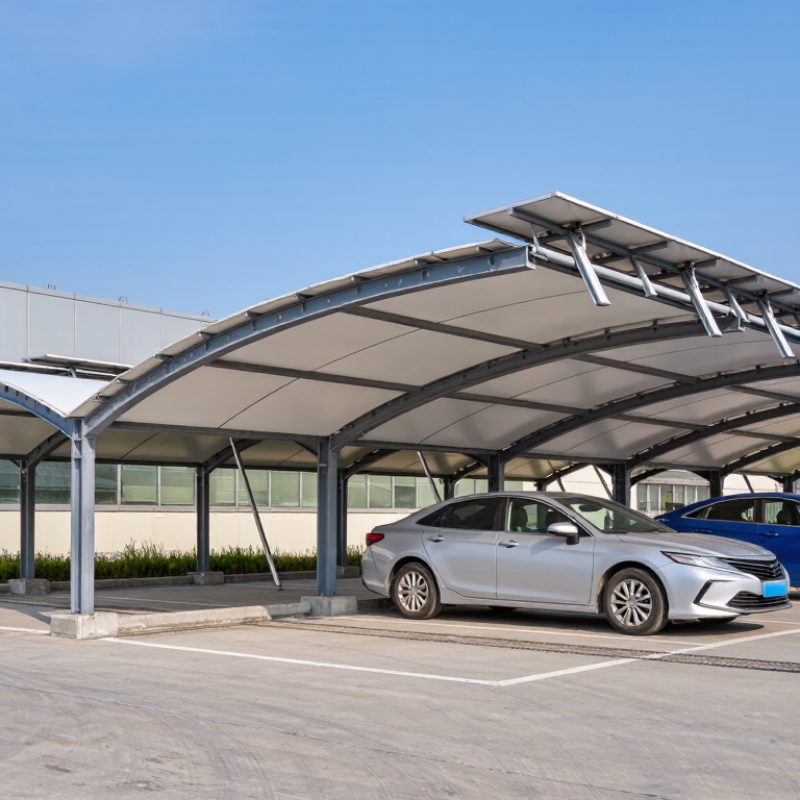
A polyester carport uses woven polyester fabric, often coated with PVC or another protective finish, stretched over a supporting frame. The fabric provides shade and helps shield vehicles from rain, dust, and falling debris. Its performance depends on fabric weight, coating quality, seams, and installation—not simply the word “polyester.” Details matter.
These structures serve varied markets. A farm may use one for tractors beside a gravel track, while a small business may cover customer parking or seasonal stock. In regions with intense sun, UV resistance matters; in wet climates, drainage and secure anchoring deserve close attention. Snow and strong winds can exceed a portable shelter’s design limits. Check the specified load ratings and installation instructions for the actual site.
Global buyers should compare clear specifications, not just prices or product photos. Ask about fabric density, coating, frame materials, replacement panels, packed dimensions, and warranty exclusions. Confirm that dimensions allow doors to open and that the chosen ground anchors suit concrete, soil, or another surface. A compact shipment can reduce freight costs, but local assembly and spare-part access still matter. One detail is easy to miss: a carport may shed water well yet collect heat beneath the fabric. Test the fit and ventilation needs before ordering several units. A perfect specification sheet cannot fix a poor site match.
How to Evaluate Polyester Carport Manufacturers
Start with the fabric, not the sales language. Ask for polyester weight in grams per square metre, yarn specification, coating type, and UV-stability test results. Textile Exchange’s Materials Market Report 2024 estimates that polyester made up 57% of global fibre production in 2023. That scale makes polyester widely available, but it does not prove a canopy will resist fading, tearing, or water ingress. A specification sheet can still mislead. Request independent test reports for fabric strength, water resistance, and seam performance, and check that the tested material matches the quoted product.
Then examine the structure and the factory’s quality controls. Ask for load calculations, frame material and thickness, connection details, and the wind conditions used in design. Verify whether the manufacturer inspects incoming fabric, welds or stitches, and finished units, and whether it can provide dated inspection records. Small details matter. Check a physical sample: rub the coated surface, inspect the hem, and look for uneven stitching or pinholes. Clarify replacement-part availability, warranty exclusions, and packaging protection for long-distance shipping. Compare like with like; a lower price may reflect lighter fabric or fewer reinforcements. I would still treat brochure claims cautiously, because real site exposure, installation, and maintenance can change service life.
Suggested evaluation weighting for comparing suppliers. These percentages are a buyer-oriented framework, not measured industry statistics or ratings of specific manufacturers. Adjust them to fit your project, and verify claims with product data sheets, test reports, and written terms.
These ten profiles are capability-based, not a verified ranking. A frame-focused manufacturer should show how its steel or aluminum supports resist wind and repeated assembly. A fabric specialist can explain polyester weight, coating, seam construction, and UV resistance. A custom-design supplier may adapt bay widths and roof shapes, but buyers should request clear drawings before approving production. A high-volume factory may offer steady output; confirm lead times and quality checks.
A modular-system maker can simplify replacement of poles and connectors. An outdoor-equipment producer may offer practical anchoring options for different ground conditions. A regional fabricator might provide closer communication, though its export experience needs checking. A contract manufacturer can build to specification, but documentation quality may vary. A testing-oriented supplier should share inspection records and fabric data sheets. An export-focused producer should pack components clearly and provide assembly instructions. Details matter. One profile rarely tells the whole story, and product claims still need verification.
Tips: Ask for fabric specifications, frame dimensions, wind-load test evidence, warranty terms, and spare-part availability. Request photos of finished seams and connector joints. Compare written quotations line by line. If a supplier cannot explain its coating or anchoring system plainly, pause and ask again. A small mismatch between sample and bulk production is possible, so agree on inspection criteria before placing an order.
For global buyers, comparing polyester carport manufacturers means looking beyond catalog photos. A frame that appears sturdy online may feel less stable once assembled. Check fabric weight, seam construction, frame dimensions, and how the cover attaches. These details affect setup time and everyday performance. Ask for drawings, material specifications, and clear explanations of load ratings. Claims without supporting details are hard to compare.
Tips: Request a sample fabric swatch and inspect its coating, flexibility, and stitching. Confirm what is included in the quoted capacity, such as frame assembly, fabric cutting, and quality checks. Small details matter.
Manufacturing capacity is more than a large factory or a high monthly output figure. Buyers should ask how production schedules are managed, whether inspection records are available, and how replacement parts are handled. A clear process is reassuring. Still, even a detailed answer may not predict every delay, so leave room in your project timeline.
Customization can cover dimensions, roof shape, fabric color, side panels, and packaging. Explain the intended site, expected weather exposure, and installation method before requesting a quote. Compare how each manufacturer documents changes and confirms final specifications. Custom features may add cost or extend lead times, and that trade-off deserves a direct conversation.
Global buyers should compare polyester carports by fabric construction, frame strength, and intended use—not price alone. Ask whether the canopy is coated, how seams are sealed, and what UV-resistance evidence is available. A sample can reveal stiffness, stitching quality, and coating consistency, but it cannot prove long-term performance. Small details matter.
Request the frame material, tube dimensions, connector design, and clear assembly instructions. Confirm the product’s stated wind and snow limits, then check whether those figures apply to the complete structure or only selected components. Anchoring needs vary with soil and installation conditions. A carport suitable for a sheltered driveway may not suit an exposed site. Treat broad performance claims cautiously, and ask for test reports or technical specifications you can verify.
Sizing, packing, and after-sales support also affect the real sourcing cost. Confirm usable clearance for vehicles, door opening, and drainage, rather than relying only on outside dimensions. Compare replacement canopy availability, spare connectors, warranty terms, and lead times in writing. Check carton dimensions and loading plans before approving a large order. A low quote can still be the wrong deal. I would be wary of choosing a supplier from one polished sample; production consistency is harder to judge, and that uncertainty deserves a direct question.
Supplier-screening comparison based on product and sourcing criteria. Specifications vary by model and market; verify all claims against the product datasheet, test reports, and sales contract.
| No. | Evaluation dimension | What to check | Buyer verification points |
|---|---|---|---|
| 1 | Polyester fabric specification | Confirm the fabric construction, stated weight, coating or finish, and whether the material is woven polyester. | Request a technical datasheet showing units, test methods, tolerances, and the exact fabric used for the quoted model. |
| 2 | Weather and UV performance | Review evidence for water resistance, UV-related performance, seam construction, and drainage design. | Ask for the applicable test method and report; do not treat terms such as “waterproof” or “UV resistant” as quantified performance without supporting evidence. |
| 3 | Frame material and finish | Identify frame material, tube dimensions, wall thickness, connector design, and corrosion-protection finish. | Check drawings and material specifications, and confirm whether the quoted frame and finish apply to every unit in the order. |
| 4 | Wind and snow limitations | Determine the model’s stated wind and snow-load limits, anchoring requirements, and whether the cover must be removed in severe weather. | Request the design assumptions and test or engineering documentation. Suitability depends on site conditions, installation, and local requirements. |
| 5 | Dimensions and configuration | Compare footprint, clear height, entrance width, roof shape, side panels, and available configuration options. | Use dimensioned drawings and confirm whether measurements refer to the roof, frame, or usable interior space. |
| 6 | Quality control and traceability | Review inspection procedures for incoming materials, fabrication, finished goods, and packaging. | Ask for inspection records, defect-handling procedures, and lot or batch identification for the ordered products. |
| 7 | Safety and market documentation | Check which product, material, and packaging documents are available for the destination market. | Verify that certificates or test reports cover the specific model and are accepted for the intended use; requirements differ by country and application. |
| 8 | Warranty and replacement parts | Review warranty duration, exclusions, claim process, and availability of replacement covers, connectors, and frame components. | Get warranty terms in writing and confirm who pays for parts, freight, and labor when a claim is approved. |
| 9 | Order terms and production capacity | Confirm minimum order quantity, sample policy, production lead time, payment terms, and acceptable order tolerances. | Request a dated quotation and production schedule that specify model, materials, quantities, inspection terms, and delivery conditions. |
| 10 | Export packaging and logistics | Check packed dimensions, gross weight, carton labeling, loading plan, shipping terms, and export documents. | Confirm the agreed Incoterms® rule and named place, packaging requirements, and responsibility for customs clearance and transport costs. |