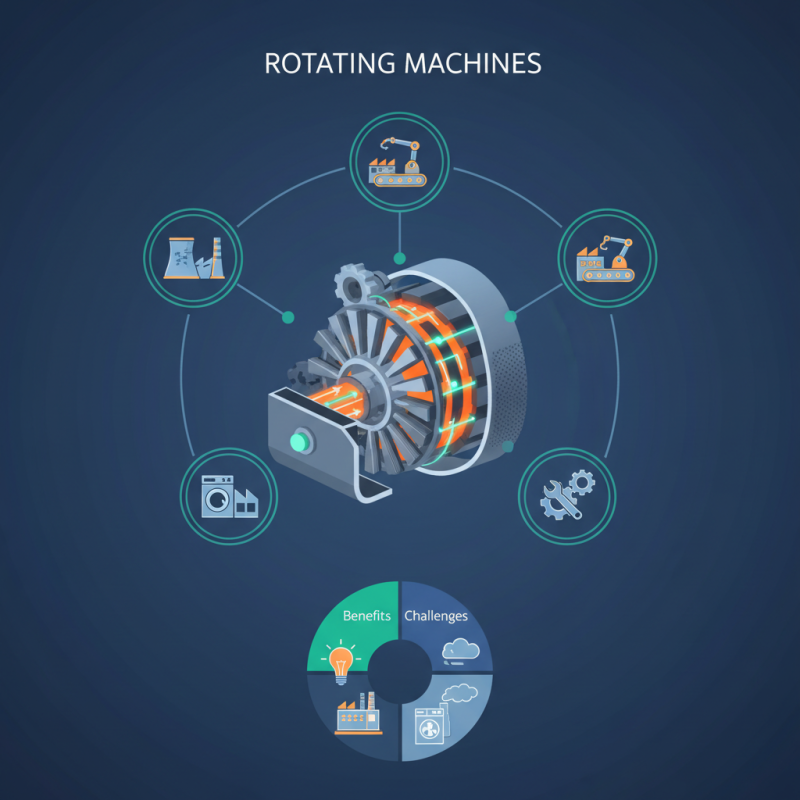
What are Rotating Machines and How Do They Work?
Rotating Machines are crucial components in several industries. These machines convert energy into mechanical work. They can be found in power plants, manufacturing facilities, and even household appliances.
Understanding how rotating machines operate can be complex. They involve various parts, including rotors and stators. Each part plays a vital role in the function of the machine. Observing them in action reveals their intricate designs and efficiencies. However, not all rotating machines perform optimally. Maintenance issues can lead to inefficiency and breakdowns.
The exploration of rotating machines invites us to reflect on their impact on modern life. They power our world, but we must also consider how we use them. This duality forces us to reassess our reliance on technology. In understanding their mechanisms, we gain insights into both their benefits and challenges.
Definition and Types of Rotating Machines
Rotating machines play a vital role in various industries. They convert energy into mechanical work, impacting everything from manufacturing to transportation. Common types include electric motors, turbines, and generators. Each type serves a specific function, yet they all share a fundamental design: a rotor that spins within a stator.
Electric motors dominate the market due to their efficiency. According to recent industry reports, 55% of industrial energy consumption is attributed to electric motors. This figure highlights their significance. Turbines, on the other hand, harness energy from fluids, driving power generation and propulsion. A growing area of research focuses on improving efficiency and sustainability in these machines.
Tips: Regular maintenance is crucial. Inspections can prevent unexpected failures. Even minor issues may lead to significant downtime. Monitoring vibration levels helps detect imbalances in rotating machines. This proactive approach can save costs in the long run.
Understanding the types of rotating machines enhances operational efficiency. However, complexity exists in their design. It’s essential to choose suitable machines based on specific requirements. Not every solution is perfect for every application. Assessing needs critically can guide better decisions.
What are Rotating Machines and How Do They Work?
| Type of Rotating Machine | Definition | Common Applications | Efficiency Range |
| Induction Motor | An electrical machine that transforms electrical energy into mechanical energy through electromagnetic induction. | Pumps, Fans, Conveyor systems | 75% to 95% |
| Synchronous Motor | A motor that operates at a constant speed regardless of the load, synchronizing with the supply frequency. | Power plants, Industrial drives | 80% to 95% |
| DC Motor | An electric motor that runs on direct current (DC) electricity. | Electric vehicles, Robotics | 70% to 90% |
| Turbine | A rotary mechanical device that extracts energy from fluid flow and converts it into useful work. | Power generation, Aviation | 85% to 95% |
| Compressor | A mechanical device that increases the pressure of a gas by reducing its volume. | Air conditioning, Refrigeration | 70% to 90% |
Principles of Operation in Rotating Machines
Rotating machines are essential in various applications, from household appliances to industrial systems. At the core of these machines is the principle of electromagnetic induction. This principle helps convert electrical energy into mechanical energy. When an electric current flows through a coil, it generates a magnetic field, which interacts with other magnetic fields to create motion.
The efficiency of rotating machines often depends on several factors. Factors include design, materials, and operational conditions. For instance, the winding techniques and core materials can significantly affect performance. A well-designed rotor can improve energy transfer, while poor construction may lead to losses.
Understanding the principles of operation is crucial. For example, the interaction between the stator and rotor often reveals inefficiencies. These inefficiencies might stem from friction or heat generation. Observing wear and tear over time provides insights into necessary maintenance, often overlooked.
Reflecting on these aspects is vital for optimizing performance.
Key Components of Rotating Machines
Rotating machines play a crucial role in various industries. These machines convert energy into mechanical power. Understanding their key components is essential for effective operation.
Key components of rotating machines include rotors, stators, and bearings. The rotor generates the rotating motion. It often contains coils or magnets that interact with the stator. The stator provides a stationary magnetic field, allowing efficient energy conversion. Bearings support the rotor and enable smooth rotation. They reduce friction and wear.
Tips: Regular maintenance of these components is vital. Inspect bearings frequently to prevent breakdowns. Clean rotors and stators to enhance efficiency. Monitoring unusual sounds can indicate potential issues. Addressing these signs early can prevent costly repairs later.
In practice, however, issues may arise. Misalignment of components can lead to vibrations. Overheating may result from inadequate cooling. Operators should be vigilant and proactive. Mistakes in handling these machines can lead to complex problems down the line. Pay attention to these components for better performance and longevity.
Applications of Rotating Machines in Various Industries
Rotating machines play a critical role across various industries. In manufacturing, they power conveyor belts and pumps, ensuring smooth operations. According to a report by the International Energy Agency, these machines account for around 60% of electricity consumption in industrial applications. Their efficiency directly impacts production costs.
In the transportation sector, electric motors drive trains and ships. These systems help reduce carbon emissions. A study by the U.S. Department of Energy indicates that optimizing rotating machines could lead to energy savings of up to 30%. This potential stands out as industries seek greener alternatives.
However, challenges exist. Not all motors are designed for maximum efficiency, leading to wasted energy. Maintenance is often overlooked. A report from the American Society of Mechanical Engineers states that inadequate upkeep can reduce performance by as much as 25%. This calls for better practices in monitoring and maintaining rotating machines to leverage their full capabilities.
Maintenance and Troubleshooting of Rotating Machines
Rotating machines play a crucial role in various industries. Their reliability depends on proper maintenance and quick troubleshooting. According to a report by the International Journal of Engineering Research, nearly 60% of downtime in industrial operations is linked to rotating equipment failures. Regular monitoring can significantly reduce these issues.
When it comes to maintenance, vibration analysis is essential. This method helps identify problems early. Often, bearings reveal the first signs of wear. Paying attention to unusual noises can save time and money. A simple yet effective tip is to check the lubrication levels regularly. Insufficient lubrication can lead to overheating and eventual failure.
Troubleshooting can be complex. Often, issues stem from misalignment or imbalance. Operators may overlook these factors. Inspections should include looking at coupling and shaft alignment. A small misalignment can cause severe damage over time. Remember, proactive measures are key. Keeping a maintenance log helps track performance and identify potential problems.
Regular training for staff is beneficial as well. Keeping everyone informed can lead to a more reliable operation.