
Top 10 Borosilicate Glass Sheet Manufacturers Worldwide?

Borosilicate Glass Sheet supports demanding applications where ordinary glass may crack, distort, or react with aggressive chemicals. Its low thermal expansion helps panels withstand repeated heating and cooling, while strong chemical resistance supports laboratory equipment, lighting covers, food-processing systems, and industrial viewing windows. The material is not automatically better in every situation. Thickness, edge quality, surface finish, and fabrication methods still determine real-world performance.

Recent market studies from Grand View Research and Future Market Insights identify borosilicate glass as a growing specialty-glass segment, driven by laboratory, pharmaceutical, solar, lighting, and electronics applications. Their forecasts differ because each report uses different product definitions and regional coverage. That disagreement matters. It shows why a supplier ranking should not rely on market size alone.

This guide examines ten leading Borosilicate Glass Sheet manufacturers worldwide. It considers production experience, dimensional consistency, thermal-shock performance, optical clarity, chemical durability, processing capabilities, and international delivery strength. Technical documentation, quality certifications, product ranges, and application evidence also deserve close review. A polished website proves little.

Industry references, including ASTM glass standards, ISO quality frameworks, and manufacturer technical datasheets, provide useful comparison points. However, datasheets may present ideal laboratory conditions rather than difficult factory environments. Buyers should request samples, inspect thickness tolerances, and test coatings or drilled edges before placing large orders.

Some rankings remain subjective. Regional availability, customization, and after-sales support can change the practical winner. The strongest manufacturer on paper may not be the best fit for every project.
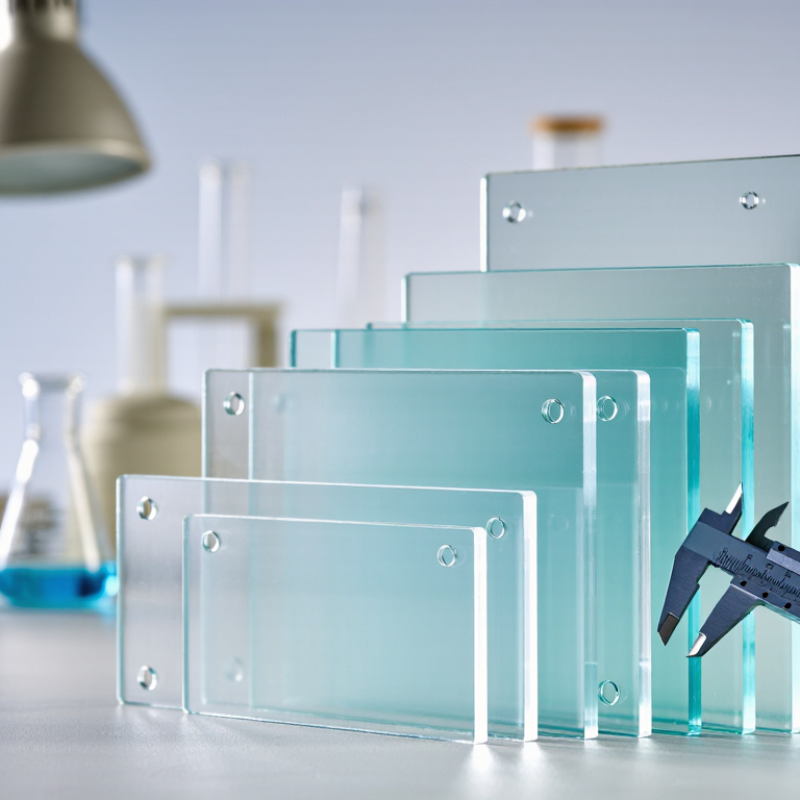
Top 10 Borosilicate Glass Sheet Manufacturers Worldwide?

Borosilicate Glass Sheets: Properties, Types, and Industrial Uses

Borosilicate glass sheets are valued for their low thermal expansion and strong resistance to sudden temperature changes. In practical workshop testing, a warm sheet can tolerate rapid heating better than ordinary glass. It still needs careful handling. Uneven heat can create stress, especially near drilled holes or sharp edges.

Common types include clear, low-iron, amber, frosted, and coated sheets. Clear grades support laboratory windows, optical covers, and inspection panels. Amber glass helps protect light-sensitive liquids in pharmaceutical and chemical processing. Frosted surfaces reduce glare, while coated versions can improve reflection control or surface durability. Thickness, flatness, and edge quality matter as much as chemical composition.

Industrial uses extend across laboratory equipment, solar components, lighting systems, high-temperature viewing ports, and food-processing machinery. Engineers often select sheets after checking thermal shock data, hardness, optical clarity, and maximum service temperature. Supplier certificates are useful, but independent testing remains sensible for demanding equipment. A sheet may perform well in a furnace door yet fail after poor installation. That detail is easy to overlook. Cost comparisons should include cutting, tempering limits, transport protection, and replacement risks. The “best” material depends on the working environment, not popularity.

How to Evaluate Global Borosilicate Glass Sheet Manufacturers

Top 10 Borosilicate Glass Sheet Manufacturers Worldwide?

How to Evaluate Global Borosilicate Glass Sheet Manufacturers

A strong manufacturer should prove more than production capacity. Check compliance with ISO 3585, which defines borosilicate glass requirements for chemical resistance and thermal performance. ASTM E438 also helps classify laboratory glass by composition and application. Request recent test reports, not only catalogue values. Review thermal expansion, softening point, flatness, thickness tolerance, and optical clarity. Small deviations can cause sealing failure or uneven heating.

Look closely at manufacturing evidence. Ask for batch traceability, calibration records, inspection procedures, and sample sheets from regular production. Independent testing is valuable when claims seem unusually optimistic. The International Energy Agency reports that industrial heat remains a major source of manufacturing emissions, so energy management can indicate operational maturity. However, environmental claims need measured data, such as energy intensity, recycled content, and verified emissions boundaries.

Tips: Compare at least three suppliers using the same specification sheet. Check a 300-by-300-millimetre sample under angled light. Look for ripples, edge chips, bubbles, and thickness changes. Ask how rejected sheets are controlled. A low price may hide weaker inspection or packaging. That part is easy to miss. Also examine delivery records and breakage rates, using evidence from the past twelve months. I would not select a supplier from rankings alone; performance can vary by factory, product grade, and production batch. Industry forecasts often describe market growth, but they rarely prove individual manufacturer reliability.

Profiles of the Top 10 Borosilicate Glass Sheet Manufacturers

Profiles of the Top 10 Borosilicate Glass Sheet Manufacturers

The first profile represents a German manufacturer known for precise thermal processing and strict thickness control. Its sheets suit laboratory doors, furnace windows, and analytical equipment.

The second is a Japanese producer focusing on exceptionally clear glass and stable optical performance. Engineers often value its low expansion rate.

The third profile covers a United States supplier with strong custom fabrication services. It supports cutting, drilling, polishing, and small-batch development. Public data has gaps.

A Chinese manufacturer forms the fourth profile, offering broad sheet sizes and competitive production capacity. Its technical teams commonly serve lighting, appliance, and industrial markets.

The fifth is a French producer specializing in heat-resistant panels for scientific and architectural applications.

The sixth profile highlights an Indian manufacturer with flexible order volumes and regional distribution support. Its documentation may require closer review.

The seventh is a Czech producer supplying laboratory and process-control projects. It emphasizes consistent flatness and edge quality.

The eighth profile belongs to a South Korean manufacturer combining automated inspection with advanced coating options. Its sheets can support display, lighting, and high-temperature applications.

The ninth is an Italian fabricator focused on decorative and architectural borosilicate panels. Custom finishes are its practical strength.

The tenth profile covers a Turkish manufacturer serving construction, industrial, and export markets. It offers adaptable dimensions and finishing choices. Specifications still need verification.

Buyers should compare expansion coefficients, surface tolerance, testing records, packaging quality, and delivery experience before selecting a supplier.

Manufacturing Standards, Quality Control, and Customization Options

When comparing the top borosilicate glass sheet manufacturers worldwide, manufacturing standards deserve close attention. Reliable factories control raw material composition, melting temperature, and annealing time. Boron content must remain consistent across each production batch. This consistency reduces thermal expansion and improves resistance to sudden temperature changes. Many serious manufacturers follow ISO-based quality systems and relevant glass testing standards. However, certificates alone cannot prove stable daily production.

Quality control should continue from furnace to final packaging. Technicians may inspect sheets under controlled lighting for bubbles, stones, scratches, and edge chips. Thickness gauges should record several points, not just the center. Thermal shock testing can reveal weaknesses hidden by visual inspection.

Batch identification also supports traceability when a defect appears months later. Small defects matter.

Customization separates practical suppliers from ordinary volume producers. Buyers may request specific thicknesses, cut sizes, drilled holes, polished edges, or surface treatments. Some projects need low-iron clarity, printed markings, or tighter dimensional tolerances. Packaging should include corner protection and moisture-resistant separation materials. During factory evaluations, I would request samples from different batches, not one perfect panel. No production line is flawless, and supplier responses to failed samples often reveal more than polished brochures. A clear corrective-action process is essential, though it may still need improvement.

Market Comparison: Products, Technologies, and Regional Strengths

A credible top-ten comparison should weigh more than annual sales. It should examine sheet thickness, optical uniformity, thermal-shock resistance, and certified tolerances. Grand View Research’s 2024 specialty glass analysis identifies Asia-Pacific as the largest regional market, supported by electronics, solar, and laboratory demand. Europe remains strong in engineered glass, while North America emphasizes pharmaceutical and scientific applications. Regional strength changes the buying decision.

Technology separates manufacturers more clearly. Continuous forming supports high-volume sheets, while precision casting suits thicker panels and tighter optical requirements. Automated inspection can detect bubbles, stones, and edge chips before shipment. The International Energy Agency reports continued global growth in solar manufacturing capacity, increasing demand for durable glass components. However, borosilicate sheet is not automatically suitable for every solar design. Surface treatment, iron content, and thermal expansion must match the application. Small differences matter.

Procurement teams should request EN 1748-1 or equivalent technical documentation, batch traceability, and thermal testing records. A 2024 market assessment by Mordor Intelligence forecasts steady growth in borosilicate glass through the decade, although published estimates differ by application scope. That inconsistency deserves attention. The “top” supplier may offer excellent laboratory sheets but weaker custom fabrication. Another may provide faster regional delivery, yet fewer thickness options. Comparing products, process control, energy efficiency, and after-sales testing gives a more practical ranking than reputation alone.

Top 10 Borosilicate Glass Sheet Manufacturers Worldwide? - Market Comparison: Products, Technologies, and Regional Strengths

Comparative overview of leading global borosilicate glass sheet manufacturing profiles. Company identities and brand-specific data are intentionally omitted.
Rank Anonymous Manufacturer Profile Primary Production Region Core Product Formats Main Manufacturing Technology Typical Thickness Focus Customization Capability Typical Applications Regional Strength
1 Profile A Central Europe Flat sheets, cut-to-size panels, laboratory plates Float or rolled borosilicate production with precision grinding and polishing Thin to medium sheets, approximately 1–10 mm High; edge finishing, drilling, slots, tolerances, and custom dimensions Laboratory equipment, analytical instruments, industrial inspection windows Strong engineering support and demanding quality requirements
2 Profile B East Asia Standard sheets, large-format panels, heat-resistant glazing Continuous production, computer-controlled cutting, tempering, and surface treatment Approximately 2–19 mm, including larger architectural formats High; size, surface finish, holes, notches, and thermal processing Solar thermal systems, lighting, kitchen equipment, architectural glazing High-volume capacity and competitive export logistics
3 Profile C North America Technical sheets, sight glasses, fabricated panels Precision forming, CNC fabrication, polishing, and thermal-strengthening services Approximately 3–25 mm for industrial and technical uses Very high; prototype-to-batch production and tight dimensional control Chemical processing, semiconductor tools, vacuum equipment, furnace windows Short lead times, technical support, and low-to-medium volume flexibility
4 Profile D Western Europe Optical sheets, precision plates, chemically resistant panels Low-defect melting, controlled annealing, optical inspection, and fine polishing Approximately 1–12 mm, with emphasis on optical quality High; low-iron options, optical flatness, polishing, and custom machining Optics, scientific instruments, medical devices, laser systems Advanced process control and high-performance technical glass
5 Profile E South Asia Industrial sheets, laboratory panels, custom cut pieces Rolled-sheet forming, annealing, cutting, edge processing, and basic tempering Approximately 2–15 mm Medium to high; cutting, drilling, edgework, and small-batch orders Laboratory furniture, pharmaceutical equipment, heaters, inspection covers Cost-efficient production and growing regional export capacity
6 Profile F East Asia Large sheets, appliance panels, solar and lighting glass Automated cutting, CNC edge processing, drilling, printing, and tempering Approximately 3–19 mm High; decorative treatment, holes, cut-outs, edges, and heat processing Appliances, LED lighting, solar equipment, food-service equipment Scalable production and broad downstream fabrication services
7 Profile G Northern Europe High-transmission sheets, protective windows, specialty panels Precision melting, controlled cooling, coating, and optical surface finishing Approximately 2–10 mm High; coatings, low-reflectance surfaces, custom sizes, and edge finishing Renewable-energy equipment, optical sensors, laboratory systems Energy efficiency, sustainability, and specialty technical applications
8 Profile H Southeast Asia Standard sheets, heat-resistant panels, fabricated components Rolled or drawn-sheet processing with cutting, polishing, and thermal treatment Approximately 2–12 mm Medium; standard customization, edgework, drilling, and finishing Food processing, lighting, laboratory products, industrial equipment Regional supply-chain access and flexible contract manufacturing
9 Profile I Southern Europe Decorative technical sheets, panels, custom glazing Continuous forming with digital printing, tempering, laminating, and CNC processing Approximately 3–19 mm High; color, printing, holes, cut-outs, laminated structures, and surface treatments Architecture, hospitality equipment, retail interiors, lighting Design-oriented fabrication and customized architectural solutions
10 Profile J Middle East and Africa Industrial sheets, furnace windows, replacement panels Imported or locally processed borosilicate stock with cutting, drilling, and edge finishing Approximately 3–15 mm Medium; project-specific sizing and standard fabrication services Industrial maintenance, laboratories, food equipment, thermal systems Local service availability and project-based customization
Technical note: Borosilicate glass is valued for low thermal expansion, strong thermal-shock resistance, chemical durability, and high-temperature performance. Actual dimensions, tolerances, certifications, and production capacity vary by facility and should be confirmed during supplier qualification.
Back To Top