
Sofa Feet may look like a minor detail, but they affect how a sofa sits, feels, and fits into a room. The right style can lift a frame above a thick rug, make cleaning beneath the couch easier, or add a quiet finishing touch. The wrong choice can leave a sofa looking awkward or feeling less stable. Small parts matter.
This guide explores ten common types of sofa feet, from tapered wooden legs to metal and block designs. It explains their typical appearance, practical strengths, and points buyers should check before choosing. Consider the sofa’s weight, frame attachment, floor surface, and desired seat height. A delicate-looking leg may not suit every heavy couch. Measure carefully, and check product specifications rather than relying on appearance alone.
Style is only part of the decision. Wood can bring warmth, while metal often creates a sharper, more modern outline. Plastic feet may be practical, but quality varies. That can be easy to miss. Compatibility also matters: replacement feet need the correct fitting, not just a similar shape. When details are unclear, ask the seller or manufacturer before ordering. There is no single best option for every home. Even so, comparing these ten types can help furniture buyers choose with more confidence—and avoid a small, frustrating mismatch.
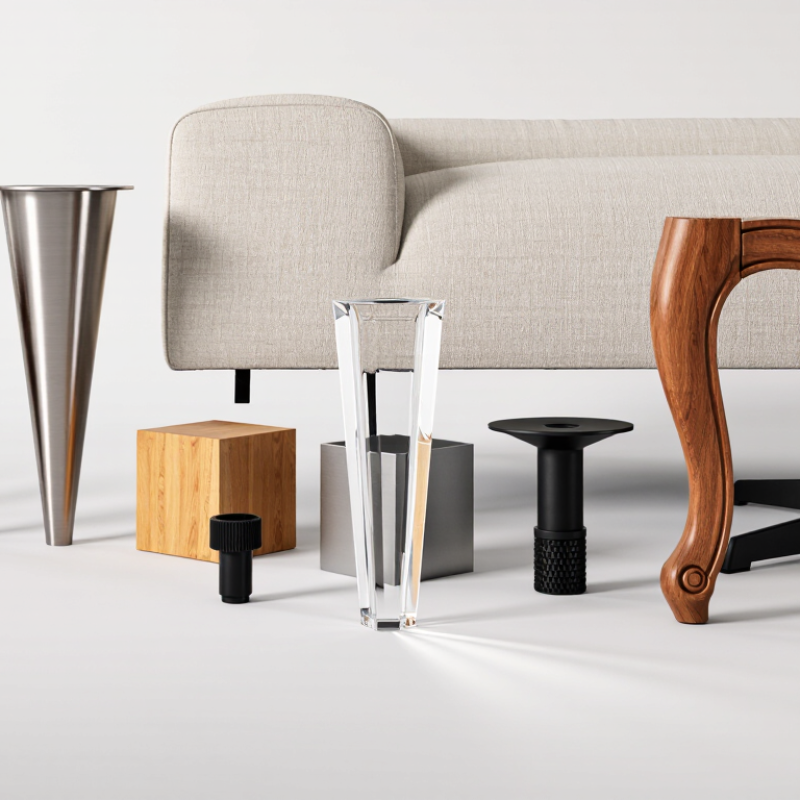
Sofa feet are the contact points between a frame and the floor. They lift the upholstery above dust, help keep the base level, and transfer weight into a small area beneath each corner. Their shape matters: broad feet spread pressure, while narrow feet can leave dents in softer flooring. A wobbly foot may also make the frame creak. Small parts, real consequences.
The ANSI/BIFMA X5.4-2020 standard sets out strength, stability, and durability tests for lounge seating. It is a useful professional benchmark, but it does not assign one universal load rating to every sofa foot. In a simple four-foot calculation, each foot appears to carry one quarter of the total weight. That neat share is only a starting point: people sit unevenly, and a floor may not be perfectly level. Material, attachment hardware, and frame construction all affect performance.
Tips: Check that every foot sits flat and feels secure before regular use. For delicate floors, consider a wider contact surface or a suitable protective pad. If one foot rocks, do not assume tightening it will solve everything; the mounting point may be worn, or the frame may be slightly out of square.
Sofa feet change both the outline and the way a sofa meets the floor. Tapered or splayed legs lift the frame and leave space for a vacuum. Block feet look steadier, while bun feet sit low and feel visually heavier. Turned and cabriole feet add curves; hairpin and sled styles use exposed metal lines. A plinth base hides separate feet, creating a grounded look. Small parts matter. The right shape depends on the sofa’s weight, room style, and floor surface—not appearance alone.
Material affects strength and maintenance. Hardwood can take repeated loads, but a narrow leg may still split under sideways force. Steel offers a slim profile and resists dents, though its finish can scratch. Plastic feet are light and often inexpensive, but may feel less substantial. Grand View Research valued the global furniture market at USD 736.6 billion in 2023. That market-wide figure does not measure sofa feet, but it gives context for a large, varied furniture sector. Attachment deserves equal attention: threaded bolts are replaceable, while plates and corner blocks spread loads across the frame. Check that all feet sit level, and inspect the fixing points before buying. Not always obvious. A stylish leg can wobble on uneven floors, and I’d want to see how it is secured before trusting it.
Tapered feet narrow toward the floor, giving a sofa a lighter, lifted look. They suit compact rooms, but slim legs may feel less steady on uneven floors. Turned feet have rounded, carved profiles that add traditional detail. Square or block feet offer a cleaner, broader contact point. Bun feet are short and rounded, often chosen for low, grounded furniture. Check their height carefully; a small difference can change seat height.
Cabriole feet curve outward and then inward, bringing a decorative, classic look. Saber feet angle gently, creating a sense of movement without heavy carving. Hairpin feet use thin, bent rods and suit an airy, modern style. They can show dust easily. Cylindrical feet are simple, straight-sided supports, often made from wood or metal. Their plain shape works with many upholstery styles, though it may look stark beside ornate fabric.
Caster feet add wheels for easier repositioning. Check that the wheels lock and roll smoothly on your flooring. Plinth-style bases sit close to the floor and spread support across a wider area; technically, they’re a base rather than separate feet. That distinction can feel fussy, but it matters when comparing clearance and cleaning access. Before buying, check attachment points, leg material, and the sofa maker’s weight guidance. A beautiful foot is still a poor choice if it wobbles under everyday use.
Top 10 Types of Sofa Feet for Furniture Buyers
Sofa feet do more than lift a frame off the floor. Tapered wood legs and slim metal feet can suit a light, modern look, while block feet or bun feet often feel visually grounded. Hairpin legs and sled bases create a more open silhouette, but their stability depends on sound joints and sensible weight distribution. Casters add mobility, though a sofa may shift when someone sits down. Check that all feet sit evenly on the floor; even a small wobble can become annoying.
Floor protection matters just as much. Narrow feet concentrate weight, which may leave dents in soft flooring or marks on timber. Wider feet spread the load, while felt pads can reduce scratches and scraping. Rugs may help, but a foot can catch on a thick edge. No design solves every problem. It is easy to choose by appearance alone, and that trade-off deserves a second look.
Tips: Before buying, check the sofa’s total weight, foot material, attachment method, and floor type. Press gently on each corner after setup. If a foot rocks, adjust or replace it rather than relying on a pad to hide the wobble.
A qualitative comparison based on typical footprint and base geometry—not standardized test results. Actual stability depends on sofa construction, load, and installation.
Wider footprints and connected bases generally resist rocking better. To help protect floors, use correctly sized felt or rubber pads, and check them regularly for wear or trapped grit.
When choosing sofa feet, start with the room and the sofa’s existing frame. Measure the current foot height, then check the clearance beneath the seat. Measure twice. Low feet can make a sofa feel grounded, while taller ones may let a vacuum pass underneath. In a small room, a few extra centimeters can change how bulky the sofa appears.
Match the material to everyday use, not just the product photo. Hardwood feet suit many interiors, but grit can scratch their finish. Metal feels crisp and can be sturdy, though narrow ends may mark soft flooring. Plastic glides are practical on some surfaces, but can look out of place on a formal sofa. Add felt pads for timber floors, and check them when dust builds up.
Check how each foot attaches before buying. Compare the screw size, mounting plate, and frame condition; repair a loose corner before fitting new feet. Look for a stated weight capacity, especially for a large sectional, and consider how weight is shared across its supports. Style matters. Still, a tall, narrow foot may wobble on uneven flooring, despite its elegant look. Take a photo and measurements when comparing options, then check that the sofa sits level without rocking.