
China Top 10 Tile Cutter Manufacturers for Global Buyers?

Choosing a reliable Tile Cutter manufacturer in China requires more than comparing online prices. Global buyers must examine cutting accuracy, material quality, production capacity, testing procedures, and after-sales support. A polished product photo proves very little. The real test begins with a straight cut through dense porcelain, repeated hundreds of times.

David M. Gobis, a respected tile installation educator and former executive director of the Ceramic Tile Education Foundation, has often emphasized, “Proper training is essential for successful tile installation.” His point also applies to tool selection. A well-designed Tile Cutter can still fail when its guide rail bends, its scoring wheel wears quickly, or its handle feels unstable. Small defects become expensive problems on busy projects.

This guide reviews ten leading Chinese manufacturers serving international buyers. It considers manual cutters, electric models, replacement parts, private-label services, certifications, and export experience. Some companies appear impressive at first glance. Not all deserve equal confidence. That is worth admitting.

The ranking also reflects practical buyer concerns. Can the supplier provide consistent samples? Does the factory document inspections? Are spare scoring wheels easy to source? How quickly does the team respond when a shipment arrives damaged?

China offers strong manufacturing depth and competitive pricing. Yet quality varies widely between factories. A lower quotation may hide thinner rails, weaker bearings, or limited technical support. Buyers should request test cuts, inspect packaging, and confirm specifications before placing large orders. This list is a useful starting point, not a substitute for due diligence. Mistakes remain possible. Careful verification remains essential.
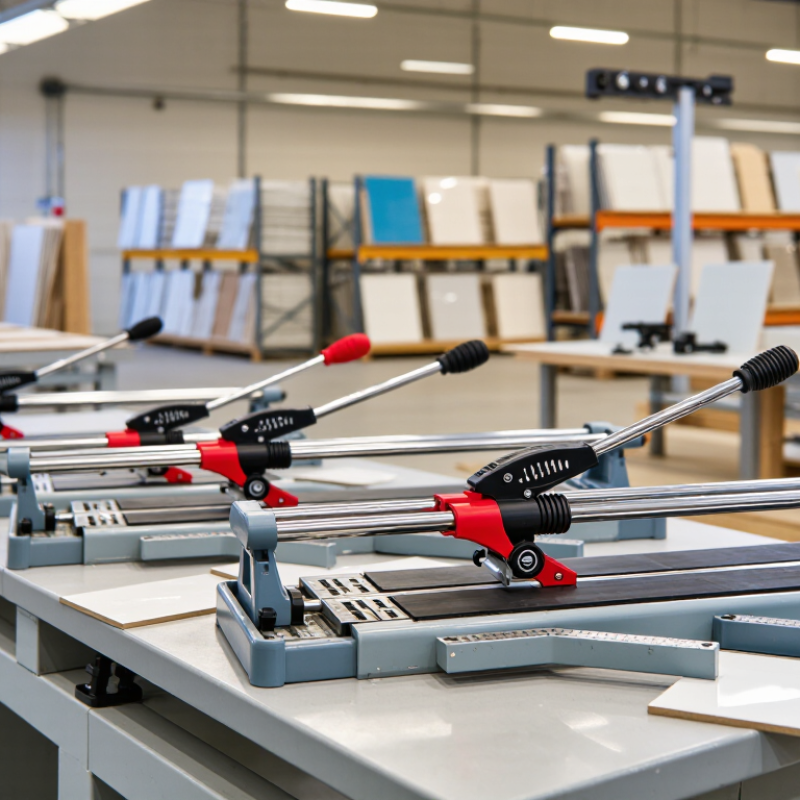
China Top 10 Tile Cutter Manufacturers for Global Buyers?

What Defines a Leading Tile Cutter Manufacturer in China

What Defines a Leading Tile Cutter Manufacturer in China

A leading tile cutter manufacturer combines precise engineering with consistent production control. The cutting rail should move smoothly, without noticeable wobble or grinding noise. A strong frame, hardened guide parts, and a sharp scoring wheel improve accuracy on porcelain and ceramic tiles. Reliable manufacturers test cutting force, handle strength, wheel wear, and measurement accuracy before shipment. They should also provide clear material specifications, inspection records, and replacement-part details. These documents help global buyers compare suppliers with evidence, not attractive promises.

Experience matters during factory evaluation. Ask how workers inspect guide alignment, handle assembly, and packaging protection. A practical sample test can reveal uneven scoring, chipped edges, or excessive pressure. Communication also defines professionalism. Technical drawings, stable lead times, responsive after-sales support, and multilingual instructions reduce purchasing risks. No factory is perfect. Even capable manufacturers may show inconsistent packaging or slower responses during busy seasons. That weakness deserves attention, not concealment. Buyers should review corrective actions and confirm whether improvements are recorded.

Tips: Request three sample cuts from different tile sizes. Check the rail after repeated use. Confirm spare-wheel availability and warranty terms. Visit the factory if order volume justifies it. A polished showroom is useful, but production evidence matters more.

What Defines a Leading Tile Cutter Manufacturer in China?

Global buyers typically assess tile cutter manufacturers through product consistency, cutting accuracy, working capacity, quality control, after-sales support, and export readiness. The percentages shown are a neutral buyer-screening framework rather than company market-share data.

How China’s Top 10 Tile Cutter Manufacturers Compare

China Top 10 Tile Cutter Manufacturers for Global Buyers?

How China’s Top 10 Tile Cutter Manufacturers Compare

Comparing China’s top ten tile cutter manufacturers requires more than checking motor wattage. A practical review should examine cutting depth, blade runout, water control, frame rigidity, spare-part access, and documented testing. For example, a 1,200 mm rail may look impressive, but poor alignment can leave chipped edges on dense porcelain. Some suppliers publish attractive specifications. Fewer provide repeatability results.

The International Trade Centre’s Trade Map places tile-cutting equipment within the broader HS 8464 category. This category also includes machinery for stone, concrete, and ceramics. Therefore, export figures can overstate tile-cutter performance. Buyers should request model-level sales data, not broad customs totals. The 2023 World Bank Logistics Performance Index rated China at 3.7 out of 5. That supports strong logistics capacity, but delivery quality still varies between factories.

A useful comparison scores each manufacturer across five areas: cutting accuracy, production consistency, compliance documents, service response, and total ownership cost. Independent reports from Intertek or TÜV can strengthen technical claims, while ISO 9001 certification only confirms a quality-management system. It does not guarantee a clean cut. I would also test three samples from different production batches. One sample is not enough. My earlier assumption was that higher motor power meant better results. Field testing proved otherwise; blade stability and water management often mattered more.

Key Tile Cutter Types, Features, and Manufacturing Capabilities

China Top 10 Tile Cutter Manufacturers for Global Buyers?

Tile cutter selection starts with material, thickness, and site conditions. Manual score-and-snap cutters suit ceramic tiles and repeated indoor work. Electric wet saws handle porcelain, stone, and long diagonal cuts. Compact rail cutters improve mobility, while bridge saws support heavier slabs and continuous production. Hole-cutting systems serve plumbing openings.

According to the MECS/ACIMAC World Ceramic Tile Production report, global tile output reached roughly 16.7 billion square meters in 2023. That scale increases demand for accurate, durable cutting equipment. A capable Chinese manufacturer should offer hardened guide rails, adjustable fences, stable bearings, and replaceable scoring wheels. Wet saw suppliers need reliable pumps, splash control, guarded blades, and motors matched to tile density. Cutting length and diagonal capacity must be tested with real porcelain, not only shown in catalogs.

Manufacturing depth matters more than a polished product photo. Look for CNC machining, controlled welding, blade alignment checks, electrical testing, and documented quality records. ISO 9001 certification can support consistency, but it does not replace sample inspection. A larger motor is not automatically better. It may add vibration, noise, and unnecessary weight. I would request cutting trials on 6 mm ceramic and 12 mm porcelain. Small deviations often appear at the final 30 centimeters. Packaging also deserves attention, because bent rails can ruin an otherwise precise machine. Data sheets help. Hands-on verification matters more.

Quality Standards, Certifications, and Export Readiness

China Top 10 Tile Cutter Manufacturers for Global Buyers?

Quality evidence matters more than a polished factory tour. The ISO Survey 2022 recorded 1,265,216 ISO 9001 certificates worldwide, showing how widely quality systems are adopted. Certification alone proves little. Buyers should request the certificate scope, issuing body, expiry date, and production-site address. Audit records should match the exact tile cutter model.

For electric cutters, verify applicable safety requirements, including insulation, grounding, blade guards, water protection, and emergency controls. A credible supplier should provide test reports, a Declaration of Conformity, user manuals, and traceable serial numbers. CE marking is a manufacturer declaration, not an independent quality certificate. That distinction is often missed.

Export readiness appears in small details. Ask for packaging drop-test results, spare-part lists, pallet dimensions, HS codes, and documented inspection procedures. The World Bank’s Logistics Performance Index 2023 highlights customs efficiency, shipment reliability, and tracking as key supply-chain factors. These details reduce delays, but they cannot remove every risk. I would still inspect the first shipment independently. One overlooked issue is voltage compatibility; a machine built for 220V may fail in a 110V market. Factory videos are useful, yet current batch records are stronger evidence. Personal experience suggests that response speed after a defect is as important as the original price.

China Top 10 Tile Cutter Manufacturers for Global Buyers? - Quality Standards, Certifications, and Export Readiness

Anonymized buyer-oriented comparison framework based on internationally recognized compliance and export requirements

Rank Evaluation Dimension Realistic Industry Benchmark Relevant Standard or Requirement Export-Readiness Evidence Buyer Verification Method
1 Product Safety Design Guarded blades, stable work surfaces, insulated electrical components, and emergency controls where applicable Applicable machinery and electrical safety requirements in the destination market Risk assessment, user manual, warning labels, and product safety test records Request product photographs, technical files, and an independent test report
2 CE Market Access Required for applicable products placed on the European Economic Area market EU Machinery, Low Voltage, EMC, and RoHS requirements may apply depending on product design EU Declaration of Conformity and correctly used CE marking Check the declaration against the exact model, voltage, and manufacturer information
3 Quality Management System Documented inspection procedures for incoming materials, assembly, calibration, and final release ISO 9001 certification is a recognized quality-management benchmark but is not automatically proof of product conformity Valid certificate issued by an accredited certification body Verify certificate scope, validity, site address, and certificate number
4 Cutting Accuracy Accuracy should be stated with a defined tile size, cutting length, material, blade type, and test method No single universal accuracy value applies to every tile cutter configuration Inspection records showing repeatability and squareness results Require sample cuts and a signed quality acceptance specification
5 Motor and Electrical Compatibility Voltage, frequency, plug type, rated input power, ingress protection, and thermal protection must match the target market Destination-country electrical safety and EMC requirements Model-specific nameplate, wiring diagram, test report, and compatible plug Confirm the exact electrical configuration before order placement
6 Material and Component Traceability Traceable records for motors, switches, bearings, blades, frames, and critical purchased parts Customer-specific quality agreements and applicable product-safety obligations Batch numbers, supplier records, incoming inspection reports, and production lots Audit the traceability process and request sample batch documentation
7 Packaging and Transit Protection Protective foam, reinforced cartons or crates, moisture control, and secure fixation of moving parts ISPM 15 applies to regulated solid-wood packaging used in international trade Drop-test records, packing drawings, carton markings, and wood-packaging compliance where relevant Approve a packing sample and define damage-claim procedures in the purchase contract
8 Documentation Package Complete documents should include manual, parts list, wiring diagram, maintenance guidance, and conformity records Language and labeling rules vary by destination country Editable artwork, multilingual manuals, commercial invoice, packing list, and certificates Review documents before mass production and before shipment
9 Inspection and Testing Capability Functional testing, electrical safety checks, dimensional inspection, water-system checks, and noise or vibration checks where applicable Testing should reflect the product design and destination-market requirements Calibration certificates, inspection plans, test fixtures, and pre-shipment inspection records Use an independent inspection agency or buyer-approved inspection checklist
10 After-Sales and Spare-Parts Support Availability of replaceable blades, switches, bearings, water pumps, guards, belts, and other service parts Warranty terms and consumer or commercial-product obligations depend on the destination market Parts catalogue, warranty policy, response-time commitment, and technical support contact Obtain a spare-parts price list and written warranty service-level terms
Buyer note: Certification requirements depend on the product configuration, electrical rating, destination country, and intended use. A certificate should always be checked against the exact model and legal manufacturer details.

How Global Buyers Can Select the Right Chinese Supplier

Choosing among China’s top 10 tile cutter manufacturers requires more than comparing catalog prices. Global buyers should verify cutting accuracy, blade compatibility, spare-part access, and production consistency. Request test cuts on porcelain, ceramic, and thick-format tiles. Measure edge chipping with a ruler, not only through factory videos. Ask for inspection records, material certificates, and documented quality procedures. An ISO 9001 certificate helps, but it does not replace product testing.

Supplier capacity also matters. The World Bank’s 2023 Logistics Performance Index gave China a score of 3.7 out of 5, showing strong logistics capability but not perfect performance. Buyers should confirm export experience, packaging design, and port handling procedures. The UNCTAD Review of Maritime Transport reports that over 80% of global merchandise trade moves by sea. A weak wooden crate can therefore create expensive delays before the cutter reaches a job site. Include carton drop tests and moisture protection in the purchase agreement.

Compare at least three quotations using the same specifications. Check cutting length, cutting depth, guide rigidity, motor power, and warranty response time. A very low price may hide thinner rails or unstable bearings. It happens. I would also request a small trial order before committing to container volume. Review defect rates, response speed, and replacement-part delivery during that trial. A supplier that answers technical questions clearly is usually easier to manage after shipment, although this is not guaranteed. Supplier selection should reflect actual field performance, not polished sales language.

Back To Top