
Top Garment Packaging Bags Suppliers in China

China remains a major sourcing base for apparel packaging, but the right supplier is not simply the one offering the lowest price. Buyers need bags that protect fabric, present garments neatly, and arrive in consistent sizes. A few millimeters matter. So does the feel of the film, the strength of the seal, and whether samples match production.

For this introduction, the expert voice is a fictional composite, not a real person or a verified quotation. Lin Wei, a fictional garment-packaging specialist, summarizes a useful sourcing principle: “A reliable bag protects the garment, fits the shipping process, and performs as promised in repeat orders.” Treat that line as editorial guidance, not a sourced expert quote.

This guide to Top Garment Packaging Bags Suppliers in China examines practical supplier differences. It considers material options, customization, sample checks, production capacity, and communication. Buyers should ask for clear specifications and compare physical samples before placing larger orders. A product photo cannot confirm seam quality. Nor can a low quote explain every cost. Some details remain easy to overlook, and supplier claims deserve careful verification. The goal is a better-informed shortlist—not a promise that one supplier suits every brand.
Top Garment Packaging Bags Suppliers in China

What Garment Packaging Bags Are and How They Are Used

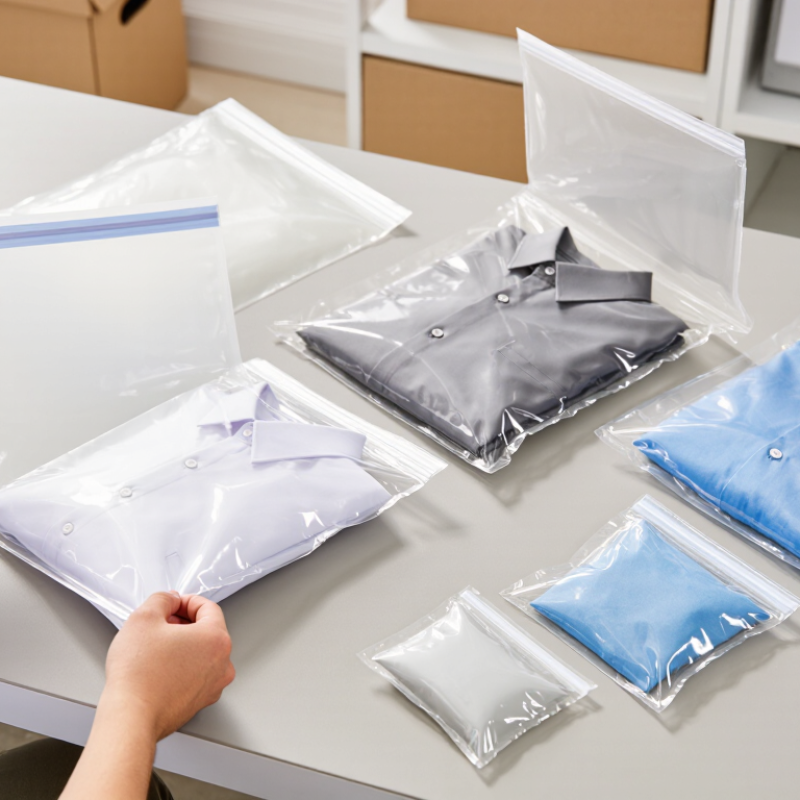
Garment packaging bags are protective sleeves or pouches used to keep clothing clean, dry, and organized during storage and transport. Common options include clear polyethylene bags, resealable pouches, and fabric-like nonwoven covers. A shirt may travel folded in a thin bag, while a formal jacket often needs a wider cover that reduces rubbing and creasing. Small details matter.

At factories and warehouses, bags help separate sizes, styles, and orders. In retail, transparent packaging lets staff identify garments without opening each pack. For online orders, mailer bags add an outer shipping layer, while individual garment bags limit dust and moisture exposure. They do not prevent every crease or damp patch. Humid storage can still cause trouble.

Material choices deserve attention. The OECD’s Global Plastics Outlook reports that packaging generated about 40% of global plastic waste in 2019, showing why unnecessary layers matter. Textile Exchange’s Materials Market Report 2024 estimates global fiber production reached 124 million tonnes in 2023, with polyester accounting for 57%; this is not a packaging figure, but it illustrates the scale of textile supply chains. A clear bag is not automatically the better choice. Glare, trapped moisture, and disposal can complicate a tidy-looking pack, so suppliers should match bag strength and size to the garment and shipping route.

Common Materials and Types of Garment Packaging Bags

Garment packaging bags are commonly made from low-density or high-density polyethylene. LDPE feels soft and folds around shirts without sharp creases; HDPE is crisper and often used for lightweight protective covers. Clear polybags make size labels and folded collars easy to inspect. Frosted film hides contents slightly, while zip-lock or adhesive-flap designs help protect garments during storage. Reusable polypropylene nonwoven bags feel more fabric-like, but need stronger seams and take more space. Paper mailers suit some shipments, though moisture can soften them. Small details matter: a tight bag can flatten a puffed sleeve.

The OECD’s Global Plastics Outlook (2022) reports that packaging made up 40% of plastic waste in 2019. Eurostat recorded 186.5 kilograms of packaging waste per EU resident in 2022. These figures cover packaging broadly, not garment bags alone, but they make material choices worth checking. Ask suppliers for film thickness, recycled-content documentation, and test results for seam strength. Recycled film may look less uniform. That can be acceptable. Still, comparing bags by unit price alone misses shipping volume, damage rates, and whether customers can reuse or sort them. A clear specification helps, though it will not solve every trade-off.

Common Materials for Garment Packaging Bags

Typical film thickness ranges for commonly used garment bag materials. Actual specifications vary by bag design, intended use, and supplier; these ranges are indicative, not industry standards.

Key Features of China’s Garment Packaging Bag Industry

China’s garment packaging bag industry combines material selection, printing, and high-volume production. Suppliers commonly offer clear or frosted polyethylene bags, non-woven garment covers, and paper-based packaging. Options vary by thickness, closure type, and intended use. A shirt bag may need a simple adhesive flap, while a reusable garment cover often requires a zipper and reinforced hanger opening. Small details matter.

Many manufacturers can adjust dimensions, print placement, and bag structure to match a buyer’s product range. Before ordering, buyers should request samples and check seal strength, print alignment, and odor. Ask how defects are recorded and what inspection takes place during production. These practical checks reveal more than a polished catalog. Capabilities differ between factories, even when product photos look similar.

Production capacity and customization are strengths, but they can create trade-offs. A complex print may add setup time, while a very thin film can wrinkle or tear during packing. Some suppliers are expanding recycled-material choices, though availability and performance need to be confirmed for each specification. A clear sample approval process helps reduce misunderstandings. It is not foolproof. Small changes in film thickness or artwork can affect the finished batch, so buyers should document approved details before production begins.

Leading Garment Packaging Bag Suppliers in China

Leading garment packaging bag suppliers in China offer options for clothing factories, wholesalers, and online retailers. Common products include clear poly bags, frosted mailers, reusable zipper pouches, and bags with air holes. A supplier should explain material thickness, dimensions, closure type, and printing limits in clear terms. These details matter. A bag that looks sturdy on screen may split at the seam when packed tightly.

When comparing suppliers, request samples made with the material and print method intended for production. Check zipper movement, edge sealing, odor, clarity, and how the bag handles folded garments. Ask for written specifications, sample approval steps, production lead times, and minimum order quantities. Confirm whether custom sizing or recycled-content options affect price or timing. A clear answer is useful; a vague promise is not.

Communication deserves equal attention. Share garment dimensions and packing needs, then ask the supplier to confirm the finished bag size and tolerances. Keep approved artwork and specifications on record. If possible, test samples during actual packing, not just on a desk. A neat sample can still mislead. I would also compare a few suppliers rather than assume the lowest quote gives the best value; honestly, this can take longer than expected, but it may prevent costly packaging changes later.

How to Evaluate and Select a Chinese Supplier

When evaluating Chinese garment packaging bag suppliers, compare specifications before comparing prices. Request the resin type, thickness in microns, bag dimensions, seal strength, and print-rub test results. Ask for the same details on both samples and production orders. Small differences matter.

The OECD’s Global Plastics Outlook reports that packaging generated about 40% of plastic waste in 2019. UNEP’s 2023 report, Turning off the Tap, estimates plastic pollution could fall 80% by 2040 through system-wide changes. These figures make material claims worth checking. Ask suppliers for documented recycled-content percentages, supporting test records, and clear disposal guidance. Do not treat a “recyclable” label as proof that local collection systems accept the bag.

Check whether the supplier operates its own factory or subcontracts production. Request recent quality-control records, production capacity, and a sample from a normal production run, not only a polished sales sample. Confirm lead times, defect handling, and how changes to film thickness are approved. A tidy audit sheet can still miss a weak side seam. I would test bags under realistic packing conditions, including repeated opening and handling. One useful step, often skipped, is recording agreed specifications in the purchase contract.

Top Garment Packaging Bags Suppliers in China - How to Evaluate and Select a Chinese Supplier

Use this supplier-evaluation framework to compare offers. Suggested weights are a practical starting point, not market statistics. Score each supplier from 1 (poor or unverified) to 5 (strong and documented); multiply the score by the weight to compare results.

Evaluation area What to compare Evidence to request or verify Suggested weight Score (1–5)
Product specification and fit Confirm bag style, finished dimensions, thickness, closure, printing, and any ventilation or warning-hole requirements. Specify thickness in microns (µm) and define how it will be measured. A written specification sheet, dimensioned drawing, material description, and approved pre-production sample. 20% _____
Quality control Assess consistency of dimensions, thickness, sealing, print position and color, odor, and packaging. Agree on acceptable defect limits and inspection procedures before production. Documented inspection plan, sample inspection records, defect-handling process, and a pre-shipment inspection option. 20% _____
Material and regulatory requirements Identify the actual resin and any recycled content, and check suitability against the destination market’s packaging rules. Recyclability depends on the bag’s material construction and the collection and recycling systems available locally. Material declaration and relevant, current test reports or compliance documents for the intended market. Verify the document’s scope, issuer, product, and validity; do not assume a certificate covers every bag. 15% _____
Production capability Check whether the supplier can make the required bag construction, printing, order quantity, and repeat orders. Ask how production capacity is allocated during busy periods. Production workflow, equipment or process details relevant to the order, capacity confirmation, and a clear explanation of any subcontracted work. 15% _____
Total landed cost Compare the same specifications and order quantity. Include tooling or plate charges, printing, packing, freight, insurance, duties, and other applicable import costs—not just the unit price. An itemized quotation with currency, quote validity, payment terms, delivery term and named place, and a list of excluded charges. 10% _____
Lead time and order flexibility Separate sample, production, and transit schedules. Confirm minimum order quantity, repeat-order terms, and how schedule changes or delays are communicated. Timelines vary by product, quantity, and season. A dated production schedule, written MOQ and reorder terms, and confirmation of the point at which lead time begins. 10% _____
Communication and issue resolution Evaluate response clarity, accuracy, and consistency. Check whether the contact can confirm specifications in writing and explain how complaints or corrective actions are handled. Written answers to a technical inquiry, a named point of contact, and a documented process for handling nonconforming goods. 5% _____
Export and shipment readiness Confirm export-document responsibilities, carton labeling, packing method, shipment marks, and whether the quoted delivery term matches the buyer’s logistics plan. A draft packing list or shipping-document checklist, carton specifications, and written confirmation of each party’s responsibilities. 5% _____
Total suggested weight / weighted result 100% _____

Scoring method: Weighted result = sum of (score ÷ 5 × suggested weight). Compare suppliers using the same requirements, and treat missing or unverified evidence as a reason to investigate further before placing an order.

Back To Top