China Top 10 Skin Tone Analyzer Manufacturers?
Choosing a Skin Tone Analyzer manufacturer in China involves more than comparing prices or polished product photos. These instruments can support cosmetic formulation, skincare consultations, product testing, and research when measurements are repeatable. A useful comparison asks how each device captures color, controls lighting, handles different skin areas, and stores results. Look for clear calibration procedures, stated measurement ranges, software demonstrations, and evidence from realistic use. Ask whether support includes operator training, maintenance, and help integrating results into existing workflows. Small details matter. A stable reading under consistent light is more valuable than a long feature list.
This guide introduces ten manufacturers associated with China and offers a practical framework for assessing their products. It is not a laboratory certification or a guarantee that every model suits every buyer. Compare intended use, repeatability data, sensor design, reporting options, customization, production capacity, and after-sales service. Where possible, request a live demonstration and test the same sample across repeated readings. That matters. Check claims against manuals, technical documents, and independent evaluations rather than accepting them at face value. Even a careful shortlist has limits: public specifications may leave unanswered questions about long-term consistency or software updates. Manufacturers change models, and practical performance depends on setup, training, and the person taking measurements. The strongest choice is the one whose documented capabilities match your workflow, budget, and quality requirements.
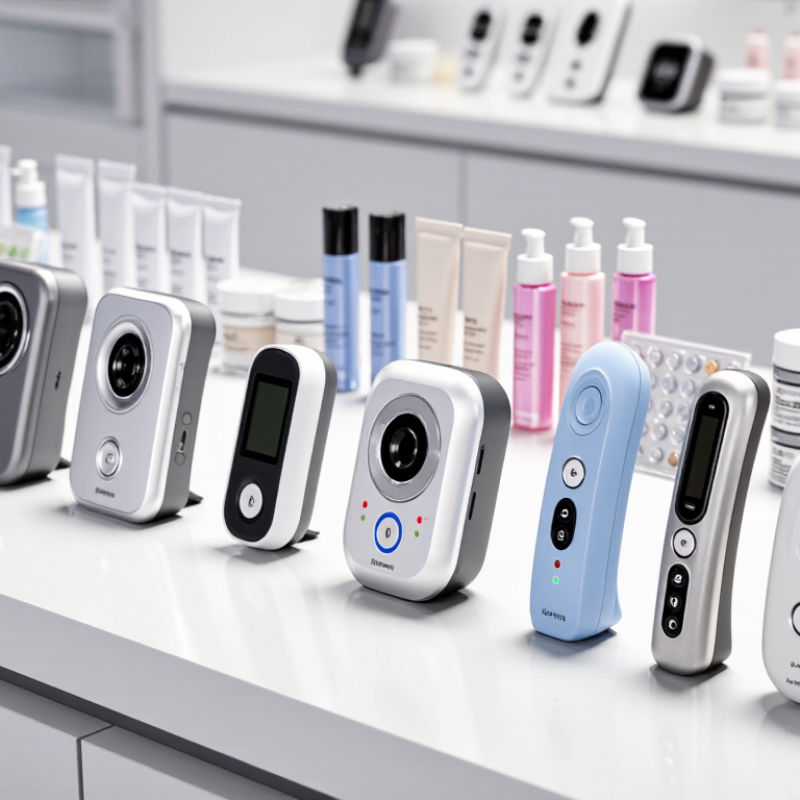
What Is a Skin Tone Analyzer and How Does It Work?
A skin tone analyzer estimates visible skin color using a sensor, camera, or both. It shines controlled light onto the skin or records an image, then measures reflected light. Many systems convert those readings into color values, such as lightness and red-green or yellow-blue components. Software uses the measurements to assign a tone range or support product matching.
The process depends on consistent conditions. A trained operator may clean the measurement area, position the device against the cheek or inner arm, and avoid direct sunlight. Some analyzers take several readings because skin color can vary across the face. Makeup, recent sun exposure, shadows, and even pressure from the device can affect results. Small details matter.
A reading is an estimate, not a permanent label.
For reliable comparisons, manufacturers and users should consider sensor calibration, repeatability, and the lighting used during testing. Results from different devices may not match exactly, especially when their scales or algorithms differ. A useful analyzer explains its method and limitations rather than implying perfect precision. It can support cosmetic shade selection or skin research, but it does not diagnose a skin condition. I would still question any result that changes sharply between nearby skin areas; the measurement setup may need another look.
How Chinese Manufacturers Develop Skin Tone Analysis Devices
Chinese manufacturers develop skin tone analyzers with calibrated optics, stable lighting, and software that converts reflected light into measurable values. Engineers may choose compact spectrometers or multispectral sensors, depending on cost, size, and intended use. A matte contact surface can reduce glare, while a fixed-distance guide helps keep readings consistent. Small details matter. If ambient light reaches the sensor, the same cheek may produce different readings in a bright shop and a dim clinic.
Development depends on repeated testing, not just design-room work. Teams compare device readings with reference instruments across varied skin tones, age groups, and lighting conditions. They adjust exposure, white balance, and algorithms when results drift. Good validation also records uncertainty: one number cannot describe every undertone or skin condition.
That limitation deserves attention.
Some prototypes may work well on standardized samples yet struggle with textured skin, makeup, or recent sun exposure. Manufacturers can improve reliability by documenting calibration intervals, cleaning instructions, and test conditions. It is careful work, and sometimes the data still disagree. That is a warning worth keeping, not a flaw to conceal.
What Features Distinguish Leading Skin Tone Analyzer Manufacturers?
Leading skin tone analyzer manufacturers stand out through measurement consistency, not flashy specifications. A reliable device should show how its sensor captures color and how readings are calibrated. Ask whether results stay stable across repeated scans and different lighting conditions. Consistency matters. Clear technical documentation should explain measurement limits, recommended distance, and maintenance needs. Without these details, a precise-looking number may be difficult to interpret.
Useful software also matters. Good systems present understandable outputs, store measurements securely, and support comparisons without hiding uncertainty. Manufacturers should provide evidence from testing across a broad range of skin tones, rather than relying on a narrow sample. Check whether independent evaluations or clear validation methods are available. No analyzer is perfect; even well-designed devices can be affected by movement, dry skin, or poor positioning. That practical gap deserves attention.
Tips: Compare the same area under consistent conditions, keep the sensor clean, and follow the device’s calibration guidance. Ask for repeatability data and sample reports before choosing. A polished screen is helpful, but it cannot replace transparent measurement methods.
How to Compare Chinese Suppliers for Different Applications
When comparing Chinese skin tone analyzer suppliers, match the device to its actual setting. A cosmetics counter needs quick readings, simple training, and a clear customer-facing report. A clinic may need repeatable measurements across visits, while a research team may prioritize raw data and documented test conditions. Ask how the instrument controls lighting, handles different skin tones, and checks calibration. Request repeat tests on the same person under consistent conditions. Small differences matter. A polished demo can still hide inconsistent readings.
Tips: Ask suppliers for sample reports, calibration instructions, and repeatability data. Test several skin tones, not just one. Ask for raw data. Confirm whether the software supports your workflow, such as exporting results or connecting to existing systems.
Before comparing prices, clarify what is included: training, software updates, service response times, and replacement parts. Check the measurement area and capture time; a small sensor may be awkward for larger areas or busy retail use. For cross-border projects, request manuals and technical documents in a language your staff can use. If a supplier cannot explain its testing method clearly, pause and ask more questions. No comparison is perfect; application-specific testing takes time, and that part is easy to underestimate.