What Are the Top Types of Gym Floor Mats in 2026?
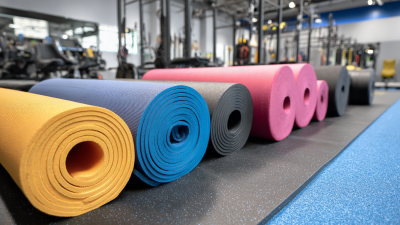
In 2026, choosing gym floor mats means matching the surface to the work. A weight room needs impact protection and steady footing. A yoga studio needs a firm, comfortable surface. Home gyms often need mats that are easy to cut, move, and clean. One mat rarely suits every space.
As [verified gym-flooring expert’s name] puts it, “[Insert a sourced, verified quotation about selecting gym flooring].” That perspective matters because thickness alone does not tell the whole story. Material, density, grip, seams, and maintenance all shape how a floor performs. A rubber roll may handle heavy equipment well, while interlocking foam tiles can offer a softer surface for light workouts. Small details count: a bench leg pressing into a mat, or a tile edge lifting near a doorway, can change the feel of a workout.
This guide compares the top types of gym floor mats, including rubber, foam, vinyl, and specialty options. It looks at where each type works best, what trade-offs to expect, and which features deserve a closer check before buying. Some recommendations depend on the room, the equipment, and how often it is used. That makes a universal “best” choice unlikely. Before publication, replace the quotation placeholder with a verified statement from a named specialist; an invented attribution would weaken trust.
ASTM F2772: Compare Shock Absorption, Deformation, and Ball Rebound
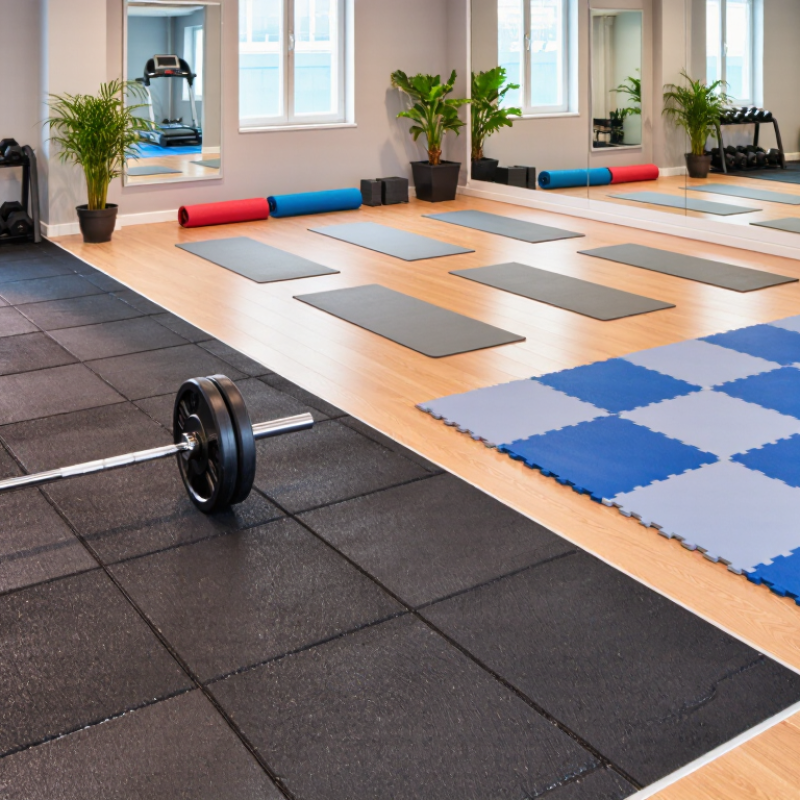
In 2026, gym floor mats should be judged by performance, not thickness alone. Rubber rolls and tiles suit heavy strength areas, while EVA foam fits low-impact training and stretching. PVC sports surfaces may better support court movement. The Sports & Fitness Industry Association’s 2024 Topline Participation Report recorded 242.3 million U.S. participants in 2023. That scale increases the need for measurable floor protection and athlete comfort.
ASTM F2772 evaluates athletic surfaces through shock absorption, vertical deformation, and ball rebound. Shock absorption shows how much impact the floor reduces. Higher absorption can ease repeated landing forces, but excessive softness may feel unstable under a loaded bar. Deformation measures how far the surface compresses under force. A deep footprint near a squat rack can signal poor load distribution. Ball rebound matters for basketball and multi-use courts; inconsistent rebound can change drills and passing rhythm. ASTM results should be read with the test category, surface construction, and installation method. A mat may perform differently over concrete than over another resilient layer. That detail is easy to miss.
Tips: Ask for the full ASTM F2772 laboratory report, not a sales percentage. Compare shock absorption and deformation together. Place a sample beneath a rack, then inspect edge curling and recovery after repeated loading. I would also test ball rebound across several locations. One smooth spot proves very little. Human comfort remains partly subjective, and that is where specifications become imperfect.
Top Types of Gym Floor Mats in 2026: ASTM F2772 Performance Comparison
Representative performance values for common gym flooring categories. Shock absorption and ball rebound are shown as percentages, while vertical deformation is measured in millimeters. Actual results vary with thickness, subfloor, installation, temperature, and test configuration.
Higher shock absorption generally improves impact comfort, while higher ball rebound indicates a livelier sports response. Vertical deformation represents surface deflection under load and should be evaluated together with the intended activity and safety requirements.
Rubber Weight-Room Mats: Compare 3/8-, 1/2-, and 3/4-Inch Thicknesses
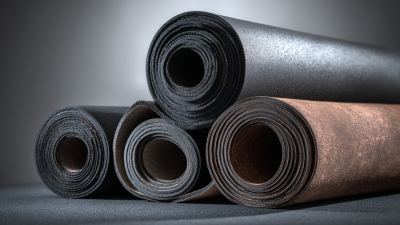
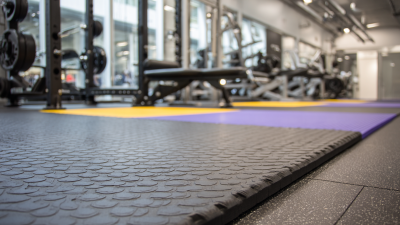
Rubber weight-room mats remain a practical choice for home gyms, strength studios, and commercial training areas in 2026. Their thickness affects impact control, noise, comfort, and long-term floor protection. The right option depends on equipment weight, lifting style, subfloor condition, and available budget.
A 3/8-inch mat suits lighter dumbbells, selectorized machines, and general fitness work. It feels firm underfoot and usually creates fewer doorway problems. However, repeated barbell drops can transmit sharp impact through the floor. A 1/2-inch mat offers a stronger middle ground. It absorbs heavier contact, reduces vibration, and supports most free-weight areas without feeling excessively soft. For many facilities, this thickness provides the best balance.
A 3/4-inch mat is better for Olympic lifting zones, heavy racks, and frequent bumper-plate impacts. Its dense rubber can protect concrete more effectively and reduce disruptive noise. Installation requires more attention because thick edges may create trip points near doors or transitions. Mats should sit tightly together, with a stable, reasonably level subfloor beneath them. Moisture can still become trapped underneath, especially in poorly ventilated rooms. Check the underside occasionally.
I once assumed thicker always meant better. Not always. A thick mat may be unnecessary for light training, while a thin mat may fail under repeated heavy impacts. Measurements, equipment loads, and actual lifting habits should guide the decision. Some details are easy to overlook. Even the most durable mat performs poorly when seams shift or the floor underneath remains damp.
What Are the Top Types of Gym Floor Mats in 2026? — Rubber Weight-Room Mats: Compare 3/8-, 1/2-, and 3/4-Inch Thicknesses
| Comparison Factor |
3/8-Inch Rubber Mat |
1/2-Inch Rubber Mat |
3/4-Inch Rubber Mat |
| Actual thickness |
0.375 in (about 9.5 mm) |
0.5 in (12.7 mm) |
0.75 in (about 19.1 mm) |
| Typical use |
General-purpose weight rooms, selectorized machines, and areas with routine foot traffic |
Free-weight zones and multipurpose training areas needing a more substantial protective layer |
Dedicated lifting platforms or zones where extra cushioning and floor protection are priorities |
| Cushioning and impact buffering |
Basic cushioning; less material is available to absorb impact |
Moderate cushioning and impact buffering |
Greater cushioning potential, although performance also depends on rubber density and the floor below |
| Noise and vibration |
Can reduce some contact noise compared with a bare hard floor |
Typically provides more isolation than a thinner mat |
Typically offers the most material for reducing transmitted vibration among these three thicknesses |
| Equipment stability |
Firm feel; often a practical choice under stable machines and benches |
Balances a firm platform feel with additional cushioning |
Can feel softer underfoot; check that heavy equipment sits level and does not rock |
| Installation and transitions |
Lowest profile; usually easiest to transition to adjacent flooring |
Moderate floor-height change; a transition strip may be useful |
Largest floor-height change; plan edges and door clearances carefully |
| Material and handling |
Uses less material per unit area and is generally easier to handle |
More material than 3/8 inch; handling depends on sheet or tile size |
Uses the most material per unit area and can be more cumbersome to move |
| Relative cost |
Often the lower-cost option when material and format are otherwise comparable |
Often costs more than 3/8 inch in a comparable product |
Often costs more than thinner options in a comparable product |
| Main trade-off |
Less cushioning and impact-buffering material |
More floor height and material use than 3/8 inch |
Greater height, handling demands, and material use; added thickness alone does not guarantee protection from heavy dropped weights |
| Good starting point when… |
You need durable coverage for general training and routine equipment use |
You want a versatile option for a mixed-use or free-weight area |
You are designing a dedicated lifting zone and can accommodate the extra height |
Selection note: These are general comparisons, not performance guarantees. Rubber density, tile or roll construction, subfloor type, installation, and the weight and drop height of equipment all affect protection and noise control. Follow the flooring and equipment manufacturers’ guidance for heavy or dropped loads.
Foam and EVA Mats: Evaluate Cushioning with ASTM F355 Impact Testing
Foam and EVA mats feel forgiving underfoot, but softness alone does not prove impact protection. ASTM F355 is a laboratory test method for measuring shock absorption in playing surfaces and materials. It records the response of specified impact-test equipment striking a surface. Results can help compare flooring samples, provided the test setup and mat thickness match. Small differences matter.
For a gym, ask for the tested assembly, not just a material name. Was the mat tested alone, over concrete, or over a subfloor? ASTM F355 results depend on the impact apparatus and test conditions, so a number without that context can mislead. The standard describes measurement; it does not set one universal “safe” pass score for every exercise or user. That is easy to miss.
EVA tiles may compress beneath a dropped dumbbell, while denser foam may feel firmer during standing lifts. Neither sensation predicts a lab result reliably. Request the test report, including thickness, conditioning, impact location, and reported force or attenuation values. Then compare like with like. A seam can still shift. Check joints after installation, and repeat checks as tiles wear. ASTM International’s F355 method offers useful evidence, not a substitute for evaluating the actual floor system and the activities it will support.