
Choosing Pvc Cabinets starts with understanding what “PVC” describes. Some cabinets use rigid PVC foam board for the cabinet body, while others apply a PVC film or laminate over MDF, plywood, or particleboard. These are different constructions, even when product listings use similar names. The distinction matters. A cabinet made from PVC foam board may handle damp conditions differently from a wood-based cabinet with a PVC surface.
This guide introduces the main types, including solid PVC board cabinets, PVC membrane-wrapped cabinets, and PVC laminate-faced options. It also explains where each type may work well, from a busy kitchen to a laundry room or bathroom. Look beyond a glossy sample. Check the core material, edge sealing, hinges, panel thickness, and the manufacturer’s care instructions. PVC surfaces can be easy to wipe clean, but that does not make every cabinet fully waterproof or resistant to heat and scratches. Installation quality matters, too. A poorly sealed joint can become a weak point.
There is no single best choice for every home. Budget, humidity, appearance, and expected wear all shape a sensible decision. Product descriptions can be confusing, and I would not rely on the word “PVC” alone. The sections ahead compare common cabinet types and the details worth checking before you buy.
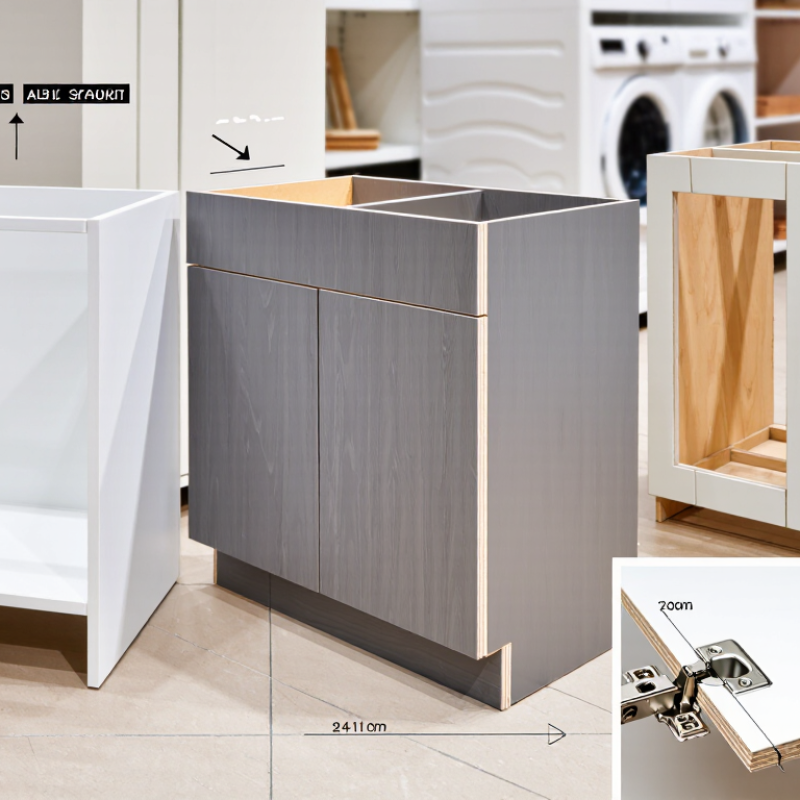
PVC cabinet construction depends on whether PVC forms the panel or only its finish. Common types include solid PVC sheet cabinets, rigid PVC foam-board cabinets, and PVC-laminated cabinets with MDF or particleboard cores. Solid and foam boards resist moisture across the panel, while laminate cabinets rely on intact edges and sealed joints. A swollen cut edge can reveal the difference.
Construction also shapes classification. Foam boards are lightweight and often used for bathroom or utility storage. Solid PVC sheets feel denser and suit areas needing frequent wiping. Laminated units can offer varied colors and textures, but their core may be vulnerable if water reaches an exposed edge. The VinylPlus Progress Report 2024 records 737,645 tonnes of PVC recycled in Europe during 2023. This is useful industry context, not proof that any cabinet type is recyclable or more durable. Specifications and local collection options still matter.
Tips: Inspect a sample cut edge, hinge fixing, and shelf support before ordering. Ask whether the cabinet body, back panel, and doors use the same material. “Waterproof” is often too broad; I would check the actual panel and joint details.
PVC foam board cabinets are made from expanded polyvinyl chloride sheets, rather than solid wood or plywood. The material is lightweight and resists routine moisture, making it useful in bathrooms, laundry rooms, and kitchens with occasional splashes. It is easy to wipe clean. Still, “moisture-resistant” does not mean every cabinet joint or fitting is immune to water damage.
Construction quality matters. Check the board thickness, internal supports, edge finish, and how hinges are attached. Foam board can be less rigid than plywood, especially across wide shelves or doors, so thoughtful reinforcement helps prevent flexing. A practical test is to open and close a sample door and look for movement around the hinge screws. Details matter. Light, but not flimsy.
These cabinets can suit homeowners who want a clean, simple surface without the weight of some traditional materials. They are available in different colors and finishes, though the look may feel less natural than wood. Ask how the panels handle heat and sunlight, particularly near ovens or bright windows. I would not assume every PVC foam board cabinet performs the same; thickness, fabrication, and hardware make a real difference. A small sample is worth inspecting before choosing a full set.
What Are the Top Types of PVC Cabinets?
PVC-Laminated MDF Cabinets
PVC-laminated MDF cabinets use a medium-density fiberboard core covered with a thin PVC film. The result is a smooth, consistent finish, often seen on flat doors and clean-edged panels. It can be easier to wipe than painted wood, especially around fingerprints and cooking splashes. Edges matter.
The core is still wood fiber, so the cabinet is not waterproof. If water reaches an unsealed edge or damaged joint, swelling can follow. This is why installers should check edge banding, cutouts, and sink-area seams, not just the visible door face. A glossy surface may look tough, but it cannot fix poor sealing.
Indoor-air quality also deserves attention. The U.S. Environmental Protection Agency’s TSCA Title VI standard sets a formaldehyde emission limit of 0.11 parts per million for MDF. Buyers can ask suppliers for compliant-product documentation rather than relying on a vague “low-emission” claim. The figure concerns the MDF panel, not the PVC film. There is a trade-off: deep scratches may be difficult to repair invisibly, and film quality varies. A small sample can reveal edge finishing and surface feel, though it cannot predict every year of kitchen use.
PVC membrane-finished cabinets typically use medium-density fiberboard (MDF) doors covered with a heated PVC film. During production, pressure helps the film follow the door’s face, edges, and decorative grooves. The result can look smooth and nearly seamless, with fewer visible joints than some edge-banded finishes. It suits flat fronts as well as routed designs. Color and texture options range from plain white to wood-like patterns.
The finish is easy to wipe with a soft cloth and mild cleaner. Everyday splashes are usually manageable, but the cabinets are not waterproof. Keep standing water away from seams, and use ventilation near sinks and cooktops. Heat matters, too. Repeated exposure to strong heat may weaken the film or lift an edge, so follow the installer’s clearance guidance. A careful fit helps.
There is a trade-off. Deep scratches and peeling can be difficult to repair invisibly, and replacement may be more practical than patching. Inspect corners and door edges before purchase; those spots reveal workmanship. Ask what substrate is used and how the film is applied. Small details matter. PVC membrane finishes offer a tidy, versatile look, but they still need sensible care.
PVC cabinet types perform differently because their cores and surface layers respond differently to water, heat, and daily loading. Solid PVC foam-board cabinets suit laundry rooms, bathrooms, and damp kitchens. Their non-porous panels resist water, but lightweight boards may flex under heavy dishes. Secure hinges into reinforced areas, not just thin panel edges. Details matter.
PVC-laminated plywood or particleboard usually offers a firmer cabinet box and a wipe-clean surface. Performance depends on the core and edge sealing: water entering an exposed seam can swell some wood-based cores. PVC membrane-wrapped doors offer smooth, seamless-looking faces and easy cleaning. Yet prolonged heat near ovens or kettles may weaken the adhesive and lift the film. Check the manufacturer’s temperature and care specifications.
The 2024 Houzz U.S. Kitchen Trends Study reported that 87% of renovating homeowners upgraded their cabinets. That figure signals how central cabinet choices are, but it does not compare PVC materials directly. For a sink base, inspect edge seals and plumbing cutouts. For overhead storage, ask about hinge reinforcement and shelf-load limits. Small sample doors help, though they cannot fully predict years of use. I would not call every PVC cabinet waterproof; construction quality changes the result.
| Cabinet Type | Typical Construction | Best-Suited Uses | Moisture Performance | Strength and Load Performance | Main Advantages | Key Limitations |
|---|---|---|---|---|---|---|
| PVC Foam Board Cabinets | Cabinet panels and doors are made from expanded, cellular PVC board, assembled with suitable joinery and hardware. | Bathrooms, laundry rooms, utility areas, and other locations where occasional splashes or humid air are expected. | High resistance to water in the board itself. Joints, cut edges, hardware openings, and installation details still need appropriate sealing. | Lightweight and practical for many cabinet applications. Stiffness and screw-holding depend on board density, thickness, reinforcement, and construction; heavy shelves may need support. | Does not rely on a wood-fiber core, is easy to clean, and is available in a range of finishes. | Can flex or dent more readily than some denser panel materials. Heat exposure and poorly supported spans can affect performance. |
| PVC Membrane-Wrapped Cabinets | A PVC film is heated and vacuum-formed over a shaped MDF door or panel. Cabinet boxes may use a different substrate. | Kitchen and bathroom doors where a smooth, seamless-looking surface or routed door profile is desired. | The film protects covered faces from routine splashes. Exposed edges, damaged film, seams, and the underlying substrate are more vulnerable to moisture. | Strength mainly comes from the MDF or other core, not from the thin PVC film. Performance varies with core thickness and cabinet construction. | Can cover shaped door profiles with few visible surface seams; the finished face is generally easy to wipe clean. | Film can peel or discolor under excessive heat or poor bonding conditions. Damaged areas may expose the core and are difficult to repair invisibly. |
| PVC-Laminated Panel Cabinets | A PVC sheet or laminate is bonded to a separate core, commonly MDF or particleboard; the core material determines much of the panel's structural behavior. | General-purpose kitchen, bathroom, office, and storage cabinetry in dry or moderately humid interiors. | The finished face can resist everyday splashes, but edges, joints, cut-outs, and the core's water resistance vary by product and edge treatment. | Typically suitable for standard cabinet use when correctly specified. Shelf capacity and screw holding depend primarily on the core and panel design. | Offers a broad choice of colors and patterns, a wipe-clean surface, and consistent panel dimensions. | Water entering an unprotected edge can swell some wood-based cores. Delamination is possible if bonding or installation is poor. |
| Solid PVC Panel Cabinets | Panels are made from unfoamed, solid PVC sheet rather than a cellular foam board or a PVC-faced wood-based core. | Moisture-prone utility settings and applications where a non-wood panel is preferred, provided the panel is appropriately supported. | The PVC panel itself is highly water-resistant. Joints, fasteners, and the overall cabinet assembly remain important potential entry points. | Panel behavior depends on thickness and support. Solid PVC can expand with temperature and may creep under sustained loads, so spans and fixings need careful design. | Water-resistant through the panel, with no wood-fiber core to swell if the sheet becomes wet. | Can be heavier or more costly than foam board, and thermal movement or long-term loading may require extra allowance in the design. |
Comparison note: “PVC cabinet” describes different materials and constructions, not one uniform performance level. Moisture resistance, load capacity, and service life depend on the core, panel thickness, edge sealing, joints, hardware, and installation conditions.