
A Portable Multi Gas Detector is a small instrument with a serious responsibility. It can monitor oxygen, carbon monoxide, hydrogen sulfide, methane, and other hazards in changing work environments. A worker may clip it to a vest, enter a tank, and watch the display change within seconds.
Market evidence shows why this technology matters. Grand View Research estimated the global gas detection equipment market at approximately USD 5.3 billion in 2023. Its report also projects continued growth through 2030, driven by industrial safety requirements and connected monitoring. MarketsandMarkets separately projects strong expansion in portable gas detection, although published estimates differ by scope and methodology. That difference deserves attention.
Gas detection specialist Tony O’Brien has stated, “A gas detector is only as reliable as its maintenance, calibration, and correct use.” The principle is simple. The practice is harder.
A reliable Portable Multi Gas Detector requires sensor selection, bump testing, calibration, alarm verification, and documented training. NIOSH guidance repeatedly stresses atmospheric testing before and during confined-space work. The device should not be treated as a magic shield. A blocked sensor, depleted battery, or ignored alarm can create a dangerous illusion of control.
This guide examines sensor types, alarm settings, accuracy, certification, battery life, and field routines. It also considers uncomfortable questions. Is the instrument suitable for the actual gases? Are workers trained to respond immediately? Are records complete?
Small details matter. A clean inlet matters. So does a visible alarm in bright sunlight.
What Is a Portable Multi Gas Detector?
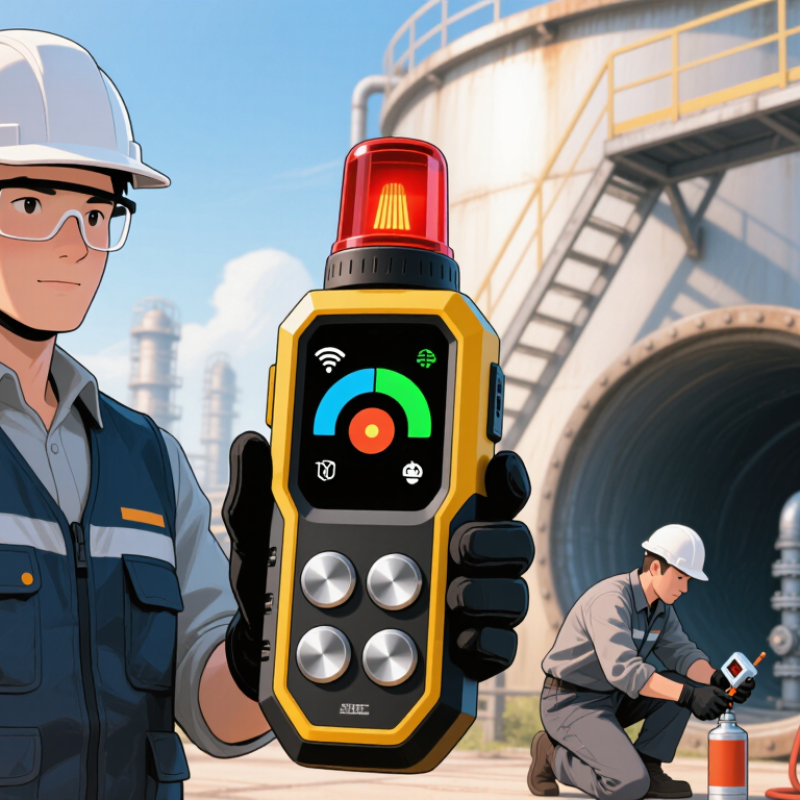
A Portable Multi-Gas Detector is a compact instrument that measures several airborne gases simultaneously. Its core purpose is simple: warn people before invisible hazards reach dangerous concentrations. Depending on its sensor configuration, it may monitor oxygen, combustible gases, and toxic gases such as carbon monoxide or hydrogen sulfide. The device draws air through sensors and displays readings on a screen. Audible, visual, and vibrating alarms can alert users quickly. This matters in tanks, utility areas, laboratories, and other spaces where air conditions can change rapidly.
Detection is not the same as protection. A detector supports decisions, but it does not replace ventilation, training, or an approved entry procedure. In practical use, workers should check the display, alarm status, battery, and sensor condition before entering a monitored area. Calibration and bump testing are also important, although they are sometimes treated as routine paperwork. That is a mistake. Sensors can age, readings can drift, and a clean screen does not prove safe air. I would question any reading that changes suddenly without a clear environmental reason.
Tips: Wear the detector near the breathing zone, not inside a pocket or bag. Keep sensor openings clear. Follow the manufacturer’s instructions for calibration intervals and alarm limits. Record unusual readings and leave the area when alarms persist.
| Data Dimension | Definition or Typical Data | Core Purpose and Practical Meaning |
|---|---|---|
| Definition | A battery-powered, portable instrument that measures two or more atmospheric hazards at the same time. | It provides real-time information about oxygen deficiency, toxic gases, combustible gases, or a combination of these hazards. |
| Most Common Configuration | Four-gas configuration: oxygen (O₂), combustible gas expressed as %LEL, hydrogen sulfide (H₂S), and carbon monoxide (CO). | This combination is widely used for general industrial work, confined-space entry, utilities, wastewater operations, and emergency response. |
| Oxygen Measurement | Usually displayed as volume percent (% vol). Normal atmospheric oxygen is approximately 20.9% by volume. | The measurement helps identify oxygen-deficient or oxygen-enriched atmospheres that may create breathing, combustion, or fire risks. |
| Combustible-Gas Measurement | Usually shown as a percentage of the Lower Explosive Limit (%LEL). The LEL is the lowest concentration of a flammable gas or vapor in air that can ignite. | The detector warns users before a combustible atmosphere reaches a potentially ignitable concentration. |
| Toxic-Gas Measurement | Common toxic-gas channels include H₂S and CO, normally displayed in parts per million (ppm). | Continuous monitoring helps identify invisible and potentially harmful gas exposure that cannot be reliably detected by human senses. |
| Sensor Technologies | Typical technologies include electrochemical sensors for oxygen and toxic gases, and catalytic-bead or infrared sensors for combustible gases. | The sensor type determines the gases that can be measured, the operating range, response behavior, and maintenance requirements. |
| Alarm Types | Common alarms are audible, visual, and vibrating alerts. Instruments may also display a high, low, short-term exposure, time-weighted average, or over-range alarm. | Multiple alarm methods help attract the user's attention in noisy, dark, or high-risk working environments. |
| Alarm Settings | Alarm limits are configurable and depend on the gas, applicable regulations, site procedures, and occupational exposure limits. | There is no single universal alarm value for every workplace; settings must be verified by a competent safety professional. |
| Sampling Method | Diffusion instruments sample gas from the surrounding atmosphere, while pumped instruments draw samples through a probe or tubing. | Diffusion is suitable for personal monitoring; pumped sampling is useful for remote, enclosed, or difficult-to-access areas. |
| Response Time | Response time varies by sensor type, gas concentration, airflow, sampling system, and tubing length. | Users should allow sufficient time for the sample to reach the sensors and for the readings to stabilize before making safety decisions. |
| Portability | The detector is designed to be carried on a belt, harness, or clothing using a clip or similar attachment. | Personal placement keeps the sensors close to the worker's breathing zone and supports continuous monitoring during movement. |
| Battery Operation | Rechargeable or replaceable batteries power the sensors, display, alarms, and data functions. | Battery status and expected operating time should be checked before each shift or entry into a hazardous area. |
| Pre-Use Testing | A bump test applies a known test gas briefly to confirm that the sensors and alarms respond correctly. | A successful pre-use test helps verify operational readiness; calibration is still required according to the manufacturer's instructions and site procedures. |
| Calibration | Calibration compares the instrument with a certified reference gas and adjusts the readings when necessary. | Regular calibration helps maintain measurement accuracy and should be performed at the required interval or after conditions that may affect sensor performance. |
| Typical Applications | Confined-space entry, tank and vessel inspection, industrial maintenance, wastewater treatment, utility work, mining, and emergency response. | The detector supports hazard identification, worker warning, entry decisions, evacuation, and incident investigation. |
| Primary Safety Limitation | A portable multi-gas detector is a monitoring and warning device, not a substitute for ventilation, isolation, respiratory protection, or a formal risk assessment. | Safe work requires an integrated control program that includes suitable equipment, trained personnel, atmospheric testing, and emergency procedures. |