
Eyelash Serum has moved from a niche beauty product to a widely discussed eye-care category. Yet, its promises often sound larger than its evidence. Grand View Research identifies eyelash products as part of the expanding global cosmetics market, while Statista Market Insights tracks growing consumer interest in eye makeup. These reports show commercial momentum, not guaranteed lash growth. That distinction matters.
An eyelash serum may condition fragile lashes, reduce breakage, or support a healthier-looking lash cycle. Ingredient choice changes the mechanism. Peptides, panthenol, biotin, and botanical extracts usually offer conditioning benefits. Bimatoprost works differently and requires medical oversight. The U.S. Food and Drug Administration’s prescribing information reports measurable lash improvement after sixteen weeks of approved bimatoprost use. However, results can vary between users. They may also fade after stopping treatment.
“Ophthalmologists should carefully evaluate the ingredients in eyelash growth products,” says Dr. Rupa Wong, a board-certified ophthalmologist, in public educational discussions about lash-enhancing treatments. Her warning reflects a practical concern: the eyelid margin is delicate, and irritation can appear as redness, itching, dryness, or darkening around the eyes. The American Academy of Ophthalmology also advises consumers to treat lash-growth claims cautiously and review products with an eye-care professional.
The science is useful, but incomplete. A serum is not automatically a treatment. This guide explains how Eyelash Serum works, which ingredients have stronger support, and where marketing becomes misleading. Patch testing may help, although it cannot remove every risk. Small habits matter. Clean hands. Careful application. Realistic expectations.
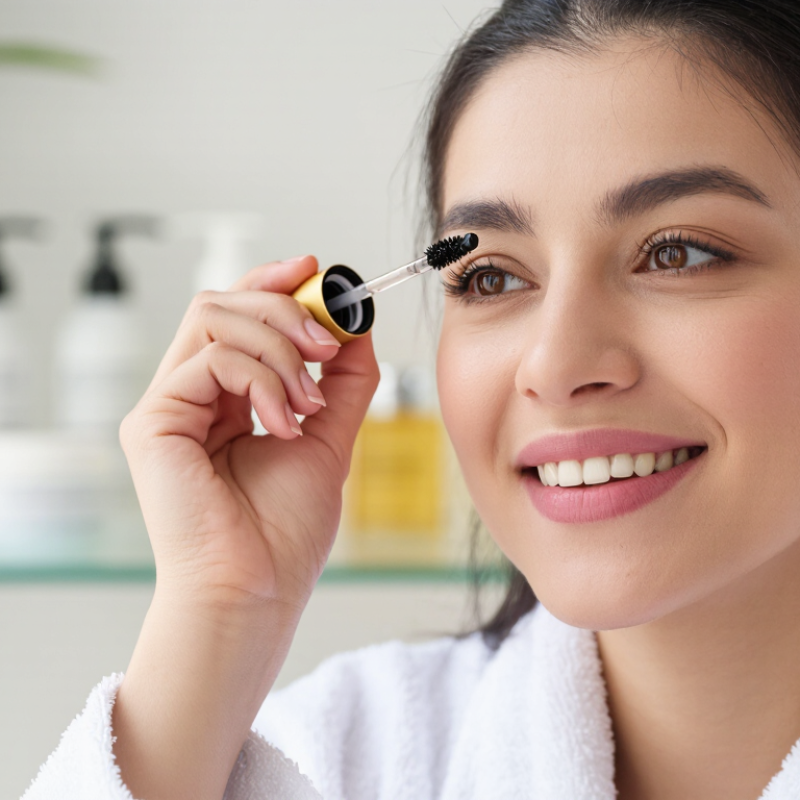
Eyelash serum is a leave-on cosmetic designed for the delicate skin around the lash line. It is usually applied with a small brush, much like liquid eyeliner. The formula may contain conditioning ingredients, such as peptides, panthenol, botanical extracts, or lightweight oils. These ingredients can help lashes feel softer, look shinier, and break less easily.
The word serum can sound more scientific than it is. Not every formula has strong clinical evidence behind every ingredient. Some products mainly condition existing lashes, while others are marketed to support a fuller appearance. They do not instantly create new lashes. Natural lash growth follows a cycle, so visible changes may take several weeks and vary between users. Patience is required.
In practical use, a clean application matters. Apply only a thin line to the upper lash line, and avoid getting the product inside the eye. Do not share the applicator. Stop using it if burning, swelling, persistent redness, or blurred vision appears. A patch test may reduce risk, although it cannot guarantee safety near the eyes. People with sensitive eyes, eye disease, or recent eye procedures should ask an eye-care professional before use. I would also question dramatic before-and-after claims, because lighting, mascara, and lash growth stages can change the result.
| Data Dimension | Evidence-Based Information | Practical Meaning |
|---|---|---|
| Definition | Eyelash serum is a cosmetic or ophthalmic topical product designed to condition eyelashes or, in some formulations, support the appearance of longer, fuller lashes. | It is applied to the lash line or lashes rather than used like mascara for immediate color or volume. |
| Primary Purpose | Most eyelash serums aim to improve lash conditioning, reduce the look of dryness or brittleness, and enhance the appearance of lash density or length over time. | Results are gradual and depend on the formula, regular use, and the individual eyelash growth cycle. |
| How Conditioning Formulas Work | Conditioning ingredients can coat the lash fiber, help reduce moisture loss, and improve softness and flexibility. Common categories include humectants, emollients, peptides, and plant-derived conditioning agents. | Conditioned lashes may look smoother, darker, or more defined, but a coating effect is not the same as new lash growth. |
| How Growth-Active Formulas Work | Some prescription ophthalmic treatments use prostaglandin-related compounds that can influence the eyelash growth phase. These products have a different safety and regulatory profile from ordinary cosmetic conditioners. | Products containing pharmacologically active ingredients should be used only as directed by a qualified healthcare professional. |
| Common Ingredient Categories | Formulas may contain peptides, amino acids, panthenol, humectants, plant extracts, vitamins, or conditioning oils. Ingredients and concentrations vary considerably between products. | The ingredient list is more informative than marketing terms such as “natural,” “strengthening,” or “growth boosting.” |
| Typical Application | A small amount is generally applied to clean, dry lashes or along the upper lash line, depending on the product instructions. Excess product should not be applied into the eye. | Using more product does not necessarily improve results and may increase the chance of irritation or accidental eye exposure. |
| Expected Timeline | Conditioning benefits may be noticed within several weeks, while changes associated with the natural lash cycle generally take longer. Eyelashes commonly renew over a period of several weeks to months. | Consistent use is usually more relevant than applying a large amount occasionally. |
| What It Cannot Do | A serum cannot permanently change a person’s natural lash genetics, replace missing eyelashes caused by an underlying condition, or guarantee a specific length or thickness. | Expectations should remain realistic, especially when lash loss is sudden, extensive, or recurring. |
| Possible Side Effects | Cosmetic formulas may cause temporary stinging, redness, itching, dryness, swelling, or eyelid irritation. More active treatments may have additional eye-area effects. | Stop use and seek medical advice if severe irritation, persistent redness, eye pain, vision changes, or significant swelling occurs. |
| Eye-Safety Considerations | The eye area is sensitive. Avoid sharing applicators, applying serum to damaged skin, or using a product that has changed in smell, color, or texture. Contact lenses should be handled according to product instructions. | Good hygiene and careful application can reduce contamination and accidental contact with the eye. |
| Who Should Seek Medical Advice | People with persistent eyelash loss, eyelid inflammation, eye disease, recent eye surgery, allergies, or pregnancy-related concerns should consult a healthcare professional before use. | Eyelash loss can sometimes be associated with skin, hormonal, nutritional, autoimmune, or eye-related conditions. |
| Key Evaluation Criteria | Review the ingredient list, usage instructions, intended regulatory category, expiration information, and suitability for the eye area. | Choose products based on transparent information and personal tolerance rather than promises of instant or permanent growth. |
Important: Eyelash serums are not all alike. A conditioning cosmetic product and a prescription growth treatment may differ substantially in ingredients, evidence, expected effects, and safety considerations.