Why Choose a Color Dosing Machine for Your Business?
A Color Dosing Machine can help businesses make color batches more consistent, reduce manual measuring, and keep production moving. Picture an operator pouring pigment by hand: one extra scoop may shift the shade across an entire batch. Automated dosing can make that step more controlled, especially when recipes change often or several product lines share equipment. Still, a machine is not a shortcut around good process control. Calibration, clean lines, and accurate recipes matter.
The broader manufacturing case for automation is growing. Deloitte and the Manufacturing Institute’s 2019 Smart Factory Study found that 86% of surveyed manufacturing executives expected smart factory solutions to be major drivers of competitiveness within five years. That finding is not a direct performance guarantee for color dosing. It does show why manufacturers are investing in more repeatable, data-informed processes. For a business, the practical question is whether dosing errors, rework, or slow changeovers are costing more than the equipment and upkeep.
Color consultant and author Faber Birren wrote, “Color is life.” In production, color is also a specification customers can see immediately. A well-chosen Color Dosing Machine can record recipes, deliver measured quantities, and help operators reproduce a target shade from one batch to the next. Not every facility needs automation, though. A poorly maintained system can create its own headaches. The best choice depends on batch size, pigment type, cleaning needs, and the cost of getting a shade wrong.
What Is a Color Dosing Machine?
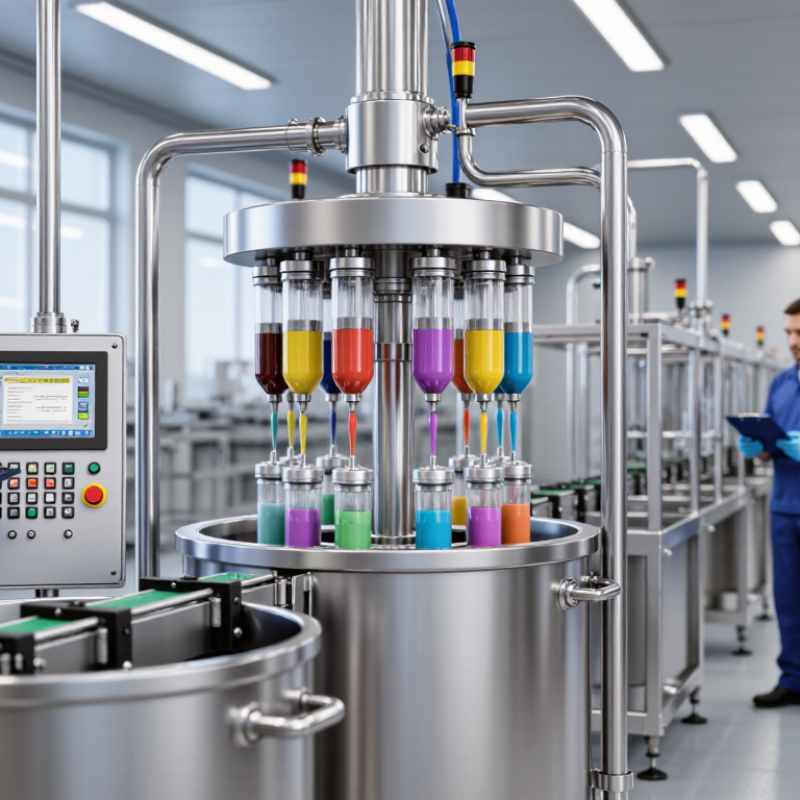
A color dosing machine measures and feeds a controlled amount of pigment or color concentrate into a base material. In plastics production, it commonly meters masterbatch into resin pellets before they enter the processing machine. Depending on the system, dosing may use weight or calibrated volume. The controller, hopper, and feeding screw work together to keep the blend consistent. It is not magic. Material flow, pellet size, and calibration can all affect the result.
On a production floor, a clear test is to compare colored pellets from the beginning and end of a run. Small errors matter.
Plastics Europe’s Plastics – the Fast Facts 2024 report estimates that global plastics production reached 413.8 million tonnes in 2023. That figure describes the scale of the sector, not the performance of dosing equipment, but it helps explain why repeatable color control matters.
A suitable machine depends on the material, target dose, and required output. Teams should verify settings with trial batches and check color under consistent lighting; even then, a perfect match may take adjustment.
Which Business Benefits Can It Provide?
Why Choose a Color Dosing Machine for Your Business?
Which Business Benefits Can It Provide?
A color dosing machine helps businesses repeat formulas with less manual measuring. An operator can enter a target amount, then dose colorant directly into a batch. This reduces guesswork with small quantities, where a few extra drops can change the final shade. It can also make production records clearer: teams can note the formula, batch size, and adjustments for later runs. That helps when customers reorder a specific color.
Consistency matters. A repeatable dosing process can reduce rejected batches and the time spent correcting them. Staff may also spend less time weighing colorants, freeing them for checks such as inspecting the mix or cleaning equipment. In a busy workshop, those minutes add up. Small changes matter.
The benefits depend on proper setup. Colorants differ in thickness, and a machine needs compatible settings, routine cleaning, and regular calibration. A clogged line or incorrect container size can create delays instead of savings. It is not magic. Businesses should compare dosing accuracy, daily batch volume, and cleaning time before choosing a system. A brief trial using common formulas can reveal whether the machine fits real production conditions. Admittedly, switching methods may feel awkward at first. That trade-off matters.
Where Are Color Dosing Machines Commonly Used?
Why Choose a Color Dosing Machine for Your Business?
Where Are Color Dosing Machines Commonly Used?
Color dosing machines are common in plastics processing, where manufacturers add measured color concentrate to natural resin. On an injection-molding line, controlled dosing helps keep items from one production run visually consistent. Small shifts matter. They can show up as uneven shades across caps, housings, or molded panels. Extrusion plants also use dosing equipment for pipes, sheets, and profiles, where color needs to remain steady along long lengths.
Paint and coating facilities use dosing systems to measure pigments into batches, while rubber processors add colorants to compounds before molding or extrusion. Textile production is another setting: measured pigments or concentrates can help color synthetic fibers more consistently. Each process has different material flow and cleaning needs, so equipment should match the material, batch size, and production speed. A machine suited to free-flowing granules may struggle with powders that bridge in a hopper.
No machine removes every color variation. Material changes, residue, and poor calibration can still affect results. Keep it clean. For a small workshop, a simple unit may be easier to operate than an automated line; larger plants may need tighter control and production records. Operators should check dosing accuracy during setup and after changing materials. The practical details are easy to overlook, and they often matter as much as the machine itself.
What Factors Should Guide Your Machine Selection?
Why Choose a Color Dosing Machine for Your Business?
What Factors Should Guide Your Machine Selection?
Start with the materials you actually use, not a machine’s maximum advertised capacity. Pigments differ in flow, density, and settling behavior. A powder that moves freely through a hopper may behave very differently from a thick liquid. Ask whether the dosing system suits your specific colorants and production process.
Match capacity to your real workload. A small workshop may value compact equipment and quick changeovers, while a busy production line may need faster cycles and repeatable dosing. Check the machine’s accuracy range, batch size, and compatibility with existing mixers or controls. If possible, run a sample using your own material. Watch for residue around the nozzle and uneven color in the finished mix. Small details matter.
Cleaning and calibration deserve equal attention. Frequent color changes can make inaccessible corners a costly nuisance. Ask how often calibration is recommended, what routine maintenance involves, and whether replacement parts are readily available. Request written performance specifications and practical training, not just a polished demonstration. Test it. One honest caveat: a more automated system does not remove the need for operator checks. Consider your available floor space, staff experience, and expected changes in demand. The right choice may not be the fastest model; it is the one your team can operate consistently.
Why Choose a Color Dosing Machine? Match Feeder Capacity to Your Production
Required concentrate feed rate depends on line throughput and the dosing ratio. The chart shows calculated examples using: feeder demand (kg/h) = production throughput (kg/h) × dosing ratio. These are example calculations, not equipment-performance claims.
How to use it: Estimate your production rate and dosing ratio, then check that the machine’s operating range covers the resulting feed rate. Also assess dosing accuracy, material compatibility, changeover and cleaning needs, and integration with your production line.