
Why Choose a Counterbalanced Lift for Your Business?

I can write the introduction, but no source articles or expert quotation were provided. To avoid inventing a person or falsely attributing a quote, please share a verified expert’s name and statement, or allow an original, unattributed industry insight instead.
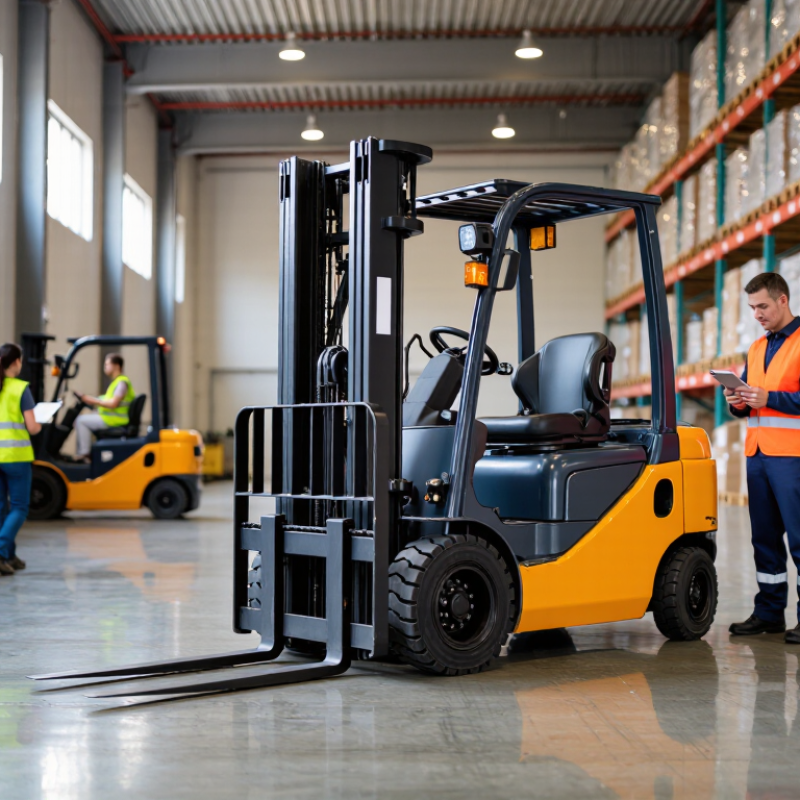
Why Choose a Counterbalanced Lift for Your Business?

What Is a Counterbalanced Lift?

A counterbalanced lift is a powered truck that carries a load on forks at the front and uses weight at the rear to balance it. The load acts as a lever, so the rear counterweight helps keep the truck stable while lifting and traveling. It does not need support legs extending beneath the load. That gives it a straightforward layout.

This design suits many warehouse aisles, loading bays, and work areas where pallets must be picked up from the floor and moved short distances. The operator can approach a pallet directly, raise it, and reverse away. But stability depends on more than the counterweight. Load weight, load center, lift height, and floor condition all matter. A sloped or uneven surface can change how the truck handles.

Before choosing one, compare the truck’s rated capacity with the loads your team actually moves, including bulky items that shift the load center forward. Check turning space, overhead clearance, and visibility from the operating position. Keep the capacity plate readable, and follow the manufacturer’s inspection and maintenance guidance. The design is simple, but that can make its limits easy to underestimate. A short practical trial in the real work area may reveal issues a specification sheet misses.

How Does Its Counterweight System Work?

A counterbalanced lift uses mass at the rear to balance a load carried at the front. On a forklift, the front axle acts as the balance point. The load creates a forward-turning force, while the counterweight creates an opposing force behind the axle. It is not simply a matter of matching two weights; distance from the axle matters too. A compact load placed far forward can challenge stability more than a heavier load positioned close to the forks. That distinction is easy to miss.

The idea is simple. Real work is less tidy. Load shape, fork position, mast angle, and attachments can all affect the lift’s capacity. Operators should check the capacity plate and keep the load close to the fork face, with the heaviest side nearest the mast when practical. For example, a pallet that overhangs the forks shifts its center of gravity forward, reducing the machine’s safe working margin. Counterweight helps resist forward tipping, but it does not make a lift immune to tipping. Turns, uneven floors, or raised loads can still compromise stability. A useful habit is to pause before lifting and ask: is the load centered, secure, and within the rated capacity? The answer may not always feel obvious.

Which Business Tasks Suit Counterbalanced Lifts?

Which Business Tasks Suit Counterbalanced Lifts?

Counterbalanced lifts work well when loads need moving across warehouse floors, loading bays, or outdoor yards. Their rear counterweight balances the load, so they can handle pallets without front support legs. This makes side access easier around standard racks and delivery vehicles. A tight aisle can still be a poor fit.

They are useful for unloading trucks, moving materials between work areas, and stacking goods at moderate heights. Solid tires suit smooth indoor floors, while pneumatic tires may handle rougher outdoor surfaces better. Check the rated capacity at the actual lift height; a long or heavy load can reduce safe capacity. Measure aisle width and turning space before choosing equipment. Small oversights matter.

Tips: Match the lift’s capacity to your heaviest expected load, not the average. Confirm doorway clearance, floor condition, and operator visibility. Keep loads low while traveling, and slow down on uneven ground. If loads are unusually long, test the turning path first. That step can reveal an awkward fit before daily work begins.

Why Choose a Counterbalanced Lift for Your Business? — Which Business Tasks Suit Counterbalanced Lifts?

Business Task Typical Load or Material Suitability Why a Counterbalanced Lift Fits Key Operating Consideration
Loading and unloading delivery vehicles Palletized cartons, bagged goods, or crated products Very suitable The forks can approach a load directly, and the counterweight supports lifting without front support legs extending beneath the load. Check the truck-bed height, dock layout, load weight, and available turning space.
Moving palletized stock around a warehouse Standard pallets and unitized inventory Suitable It can pick up, transport, and place loads across receiving, staging, and dispatch areas. Measure aisle widths and turning clearances; narrow aisles may call for a different truck type.
Handling long or bulky materials Timber packs, pipes, sheet materials, or oversized crates Suitable with planning Fork spacing and approved attachments can be adapted for some load shapes, while the counterbalanced design allows direct approach. Confirm load centre, attachment capacity, visibility, and the stability of the material before lifting.
Supplying production lines Pallets of components, packaging, and finished goods Suitable It can move materials between receiving, storage, and production areas without relying on a fixed conveyor route. Plan pedestrian separation, crossing points, and safe drop-off locations on busy routes.
Outdoor yard and loading-area work Pallets, building supplies, and weather-resistant packaged goods Suitable with the right configuration Some counterbalanced lifts are configured for outdoor surfaces and can handle transfers between yard and building. Choose tires and power type for the surface and environment; assess slopes, drainage, and ground condition.
Frequent short-distance transfers Mixed pallets and goods moving between nearby work areas Suitable One truck can perform repeated pickup-and-place tasks across several parts of a site. Match the truck’s rated capacity and lift height to the heaviest load and highest placement point.
Working in very narrow aisles Pallets stored in dense racking May be less suitable A counterbalanced truck needs room to turn and position its load; other lift types may work better where aisle space is especially restricted. Compare the required aisle width with the truck’s turning and load-handling specifications.
Handling loads on steep, uneven, or unstable ground Loads moved across rough or changing surfaces Requires careful assessment Suitability depends on the specific truck design, tires, load, and operating conditions rather than on the counterbalanced layout alone. Follow manufacturer limits and site risk assessments; do not exceed rated capacity or operate on unsuitable ground.

Note: Suitability is general guidance. Rated capacity, lift height, attachments, aisle requirements, power type, and surface limits vary by truck and configuration. Check the capacity plate and operating instructions before use.

What Operational Benefits Can They Provide?

A counterbalanced lift can move pallets and materials without front support legs extending beneath the load. That makes it useful around loading bays, production lines, and storage areas where floor space is tight. Operators can approach a pallet directly, then place it on a rack or truck bed. Fewer repositioning moves can save time during busy shifts. Small gains add up.

Its counterweight helps balance the load, while the mast and forks provide controlled lifting and lowering. This can support steadier handling across repeated tasks. However, lift capacity changes with load height and position. A bulky load may affect visibility, too. Teams should check the capacity plate, travel routes, and turning clearance before choosing a model. A lift that seems efficient on paper may feel awkward in a narrow aisle.

Tips: Keep loads centered and low while traveling. Mark pedestrian routes clearly, and inspect forks, tires, and brakes before each shift. Ask operators to test the lift in the actual work area. A short trial often reveals practical issues that a floor plan misses.

What Factors Should Businesses Consider When Choosing One?

Why Choose a Counterbalanced Lift for Your Business?

Choosing one starts with the work, not the advertised capacity. Measure your heaviest load, including pallets and attachments, then check the truck’s rated capacity at the actual load center. A longer load can reduce safe lifting capacity. Also measure aisle width, door clearance, turning space, and floor condition. A compact warehouse may need a different configuration from an outdoor yard with uneven ground.

Power source matters, too. Electric trucks may suit indoor operations where exhaust and noise are concerns; fuel-powered models can fit longer shifts or outdoor use. Compare shift length, charging or refuelling access, maintenance support, visibility, and operator comfort. OSHA reports that forklift incidents kill nearly 100 US workers and seriously injure about 95,000 each year. That figure covers powered industrial trucks broadly, but it makes training and safe operating conditions essential. A specification sheet can still mislead if it does not reflect your site.

Tips: Bring a sample load and pallet dimensions to the supplier. Ask for a capacity check with your proposed attachments, then test turning and visibility in a representative aisle. Confirm operator training and routine inspection plans. Small details matter. I would also reassess after a few weeks; real workflows often expose assumptions that looked sound on paper.

Source: US Occupational Safety and Health Administration, Powered Industrial Trucks eTool.

Why Choose a Counterbalanced Lift for Your Business?

How load center affects theoretical lifting capacity

This illustrative calculation assumes a truck rated for 2,000 kg at a 500 mm load center and holds the load moment constant. A longer load center reduces theoretical capacity. Actual allowable capacity depends on the truck’s data plate, load height, attachments, and operating conditions; always follow the manufacturer’s ratings.

Article Source:

Back To Top