Why Choose a Salon Furniture Factory for Global Sourcing?
Global salon owners are rethinking how they source furniture. A salon furniture factory can offer direct communication, consistent production, and practical customization. These advantages matter when a shampoo unit must fit a narrow wall, or when twenty styling chairs must match precisely.
David Rockwell, a respected hospitality and retail design expert, said, “Good design is not just what it looks like and feels like. Good design is how it works.” His observation applies strongly to salon furniture. A beautiful styling station means little if drawers jam, wiring remains exposed, or the work surface stains easily. Factory sourcing allows buyers to discuss these details with technical teams before production begins. They can review drawings, finishes, foam density, hardware, and packaging.
The process is not flawless. Samples may differ slightly from final batches. Time zones can slow decisions. Some factories also describe materials too broadly. Buyers must ask better questions. Request material specifications, inspection photos, installation guidance, and realistic lead times. Confirm whether surfaces resist moisture, chemicals, and repeated cleaning. Check the chair’s hydraulic base and weight capacity.
A reliable salon furniture factory should welcome these questions. It should provide traceable communication and stable quality controls. Experience also matters. A factory familiar with salons understands circulation space, client comfort, staff movement, and daily sanitation.
Global sourcing is not simply about finding the lowest price. It is about reducing avoidable problems. The strongest partnerships combine factory capability, transparent verification, and thoughtful design. Sometimes, the most valuable decision is slowing down before placing the order.
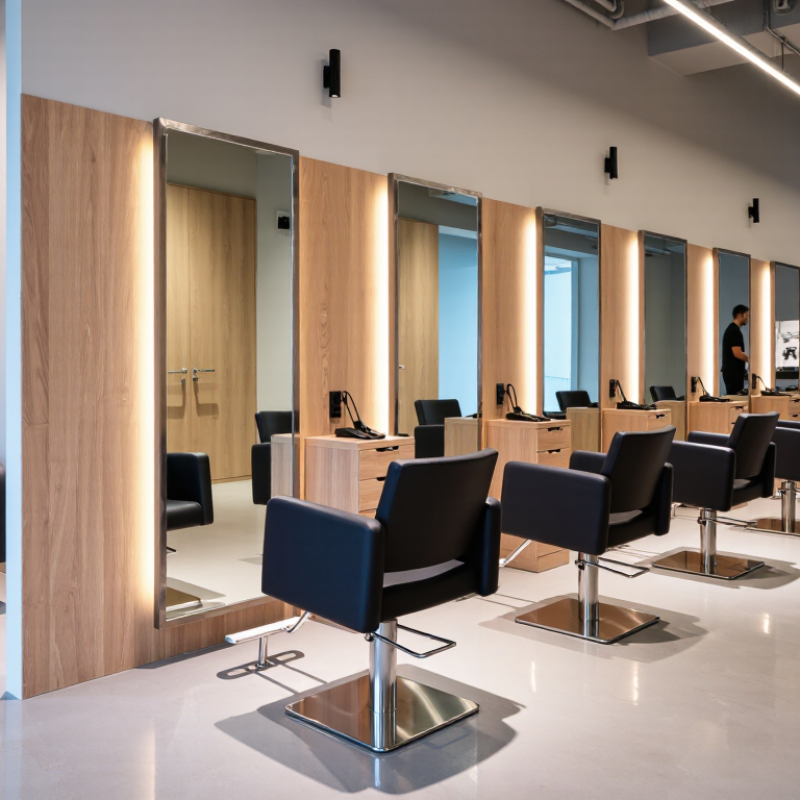
What a Salon Furniture Factory Provides for Global Buyers
A salon furniture factory gives global buyers direct access to production knowledge. Its team can adjust chair height, basin angles, storage sizes, and upholstery materials. These details matter when salons serve different customers and work in different spaces. A factory can also provide material samples, technical drawings, product dimensions, and installation guidance before production begins. Clear documents reduce misunderstandings between buyers, designers, and installers.
Quality control happens through several practical checks. Staff inspect welding points, hydraulic pumps, stitching, surface finishes, and packaging before shipment. Buyers may request pre-production samples or inspection photos. Factories can also support export packing, container loading, and required product documentation. Some provide replacement parts and remote support after delivery. That support can be valuable when a damaged fitting delays installation.
Not every factory handles every project well. Some need stronger communication with overseas buyers. Delivery estimates may also change when materials become unavailable. Honest discussions about these risks are essential. Experienced buyers should confirm specifications, inspection standards, payment terms, and shipping responsibilities in writing. A factory that welcomes questions usually offers more reliable cooperation. Still, buyers should verify each claim independently. A polished showroom does not guarantee consistent mass production.
What a Salon Furniture Factory Provides for Global Buyers
Typical planning timeline for key factory-sourcing deliverables, measured in business days
Direct cooperation with a salon furniture factory can combine product customization, sample development, production, quality inspection, and export documentation within one coordinated workflow. Actual timing depends on product complexity, order quantity, materials, and destination requirements.
How Direct Manufacturing Improves Quality and Cost Control
Choosing a salon furniture factory for global sourcing creates a shorter path between ideas and finished products. Direct manufacturing places design, materials, production, and inspection under one accountable team. In practical projects, a factory engineer can adjust a chair frame after reviewing drawings. This avoids delays caused by several trading layers. Small details matter. Weld alignment, foam density, edge sealing, and drawer clearance affect daily performance.
Cost control becomes clearer when buyers can review each production stage. A transparent quotation should separate steel, plywood, upholstery, hardware, packaging, and inspection costs. This helps sourcing teams compare complete prices instead of attractive but incomplete offers. Factory-direct purchasing may also reduce repeated markups and support more flexible order planning. However, the lowest price is not always the best value. Thin coating or weak foam can create replacement costs later.
Quality requires evidence, not promises. Request material samples, pre-production prototypes, measurement records, and load-testing results. An experienced factory should explain acceptable tolerances and corrective actions clearly. No factory is flawless. An approved sample may still differ slightly from mass production. That risk deserves attention. Regular inspections, batch records, and clear communication can reduce surprises. A reliable supplier also admits production limits and suggests realistic solutions. That honesty is useful.
What to Evaluate When Selecting an Export-Ready Factory
When sourcing salon furniture globally, an export-ready factory offers more than attractive designs. It should understand packaging, customs documents, container loading, and installation risks. In factory audits, small details often matter: reinforced carton corners, moisture barriers, labeled hardware, and spare fittings. Maritime transport carries over 80% of global merchandise trade, according to UNCTAD’s Review of Maritime Transport 2023. Therefore, shipment protection deserves serious attention.
Evaluate the factory’s quality system, not only its sample room. Ask for production records, material specifications, inspection procedures, and corrective-action reports. ISO’s 2022 Survey recorded more than 1.2 million ISO 9001 certificates worldwide, but certification alone proves little without consistent factory practice. Request recent audit evidence and verify whether the same standards apply to every order. Check export experience through packing lists, bill-of-lading samples, and destination-specific labeling. Some suppliers appear professional during meetings, yet struggle with moisture control or replacement parts. That gap is easy to miss.
Tips: Request a pilot order before large-volume purchasing. Test a shampoo unit’s plumbing, chair hydraulics, upholstery seams, and cabinet alignment. Ask for carton dimensions and loading photos. Compare promised lead times with actual production records. Keep specifications measurable. “Premium quality” is too vague. Define foam density, metal thickness, color tolerance, and load capacity. Also examine communication speed across time zones. A factory may have excellent equipment but weak after-sales coordination. I would not ignore that weakness. It can become expensive.
How Factories Manage International Orders and Logistics
A salon furniture factory can manage international orders through a clear production and shipping process. Experienced teams review drawings, dimensions, upholstery samples, and electrical requirements before quoting. This prevents costly changes later. Still, mistakes happen. A small measurement mismatch can affect installation overseas.
Factories usually assign one order manager to coordinate production, quality checks, and export documents. The manager confirms quantities, carton sizes, product markings, and delivery terms. Before loading, workers inspect frames, finishes, hinges, pumps, and upholstery. Photos and inspection records give buyers practical evidence, not just promises. Independent inspections can add confidence for larger orders.
Logistics planning begins while furniture is still in production. Teams calculate container space and protect fragile surfaces with foam, corner guards, and reinforced cartons. They prepare commercial invoices, packing lists, and other required shipping documents accurately. Incorrect carton details may delay customs clearance. It is an avoidable problem, but it still appears in real projects.
Factories may arrange sea freight for bulk orders and air freight for urgent replacement parts, depending on cost and timing. They also track port schedules, transshipment risks, and destination delivery requirements. Buyers should confirm who handles insurance, import procedures, unloading, and final placement. Clear communication matters when time zones separate the factory from the salon project. A reliable factory does not hide delays. It reports them early and proposes workable adjustments.