
Why Choose an Electric Winch for Your Business?

Moving heavy loads can slow a business when crews rely on manual effort or equipment that does not match the job. An Electric Winch can provide controlled pulling power for workshops, warehouses, service vehicles, and other demanding work settings. With suitable capacity and installation, it can help teams move loads more consistently and reduce strenuous handling.

The right choice depends on more than rated pulling capacity. Consider the load’s weight, the distance and direction of the pull, the duty cycle, and the available power supply. A winch used for occasional equipment recovery has different needs from one operating throughout a busy shift. Cable or rope type, mounting strength, controls, and environmental exposure also matter. Small details count. A weak mounting point, for example, can undermine an otherwise capable unit.

Electric models are often valued for convenient operation, steady performance, and straightforward integration into existing workflows. Their practical benefits still depend on correct selection, trained operators, and regular inspection. Follow the manufacturer’s instructions, check components for wear, and keep the work area clear before use. These steps support dependable operation; they do not remove every risk. And not every job suits a winch. Comparing specifications with real working conditions helps businesses avoid paying for unnecessary capacity or choosing a unit that falls short. The sections ahead explore these trade-offs, key features, and selection questions, so decision-makers can judge whether an Electric Winch fits their daily operations. A careful assessment may take longer, but that is usually time well spent.
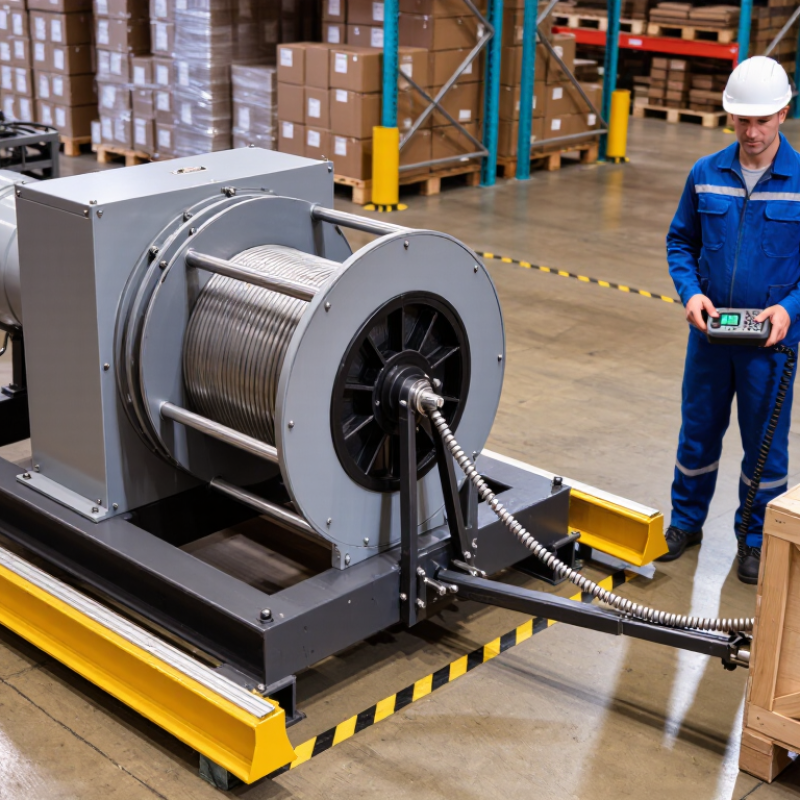
Why Choose an Electric Winch for Your Business?

How Electric Winches Work

An electric winch converts electrical energy into controlled pulling force. When an operator presses the control, current powers a motor, which turns a gearbox. The gearbox reduces speed and increases torque, rotating a drum. A steel cable or synthetic line wraps around the drum and draws a load toward the winch. Direction controls let the operator pay out or retrieve the line. Simple, but not effortless.

When power stops, a brake helps keep the drum from turning freely. Brake behavior varies by design. Heavy pulls can draw substantial current, while long cables or weak connections may reduce performance and heat components. Check the rated capacity, line condition, mounting points, and duty cycle before use.

Keep the line aligned and stand clear of its path. That matters. A winch can stall or overheat if pushed too hard.

A higher capacity rating does not solve every problem; anchoring and setup matter just as much. Follow the equipment instructions, and reassess if the load moves unevenly.

Key Components and Power Requirements

An electric winch is only as dependable as its load path: motor, gearbox, drum, brake, rope, and controls. Each part has a job. The brake holds the load; it cannot compensate for an undersized gearbox or damaged rope. Inspect the first wraps on the drum, its flanges, and connectors, where wear can hide beneath grease and dust.

Power selection starts with line pull and speed, not horsepower alone. Mechanical output is roughly force multiplied by rope speed; electrical input rises with motor and gearbox losses. Account for starting current, supply voltage, duty cycle, and starts per hour. Brief, slow lifts create different thermal demands from continuous hauling. The U.S. Department of Energy’s 2014 U.S. Industrial and Commercial Motor System Market Assessment Report attributes about 68% of U.S. manufacturing electricity use to motor-driven systems. That figure is not a winch-sizing rule, but it underscores why efficiency and heat management matter.

Compare the heaviest realistic pull with the rated pull on the drum’s first rope layer; additional layers can reduce available line pull. Leave a margin. It is easy to overlook. Check emergency stops, travel limits, and cable routing against the installation. Measure voltage at the winch under load, since long cables can cause voltage drop and sluggish starts. Revisit the calculations after installation. Real friction and operator habits may differ from the worksheet.

Why Choose an Electric Winch? Key Components and Power Requirements

Estimated motor input power rises with line pull when line speed and system efficiency are held constant.

Illustrative estimates assume a line speed of 5 m/min and 75% overall efficiency, using input power = pull force × line speed ÷ efficiency. Actual requirements depend on operating conditions, starting loads, duty cycle, and the winch manufacturer’s specifications. Key components include the electric motor, gearbox, drum, brake, and controller.

Common Business Uses for Electric Winches

Electric winches help businesses move loads when forklifts cannot reach or fit. In repair shops, crews use them to pull engines or machinery onto service beds. On construction sites, they can position materials along ramps or guide equipment into tight spaces. Marine operators use them to retrieve boats and handle dockside lines. The useful detail is controlled pulling: an operator can pause while a load clears a threshold or aligns with a trailer. Small adjustments matter.

The U.S. Bureau of Labor Statistics reported 2.6 million nonfatal workplace injury and illness cases in private industry in its 2023 report, Employer-Reported Workplace Injuries and Illnesses. That figure does not show that winches prevent injuries, but it underlines why planned material handling matters. Match the winch’s rated capacity to the load, and check the anchor point, cable condition, brake, and duty cycle before use. A pulling winch is not automatically suitable for lifting. In practice, teams sometimes underestimate the awkward setup. A crooked pull can shift a load, even when the motor has ample power.

Operational Benefits Compared with Manual Winches

An electric winch replaces repeated hand cranking with a powered pull. The operator can guide the load while controlling movement from a pendant. In a busy loading bay, that can reduce time spent on repetitive winding and make frequent lifting or pulling tasks easier to schedule. It also helps maintain a steadier pull when a load needs careful positioning. Small gains add up.

The U.S. Bureau of Labor Statistics reported 2.6 million nonfatal workplace injuries and illnesses in private industry in 2023. This broad figure is not winch-specific, so it cannot prove that electric models prevent injuries. It does, however, underline why businesses should assess repetitive physical work rather than dismiss it. An electric winch still needs a suitable anchor, rated capacity, regular inspection, and an operator who keeps clear of the loaded line. A manual winch may suit occasional jobs or sites without reliable power. Electric equipment adds power and maintenance requirements, too. That trade-off is easy to overlook. Check duty cycle and load details before choosing; a poor fit can create delays instead of saving time.

Factors to Consider When Choosing an Electric Winch

Choosing an electric winch starts with the job, not the catalog headline. Record the load’s weight, travel distance, lifting speed, and operating frequency. Include friction, shock loading, and rigging weight. A 1,000-kilogram load may require more than 1,000 kilograms of line pull. Check capacity at the drum layer you will actually use; pull can decrease as rope builds up. Small detail. Big consequence.

Power and duty cycle matter just as much. The IEA’s 2011 report, Energy-Efficiency Policy Opportunities for Electric Motor-Driven Systems, estimates that motor-driven systems use about 45% of global electricity. The U.S. Department of Energy’s motor-system sourcebook reports that they account for about 69% of electricity used in U.S. manufacturing. These figures are not winch-specific, but they underline the value of checking motor efficiency and heat management. Confirm voltage, phase, available current, brake behavior, and duty rating against your real work cycle. A workshop outlet may not be enough.

Match the winch’s construction to dust, moisture, temperature, corrosion, and visibility at the worksite. Check rope type, drum capacity, emergency-stop access, guarding, and inspection needs. Ask for duty-cycle ratings and test documentation, not just peak pull. A spreadsheet helps. It may still miss a jammed load or awkward mounting point, so measure the site and allow a suitable safety margin.

Back To Top