Why Choose an On Board Marine Charger?
A boat’s batteries often need charging when the engine is off and shore power is available. An On Board Marine Charger provides a fixed, convenient way to replenish selected battery banks without carrying a portable unit back and forth. For many owners, that means less clutter in the cabin and a clearer charging routine after a day on the water. Small comforts matter.
The right charger depends on the boat, battery chemistry, bank capacity, and available shore-power supply. A model with multiple outputs may support separate banks, but its charging profile and rating must match the batteries. Check the manufacturer’s specifications rather than relying on a broad “marine grade” label. Installation also deserves care: cable size, fuse protection, airflow, mounting location, and moisture exposure all affect safe, dependable operation.
An onboard unit is not automatically the best choice for every vessel. A small boat used occasionally may be well served by another charging arrangement, while a larger boat can benefit from a permanently installed system. There are trade-offs. Before choosing, compare charging needs with installation costs and ask a qualified marine technician when wiring or compatibility is uncertain. The goal is not simply faster charging; it is a system suited to the boat and its real use.
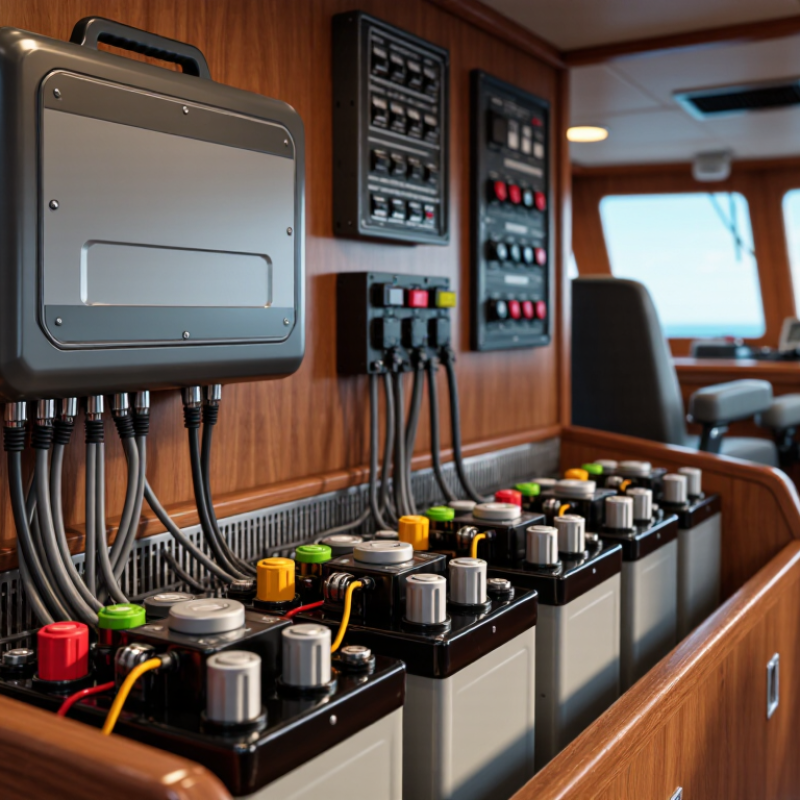
What an Onboard Marine Charger Is
Why Choose an On Board Marine Charger?
What an Onboard Marine Charger Is
An onboard marine charger is a permanently installed device that replenishes a boat’s batteries from an AC power source. That source is often shore power, or a generator when available. The charger converts incoming AC electricity into regulated DC power that batteries can accept. It may charge one battery bank or several, depending on its design.
Many chargers adjust their output to suit different battery types and charging stages. This helps reduce the risk of undercharging or overcharging when the settings match the batteries. Check the specifications carefully. A charger is not the same as an alternator, which charges batteries while the engine runs. It also cannot fix a worn-out battery.
Installation affects reliable operation. The unit needs a secure location with suitable ventilation and protection from water, heat, and vibration. Correct cable size, fusing, and connections matter too. Small details count. The name sounds simple, but choosing a charger can take more thought than expected. Battery chemistry, bank capacity, and available AC supply all influence the right fit. Follow the charger and boat manufacturers’ instructions, and have a qualified marine electrician review the installation if anything is unclear.
How an Onboard Marine Charger Works
Why Choose an On Board Marine Charger?
How an Onboard Marine Charger Works
An onboard marine charger takes alternating current from a dockside power connection or generator and converts it into direct current for the batteries. It then regulates voltage and charging current to suit the battery system. The charger may support separate battery banks, such as one for starting and another for house loads. Small difference. Big consequence.
Many chargers adjust their output through stages. A bulk stage replenishes much of the charge, an absorption stage fills the battery more carefully, and a float stage helps maintain it. The exact behavior depends on the charger and battery chemistry, so check their manuals rather than assuming every setup is alike. Some systems also monitor temperature, which can affect safe charging.
At the dock, a useful check is whether the charger’s status display matches the battery condition you expect. Warm cables, damaged insulation, or repeated charging faults deserve attention, not guesswork. Use equipment rated for the marine environment, and have the AC supply and wiring assessed by a qualified marine electrician. It is tempting to treat charging as automatic. It is not entirely hands-off. A charger can manage its cycle, but it cannot correct poor connections or an incompatible battery setup.
Benefits for Marine Battery Systems
Why Choose an On Board Marine Charger?
Benefits for Marine Battery Systems
An onboard marine charger keeps charging equipment on the boat, ready for use at the dock. It can charge separate battery banks, such as starting and house batteries, without moving a portable unit between them. Many models use staged charging to replenish batteries and then maintain them, but settings must match the battery chemistry and capacity. Details matter.
The National Marine Manufacturers Association’s Recreational Boating Statistical Abstract estimates that about 100 million Americans go boating each year. For boats used across varied schedules, a permanently installed charger can make routine shore-power charging simpler. A sealed, marine-rated unit also helps protect charging components from damp conditions; installation still needs sound ventilation, secure wiring, and appropriate overcurrent protection. Convenient does not mean careless.
A charger cannot restore a damaged battery or compensate for poor connections. Battery Council International reports a lead-battery recycling rate near 99% in the United States, but recycling is not a substitute for longer service life. Correct charging can help avoid chronic undercharging, though results depend on battery condition, temperature, and load. I would not treat a charger’s indicator light as a complete battery-health test. Check voltage and inspect terminals, too.
Key Features to Consider When Choosing a Charger
An onboard marine charger can keep batteries ready between trips, but the right choice depends on your boat’s setup. Check the battery chemistry first. A charger must support the chemistry installed, such as lead-acid or lithium, and use a suitable charging profile. Next, match its output to your battery bank and typical charging time. Too little output may leave batteries short on power after a long day; more output is not automatically better. Check the manufacturer’s guidance.
Tips: Count your battery banks and note their voltage and chemistry before comparing chargers. Check whether separate outputs can charge different banks independently. Small details matter.
Look for temperature compensation when supported by your battery type, plus clear status indicators that show charging stages or faults. A sealed, corrosion-resistant unit can be useful in a damp compartment, but confirm its specified environmental rating and mounting requirements. Leave space for ventilation, and inspect cable length and fuse requirements before installation. It is easy to focus on output numbers and miss these practical details. I have found that a charger’s features only help when they suit the actual installation. Follow the charger and battery manuals, and ask a qualified marine technician if compatibility or wiring is uncertain.
Why Choose an Onboard Marine Charger?
Choosing a Charger: A Practical Current-Sizing Guide
As a general starting point, charger output is often sized at about 10–20% of the battery bank’s amp-hour capacity. Actual requirements depend on battery chemistry and manufacturer specifications, as well as your charging time and onboard electrical setup. Check compatibility with your battery bank’s voltage and chemistry before choosing a charger.
Installation and Maintenance Requirements
An onboard marine charger needs more than a convenient spot near the batteries. Choose a marine-rated unit matched to battery chemistry and system voltage. Mount it securely in a dry, ventilated location, away from fuel vapors and excessive heat. Follow the charger’s manual and applicable ABYC A-31 and E-11 guidance for mounting, wiring, overcurrent protection, and grounding. Use conductors sized for the charger’s current and cable length; loose or undersized connections can heat up under load. Keep terminals clean and protected. Small details matter.
Before installation, disconnect shore power and isolate the battery bank. Check polarity carefully. It is easy to rush that step. The U.S. Coast Guard’s 2023 Recreational Boating Statistics recorded 3,844 reported boating accidents and 564 deaths; those figures cover many causes, not charger faults, but they reinforce the value of sound maintenance. Inspect cables, fuses, ventilation openings, and mounting hardware regularly, especially after rough trips. Look for corrosion, cracked insulation, or a warm connector while charging. For flooded lead-acid batteries, provide suitable ventilation and check electrolyte levels as directed by the battery maker. I still recheck cable labels after service; they are not always as clear as they should be.