Why Choose Hiking Shoes for Men?
Choosing the right pair of Hiking Shoes For Men can make a long trail feel steadier and more comfortable. The right shoe supports your feet across loose gravel, damp roots, and rocky climbs. It can also help reduce rubbing when the trail keeps going after lunch. Small details matter. A padded collar, secure lacing, and grippy outsole are easy to notice on uneven ground.
Outdoor educator and backpacking guide Andrew Skurka emphasizes matching footwear to the route, conditions, and individual fit. That practical idea matters because no single shoe works for every hiker. A light, flexible pair may suit maintained paths, while rougher terrain may call for more protection and stability. Fit should come before fashion. To check it, try shoes late in the day, when feet may be slightly swollen, and leave room for your toes on descents. Still, fit is personal. A feature praised by one hiker may bother another.
This guide explores why men’s hiking shoes deserve careful consideration, what separates them from everyday sneakers, and which features matter most on the trail. It also looks at tread, cushioning, support, materials, and weather protection. Those details can help narrow the choices, but they cannot promise a perfect match. Your pack weight, walking style, and usual terrain all count. There is no magic pair. Think about the last trail that left your feet sore; that memory may be more useful than a product label.
What Defines Hiking Shoes for Men?
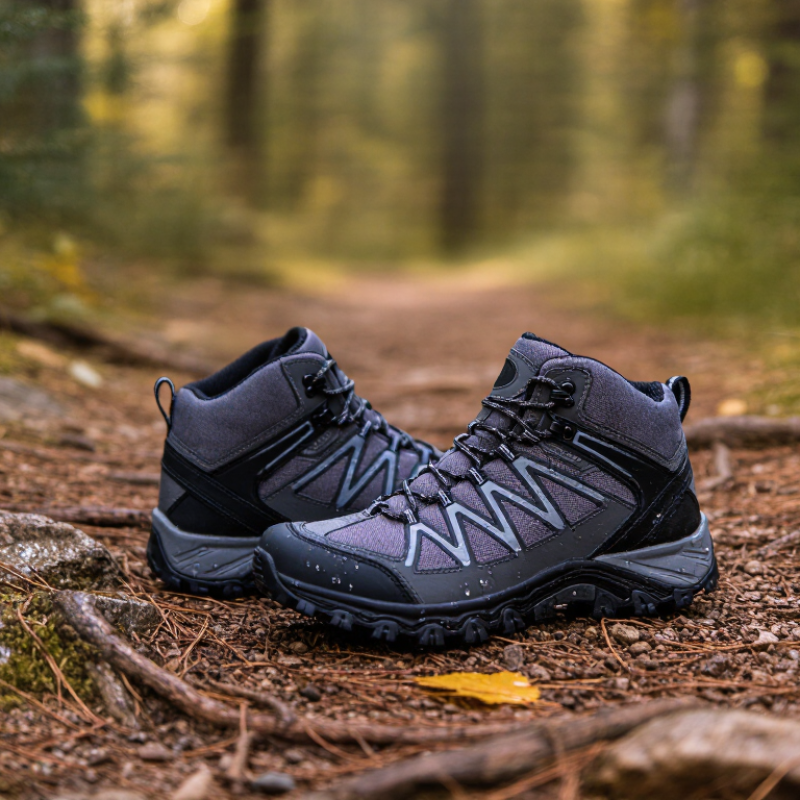
What defines hiking shoes for men? A stable fit, protective upper, grippy outsole, and cushioning suited to the route. Men’s models often use different width and shape options, but sizing labels alone cannot guarantee a good fit. The heel should stay secure, while toes need room to spread on descents. Try them with hiking socks, ideally late in the day when feet have expanded. Small detail. It matters.
The outsole’s lugs help grip loose dirt, rock, and mud; deeper patterns can feel clumsy on smooth pavement. A supportive midsole softens repeated impact, while a protective toe cap helps against roots and stones. Waterproof membranes may help in wet conditions, but can feel warm on dry, hot trails. The Outdoor Industry Association’s 2024 Outdoor Participation Trends Report counted 175.8 million U.S. outdoor participants in 2023, reflecting the scale of outdoor recreation—not a measure of hiking-shoe performance. For traction, ASTM F2913 describes a whole-shoe test method for measuring friction between footwear and a test surface. Still, lab results cannot fully reproduce slippery leaves or uneven trails. Fit is personal, and even experienced hikers sometimes choose shoes that feel too stiff. A little awkward at first. That is worth noticing before a long walk.
How Hiking Shoes Support Stability and Traction
Men’s hiking shoes can make uneven trails feel more controlled by combining a supportive fit with a grippy outsole. Their tread often uses spaced lugs that bite into dirt and help shed loose mud. On a rocky slope, a stable platform can reduce unwanted foot movement inside the shoe. That matters.
Support also comes from the upper and midsole. A secure heel fit helps limit slipping, while a firm midsole can steady the foot when stepping across roots or gravel. The shoe should hold your foot comfortably without squeezing your toes; too much tightness can become painful on descents. Fit varies, so try shoes with the socks you plan to hike in, and walk on an incline if possible.
Traction still has limits. Smooth, wet rock can be slippery, even with deep lugs, and worn tread may grip less effectively. Choose a pattern suited to your usual terrain, then shorten your stride on slick sections. I might expect a sturdy shoe to solve every balance problem, but it cannot replace careful footing.
Key Benefits on Different Types of Trails
On packed dirt and gravel, hiking shoes for men can offer more grip and foot protection than everyday sneakers. Their firmer soles help reduce the sting of small stones underfoot, while a snug heel can limit sliding on descents.
Grip matters.
On rocky paths, a protective toe area can help when a loose stone shifts unexpectedly. The trade-off is weight: a sturdier shoe may feel tiring on a flat, easy trail, so more support is not automatically better.
Wet roots and muddy sections call for dependable traction and a fit that keeps your foot from shifting. Deeper tread may help in soft ground, though mud can clog it.
Not always.
On dry, technical routes, a close fit and flexible sole can make foot placement feel more precise. For long walks, cushioning may ease repeated impact, but a soft shoe can feel unstable on uneven slopes. I still get this wrong sometimes: choosing waterproof shoes for warm weather can leave feet hot and damp. Match the shoe to the trail, then check the fit with the socks you plan to wear. A short test walk can reveal rubbing before a full day on the path.
How to Choose the Right Fit and Features
A good fit matters more than a rugged-looking sole. The Outdoor Industry Association’s 2024 Outdoor Participation Trends Report counted 175.8 million U.S. outdoor participants, including people taking day hikes and longer trips. That range of use means your shoe should match the terrain and the load you carry. On a rocky trail, a firm sole and protective toe cap can help shield your feet; on smoother paths, a lighter, more flexible shoe may feel less tiring.
Try shoes late in the day, when feet may be slightly swollen, and wear the socks you plan to hike in. Leave roughly a thumb’s width between your longest toe and the front. Walk down a ramp or slope if possible: toes hitting the front are a warning, even when the shoe feels comfortable on a flat floor. The heel should stay secure without rubbing. Check both feet; they may not be the same size. Small details matter.
Choose waterproofing only if wet conditions are common. Membranes can slow drying in warm weather, and that trade-off is easy to overlook. For ventilation, inspect the upper; for grip, look for deep, well-spaced lugs suited to mud or loose ground. There is no perfect fit on paper. Walk in the shoes before a long hike, and notice any pressure point early. My own judgment can still be wrong: comfort in a shop is not proof of comfort after several miles.
When Hiking Shoes Are Preferable to Boots or Trail Runners
Hiking shoes are often the practical middle ground when a day hike includes packed dirt, rocky sections, and a moderate load. They usually feel lighter and less restrictive than boots, while offering more underfoot protection than many trail runners. On loose gravel, a firm sole can make each step feel steadier; a protective toe cap helps when the trail gets stony. Small details matter. A secure heel and enough toe room reduce rubbing on long descents.
Outdoor Industry Association’s 2023 Outdoor Participation Trends Report estimated 58.7 million U.S. hiking participants in 2022. That broad group faces very different terrain, so footwear should match the route, not a category label. Hiking shoes can suit maintained trails and mixed day-hike surfaces, especially when runners feel too thin underfoot. Boots may be preferable for sustained rough terrain, heavier packs, or when their higher cut feels more comfortable to the wearer. Trail runners can be a better fit for fast, light outings and people who value flexibility. The trade-off is not perfectly neat. Wet conditions, shoe fit, and personal comfort can outweigh the label on the box. Fit still decides much. Try shoes with hiking socks, and check for heel lift before setting out.
Why Choose Hiking Shoes for Men?
When Hiking Shoes Are Preferable to Boots or Trail Runners
Hiking shoes often offer a middle ground: more structure and protection than trail runners, with less weight and ankle coverage than boots. These approximate ranges are per pair; actual weight varies by size and design.