
Why Is Strontium Fluoride Used in Industrial Applications?

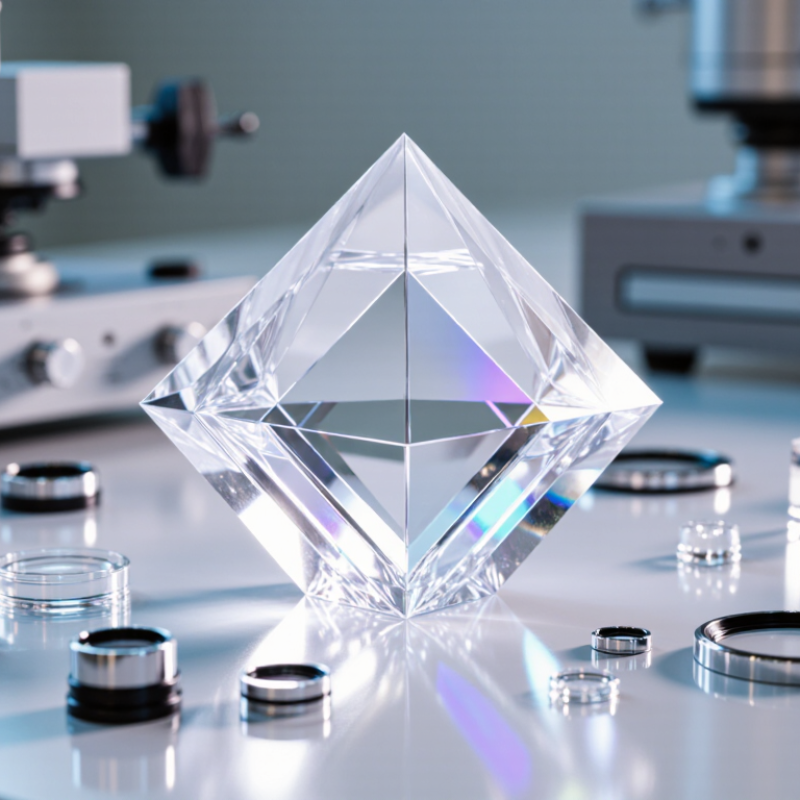
Strontium Fluoride (SrF2) is a crystalline material used in specialized optical and electronic applications. Its cubic crystal structure and broad light-transmission range make it useful for selected optical components. That matters. Manufacturers may use it in lenses, windows, or prisms designed for ultraviolet, visible, or infrared wavelengths. The right choice depends on the exact wavelength and the component’s required performance. A clear crystal is not automatically a suitable one.

Industrial interest also comes from its behavior as an optical host material. When carefully prepared and doped, SrF2 crystals can serve in specialized laser and research systems. Crystal purity, growth quality, and surface finish can all affect results. These details are visible in practice: a tiny inclusion or surface flaw may scatter light and reduce component performance. Not always. Compared with other fluoride crystals, Strontium Fluoride is selected for particular material and optical properties, not as a universal substitute. Cost, processing requirements, and the limits of a given design also matter. Engineers therefore evaluate the full operating range, including temperature and exposure conditions, before specifying it. The material has useful capabilities, but its role is relatively specialized. Understanding those trade-offs helps explain why it appears in certain industrial applications rather than in everyday products.
Why Is Strontium Fluoride Used in Industrial Applications?

Chemical Identity and Structure of Strontium Fluoride

Strontium fluoride, or SrF₂, is an inorganic salt made from strontium and fluorine. PubChem’s compound record lists a molar mass of 125.62 g/mol. Its crystal adopts the cubic fluorite structure, also found in calcium fluoride: strontium ions form a face-centered cubic lattice, while fluoride ions occupy tetrahedral sites. This ordered arrangement helps explain why the material is studied for optical components and other applications requiring stable, transparent crystals. Small structural differences still matter.

PubChem reports a density of about 4.24 g/cm³ and a melting point near 1,477°C. These figures indicate a dense solid that tolerates substantial heat, but they do not alone determine performance in a finished component. Crystal purity, defects, and processing conditions can change optical behavior. That distinction is easy to overlook when specifications are reduced to a single number.

Tips: When reviewing a datasheet, check whether values describe bulk material or a finished crystal. Compare test methods, too; the details can be imperfectly reported.

Why Is Strontium Fluoride Used in Industrial Applications? — Chemical Identity and Structure of Strontium Fluoride
Category Property or Application Details Industrial Relevance
Chemical name Strontium fluoride An inorganic compound made of strontium and fluorine. Its stable fluoride composition makes it useful as a material in specialty optical and chemical applications.
Chemical formula SrF2 One strontium atom is combined with two fluorine atoms. The defined composition supports its use as a source of strontium and fluoride in materials research and specialty manufacturing.
CAS Registry Number 7783-48-4 Common chemical identifier for strontium fluoride. Used in technical specifications, chemical inventories, and safety documentation.
Molar mass 125.62 g/mol Calculated from the atomic masses of strontium and fluorine. Useful for calculating batch quantities and material composition.
Crystal structure Cubic fluorite structure Strontium fluoride crystallizes in the fluorite-type structure, with space group Fm̄3m. A well-defined crystal structure is valuable when producing and evaluating optical crystals and other engineered materials.
Ionic arrangement Coordination environment Each strontium ion is surrounded by eight fluoride ions; each fluoride ion is surrounded by four strontium ions. This arrangement contributes to the compound’s characteristic solid-state properties.
Appearance Solid crystalline material High-purity material is typically supplied as a white or colorless solid. Purity and crystal quality are important in optical and electronic-material applications.
Density Approximately 4.24 g/cm³ A representative value for solid strontium fluoride. Relevant to component design, material handling, and crystal characterization.
Melting point Approximately 1,477 °C A high melting point characteristic of this inorganic ionic solid. Supports consideration of SrF2 in high-temperature materials processing, subject to process conditions and compatibility.
Optical behavior Broad optical transmission Optical-grade strontium fluoride can transmit ultraviolet, visible, and infrared radiation; the usable range depends on material quality and component design. Used in specialized optical windows, lenses, and other components where transmission across a broad spectral range is required.
Optical applications Windows and lenses Crystals or optical components may be selected for applications requiring suitable transmission and environmental performance. Found in specialized optical systems, including instruments operating in ultraviolet or infrared wavelength regions.
Scintillation materials Specialty crystal host Strontium fluoride crystals can be used in scintillation research and detector materials, including doped crystal compositions. Relevant to specialized radiation-detection and materials-development applications; performance depends on composition and crystal quality.
Material formulations Fluoride-based materials SrF2 may be incorporated into selected fluoride glass, ceramic, or other specialty formulations. Its use depends on the target composition and the required optical, thermal, or chemical properties of the finished material.
Specification note Grade-dependent properties Reported physical and optical values can vary with purity, crystal defects, measurement conditions, and supplier specifications. Application design should use verified data for the specific material grade and component.

Physical and Optical Properties Behind Its Industrial Value

Strontium fluoride is valued in industrial optics because its crystal structure and light transmission suit demanding optical components. At room temperature, it forms a cubic fluorite-type crystal with optical symmetry in different directions. That consistency can help reduce unwanted directional effects in lenses and windows. The material transmits light across ultraviolet, visible, and infrared regions, although actual performance depends on purity, crystal quality, and component thickness.

Its relatively low refractive index can limit surface reflection, while its useful transmission makes it a candidate for specialized windows, prisms, and optical assemblies. In practice, a polished strontium fluoride window may look clear under visible light yet serve equipment operating beyond what the eye can see. Useful, but not magical. Scratches, inclusions, and poor surface finishing can still scatter light and weaken performance.

The crystal also has a high melting point, which supports use in some elevated-temperature settings. However, that figure alone does not guarantee resistance to thermal shock or mechanical wear. Strontium fluoride is comparatively soft and brittle, so handling and mounting need care. Engineers typically weigh its optical range against fabrication difficulty, cost, and the component’s operating conditions. A small flaw can matter more than the headline property.

How Key Properties Support Industrial Applications

Strontium fluoride is useful where optical parts must pass ultraviolet and infrared light while tolerating heat. Its cubic crystal structure and broad transmission window suit specialty windows, lenses, and spectroscopic components. PubChem’s compound record lists a melting point near 1,477 °C and density of about 4.24 g/cm³. These figures help engineers assess thermal margins and component weight before selecting a crystal. A high melting point helps, but it does not make the material immune to thermal shock.

Optical performance depends on crystal purity, surface finish, and the wavelength being used. In a spectrometer, for example, a polished SrF2 window can transmit light between a hot source and a detector with limited absorption. Small inclusions or machining damage can still scatter light. That detail matters. It is easy to overstate what a material property alone guarantees.

The USGS Mineral Commodity Summaries 2025 describes strontium compounds as inputs to several industrial sectors, including ceramics and ferrite magnets; SrF2 serves more specialized optical needs. Its hardness and chemical stability can support durable components, while brittleness complicates cutting and mounting. Engineers should validate transmission and thermal cycling in the actual assembly. Data sheets rarely capture every real operating condition.

Major Uses in Optics, Ceramics, and Metallurgy

Strontium fluoride is valued in industry because its crystal structure and chemical behavior suit demanding, specialized processes. In optics, high-purity SrF₂ can be made into windows and lenses for ultraviolet and infrared instruments. Its cubic structure reduces direction-dependent optical effects, while its broad transmission range supports work across several wavelengths. Performance still depends on crystal quality. Tiny inclusions or a poor polish can scatter light.

Small details matter. In ceramics, SrF₂ may be added to selected glaze or glass-ceramic formulations to influence melting behavior and crystallization. A measured addition can help produce a smoother fired surface or alter the finished material’s appearance. Too much fluoride, however, can cause unwanted defects or volatilize during firing. Results depend on the recipe, kiln temperature, and firing time, so small test batches are often more useful than assumptions.

In metallurgy, strontium fluoride appears in some specialty flux blends for nonferrous processing. The flux can help improve melt fluidity and assist the separation of oxide-bearing material, but it is not a universal fix. Alloy chemistry and furnace conditions change how a blend performs. Operators must also consider fluoride-containing emissions and use appropriate process controls. That practical trade-off is easy to overlook.

Handling, Safety, and Material Selection Considerations

Why Is Strontium Fluoride Used in Industrial Applications?

Handling, Safety, and Material Selection Considerations

Strontium fluoride is selected for applications such as optical components and specialty ceramics because its properties can suit demanding material requirements. Performance depends on grade, purity, and processing—not just the chemical name. Check the technical data and safety data sheets for the specific material before purchase or use.

Keep powder handling controlled. Fine particles can become airborne during pouring or mixing, so use suitable local exhaust and avoid creating dust. Wear protective equipment specified by the supplier’s safety data sheet, and keep containers closed when not in use. Good housekeeping matters. Clean spills with methods that limit dust rather than dry sweeping. A small detail, but an easy one to miss.

For material selection, compare purity limits, particle size, moisture specifications, and batch consistency against the process needs. Optical applications may require tighter impurity controls than general ceramic use. Confirm that packaging protects the material during storage, and inspect it for damage or contamination on receipt. Pilot testing can reveal handling or processing problems that a specification sheet will not. It takes extra time. Yet relying on a familiar grade without checking the actual process can be a poor assumption.

Why Is Strontium Fluoride Used in Industrial Applications?

A density comparison of three alkaline-earth metal fluorides used in specialty materials.

Material selection: Strontium fluoride has an approximate crystal density of 4.24 g/cm³. Density is one useful comparison, but optical performance, purity, chemical compatibility, and operating conditions also matter when selecting a fluoride material.

Handling: Avoid creating or breathing dust, prevent ingestion, and follow the supplier’s safety data sheet. Use appropriate workplace controls and protective equipment.

Values are approximate room-temperature crystal densities; actual material specifications may vary.

Back To Top