Commercial floors face more than ordinary foot traffic. A restaurant entrance may collect rainwater, grit, and muddy shoe prints before lunch. Behind a service counter, workers may stand for hours on hard concrete. In a warehouse, carts and pallet jacks can place different demands on the same surface. The best rubber floor mats depend on where they will be used, how they will be cleaned, and what the floor must withstand.
This guide compares ten options for commercial settings, looking at practical details such as surface grip, drainage, thickness, edge design, and ease of maintenance. A mat with open holes may suit a wet work area, while a flatter, low-profile style can work better near doorways or wheeled equipment. Check dimensions and product specifications carefully. A useful feature in one location can become a nuisance in another. Small things matter.
There is no single perfect choice. Product descriptions may not reveal how a mat feels underfoot or fits around a busy workstation, so verify measurements and care instructions before buying. This review is intended to help readers compare suitable rubber floor mats with realistic expectations, not promise that one product fits every business. A little doubt is healthy; the right fit often depends on the floor, the workflow, and the people using it each day.
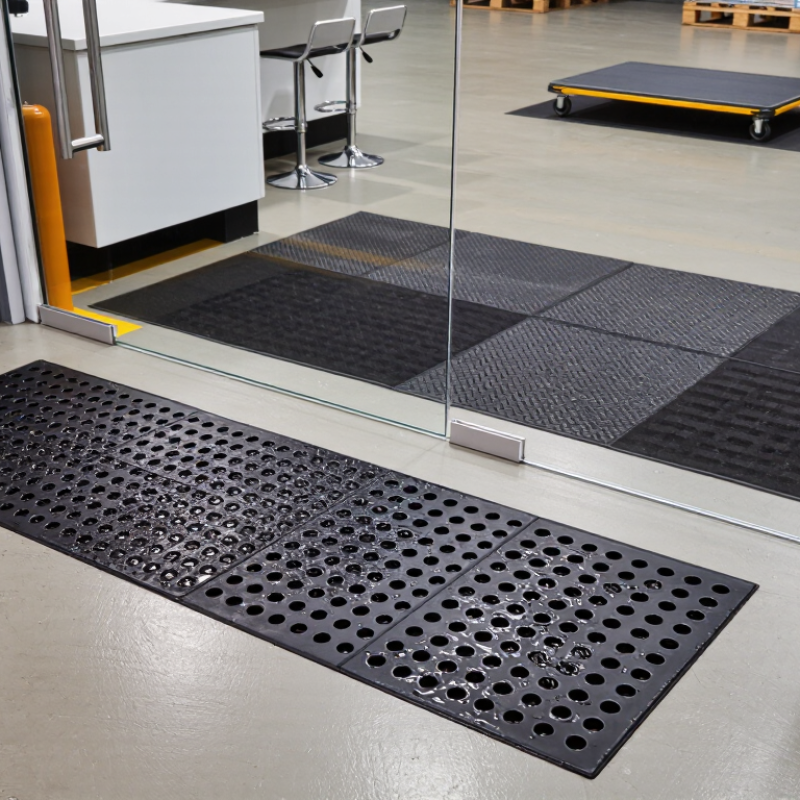
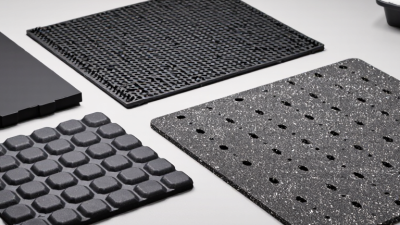
Commercial rubber floor mats differ by surface design and job. Flat, solid mats cushion workers at packing benches and checkout counters. Textured mats add grip where water or light oil reaches the floor. Open-grid mats let liquids and debris fall through, making them useful near wash stations. They are not ideal everywhere.
Natural rubber often feels flexible and resilient, while nitrile rubber is commonly chosen for areas exposed to oils. Recycled rubber can suit general-purpose routes, though its composition and odor may vary. Check chemical compatibility, thickness, and cleaning guidance before ordering. Small details matter. A mat that curls at the edge can create a trip point.
Match the mat to the task, not just the room. Anti-fatigue styles can ease standing work, but they cannot fix poor footwear or an awkward bench height. Entrance mats trap grit before it spreads across a warehouse floor. In wet zones, drainage and frequent cleaning matter as much as surface texture. Measure the work area, including door swings and cart paths. Fit matters. The first choice may still need adjustment after workers use it.
A useful comparison of ten commercial rubber mat designs starts with consistent testing, not appearance alone. ASTM D2240 measures indentation hardness, reported on a specified Shore scale. A harder compound may resist dents from narrow cart wheels, while a softer one can feel more forgiving during long shifts. Neither result tells the whole story. Check the scale, specimen thickness, and test conditions before comparing values.
ASTM D412 evaluates tensile behavior by stretching a standard rubber specimen until it breaks. Record tensile strength and elongation at break for each design. Higher tensile strength can indicate better resistance to pulling forces, but it does not directly measure tear or abrasion resistance. Small details matter: a mat pulled tightly around a floor edge may face different stresses than one laid flat beside a packing bench.
For a fair ten-mat comparison, use matching sample preparation and report the results alongside thickness, surface pattern, and intended setting. One design may suit a dry assembly area; another may stay more stable near a wash station. Look closely at the actual numbers. A lab result cannot fully predict performance over a concrete floor with grit, spilled water, and daily cart traffic. I would treat test data as a screening tool, then verify fit and comfort in the intended workspace.
Illustrative comparison of Shore A hardness (ASTM D2240) and tensile strength (ASTM D412) across ten common mat design profiles.
Note: Values are illustrative screening examples, not results from laboratory testing or claims about specific products. Actual results vary with formulation, specimen preparation, thickness, conditioning, and test procedure. Verify performance using test reports for the mat being considered.
For commercial rubber floor mats, opening size deserves a close check, not a quick glance. The ADA’s 2010 Standards state that floor openings on accessible routes must not allow passage of a sphere more than ½ inch in diameter. If openings are elongated, their long dimension should run perpendicular to the main direction of travel. This matters near entrances, service counters, and other paths used by customers or staff.
Measure the widest clear opening, including gaps where mat sections meet. A ruler can help, but a ½-inch gauge gives a more dependable check. Look for curled edges, shifting sections, and compressed areas; a compliant opening size alone does not make a mat stable. Keep the surface firm and secure, and reassess it after cleaning or heavy cart traffic. A common oversight is choosing a highly open pattern for drainage, then placing it across a doorway where wheels and canes must cross. It is easy to miss that detail. The ADA requirement is a useful baseline, but site conditions and applicable local standards may call for additional review. A careful measurement is worthwhile, even when the mat looks safe.
Choosing commercial rubber floor mats should start with the walking surface, not a product claim. OSHA 29 CFR 1910.22 requires walking-working surfaces to be kept clean, orderly, and, where feasible, dry. Employers must inspect them regularly and address hazardous conditions before use. The standard does not prescribe one mat design or certify mats as “OSHA-approved.”
Match mat features to the hazard. At a wet entrance, open drainage channels can help move water away from foot traffic; a textured, slip-resistant top can improve footing. In a dry assembly area, cushioning and stable backing may matter more. Check that edges lie flat, mats resist curling, and the underside stays put on the actual floor. Small details matter.
Cleaning matters too. A mat that traps grit or hides spills can create a problem rather than solve one. Select a surface staff can clean and inspect, and replace mats that split, buckle, or lose traction. Test placement during normal work, including cart routes and door swings. Looks safe isn’t enough. Conditions change through a shift, and even a well-chosen mat needs routine attention.
Choosing commercial rubber floor mats takes more than comparing thickness. Check whether water, grease, or washdown residue can drain through the surface. Open-grid designs suit wet work areas, while solid mats may be easier to wipe in dry zones. Not every mat drains. Fine debris can block openings, so inspect the underside and floor beneath it.
Load capacity should reflect real traffic, not just footfall. A mat under a wheeled cart faces concentrated pressure at its small wheels. Look for published load ratings and compression guidance, then consider whether the mat may shift or curl at the edges. Thick does not always mean durable. That detail matters.
Chemical resistance depends on the actual substances used onsite. Cleaning solutions, oils, and food residues can affect rubber differently, so check compatibility data rather than relying on a general “chemical-resistant” claim. Maintenance needs deserve equal attention: textured surfaces may improve grip but hold dirt, and frequent lifting takes time. Set a practical cleaning schedule, inspect seams, and let the floor beneath dry. It is easy to overlook that step. A mat that performs well on paper may still be inconvenient in a busy room.
| Mat Type | Typical Construction | Drainage | Load Suitability | Chemical Resistance | Maintenance Needs | Typical Commercial Setting |
|---|---|---|---|---|---|---|
| Open-grid drainage mat | Molded rubber grid with open holes or channels | Very high; allows water and debris to pass below the walking surface | Foot traffic and light carts; confirm product rating for wheeled equipment | Generally suitable for water; resistance to oils and cleaners varies by compound | Lift periodically, rinse underneath, and allow the floor to dry | Wet entrances, wash areas, and food-service back-of-house zones |
| Solid ribbed rubber mat | Continuous sheet with raised ribs on the surface | Low; surface ribs help channel small amounts of liquid, but the mat is not perforated | Routine foot traffic and light carts on a flat, sound floor | Depends on rubber formulation; check compatibility with oils, solvents, and cleaning agents | Sweep or mop the surface; lift edges to clean trapped moisture | Dry workstations, corridors, and service counters |
| Coin-pattern rubber mat | Solid rubber sheet with raised circular surface pattern | Low; raised pattern provides limited surface texture, not through-drainage | General foot traffic; rolling loads should be checked against the specific product and floor | Varies by compound; standard rubber should not be assumed resistant to fuels or strong solvents | Regular sweeping and damp cleaning; avoid cleaners not approved for the compound | Retail service areas, workshops, and general-purpose walkways |
| Rubber entrance scraper mat | Textured rubber surface, often with molded scraping ridges or openings | Moderate to high when openings are present; depends on the design and installation surface | Pedestrian traffic; not intended for heavy vehicle or concentrated machinery loads unless rated | Usually suited to outdoor moisture and dirt; chemical resistance varies by compound | Shake out or hose down; clean accumulated grit from the underside | Building entrances, exterior thresholds, and utility doorways |
| Nitrile rubber mat | Solid or textured mat made with nitrile-based rubber compound | Low unless manufactured with drainage holes or channels | Foot traffic and light-to-moderate carts; verify the rated load for the specific mat | Often a suitable choice around oils and grease; exact resistance depends on the formulation and exposure | Wipe or wash with a compatible cleaner; remove oily residue promptly | Machine shops, food-preparation areas, and maintenance work zones |
| EPDM rubber mat | Solid or textured mat made with EPDM rubber compound | Low to moderate; drainage depends on whether the mat has molded openings | Routine foot traffic and light carts; check product data for concentrated or rolling loads | Generally performs well with weathering, water, and many dilute acids or alkalis; typically unsuitable for petroleum oils and fuels | Sweep or wash with mild, compatible detergent; rinse off chemical residues | Outdoor walkways, wash-down areas, and spaces exposed to sunlight or weather |
| Recycled rubber mat | Compressed or molded recycled rubber granules or rubber blend | Low for solid sheets; moderate or high for perforated designs | Typical foot traffic and some light carts; load performance varies considerably with density and construction | Compound-specific; do not assume resistance to oils, solvents, or concentrated chemicals | Vacuum or sweep granules and debris; use mild cleaners and check for wear at edges | General commercial areas, gyms, and utility spaces |
| Interlocking rubber tile | Modular rubber tiles with interlocking edges; solid and perforated styles are available | Low for solid tiles; higher for perforated tiles, with drainage dependent on the floor beneath | Varies by thickness and tile construction; confirm suitability for carts and point loads | Depends on the rubber compound; joints can collect chemicals or debris if not cleaned | Lift sections for periodic cleaning; inspect interlocks and replace worn tiles as needed | Workstations, temporary coverage, and areas needing localized replacement |
| Perforated anti-fatigue rubber mat | Cushioned rubber mat with holes or open sections for liquid and debris passage | High relative to solid mats; openings need a suitable floor or collection area beneath | Designed primarily for standing workers; rolling carts may catch on openings or edges | Varies by compound; choose a compatible formulation for oils, food fats, or cleaners | Lift and rinse regularly; inspect openings for trapped debris and keep edges flat | Standing stations in wet or debris-prone work areas |
| Conductive or static-dissipative rubber mat | Specially formulated rubber mat designed to control static electricity when properly installed | Usually low; drainage is not the main design purpose | Light equipment and foot traffic; verify product specifications for equipment loads | Chemical resistance varies by formulation; confirm compatibility before exposure | Use approved cleaners and follow grounding and inspection procedures for the installation | Electronics assembly, testing benches, and other static-sensitive work areas |
Selection note: These are general mat categories, not certified product ratings. Actual load capacity, drainage performance, and chemical compatibility depend on the specific mat, thickness, compound, installation, floor condition, and exposure. Check the manufacturer’s technical data and confirm suitability for the intended equipment and cleaning chemicals.