How to Choose the Best Non Slip Mat in 2026?

Choosing the best non slip mat in 2026 requires more than checking a product rating. A mat may look thick and secure, yet slide across wet tile after repeated use. The right choice depends on surface type, moisture level, foot traffic, cleaning habits, and edge design. It should stay flat near doorways, grip firmly in bathrooms, and drain water without becoming difficult to wash.

Slip-and-fall prevention specialist Dr. Steven Di Pilla has written, “The best way to prevent slips and falls is to identify and eliminate hazards before they cause an accident.” His advice reflects an important truth. A non slip mat supports safety, but it cannot replace proper cleaning, ventilation, or quick spill removal. Test the mat where it will actually be used. Press one corner with your shoe. Drag it gently across the floor. Check whether the backing leaves residue or loses grip when damp.

Material quality matters. Rubber and thermoplastic elastomer backings often provide dependable traction, while loose fabric may bunch under moving feet. Look for beveled edges, reinforced borders, drainage holes, and clear care instructions. Measure the area carefully; a mat that is too small can create exposed wet zones. A mat that is too large may curl against cabinets or doors.

Still, no mat is perfect. Even a highly rated model can fail on dusty flooring or with poor maintenance. This guide compares practical features, safety evidence, comfort, durability, and value. It also considers overlooked details, such as odor, drying time, and how the mat behaves after months of washing.
How to Choose the Best Non Slip Mat in 2026?

Define Wet-Grip Performance with ANSI A326.3’s 0.42 DCOF Benchmark

How to Choose the Best Non Slip Mat in 2026?

ANSI A326.3 provides a practical reference for wet-grip performance. Its 0.42 DCOF benchmark applies to interior, level walking surfaces tested under wet conditions. DCOF means dynamic coefficient of friction. It measures resistance while a surface is moving, not just standing still.

For a non slip mat, request wet DCOF results from a qualified laboratory. The report should identify the floor surface, water condition, footwear, and test method. A dry traction claim is not enough.

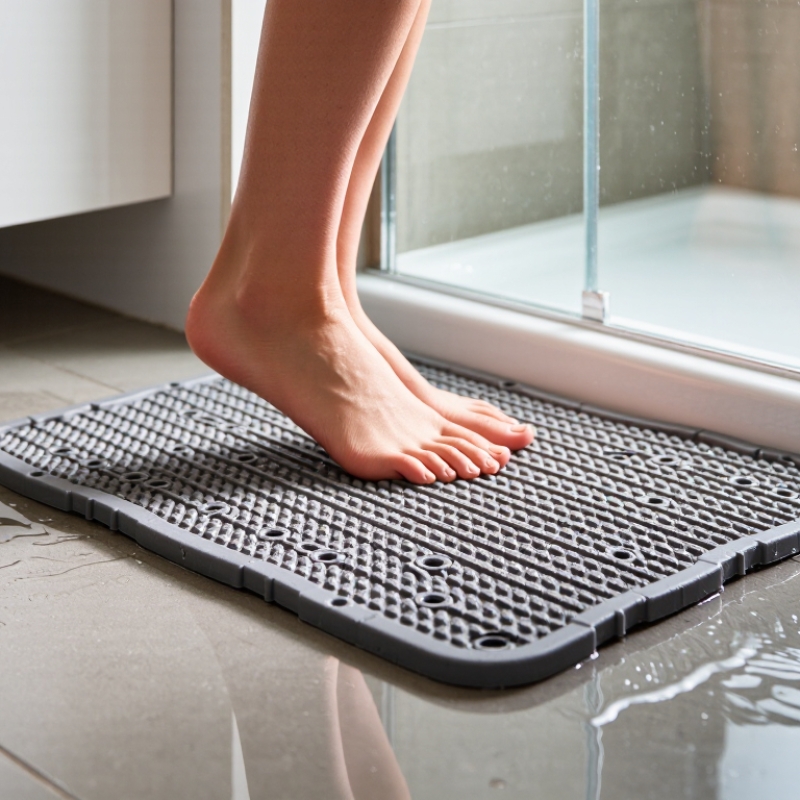
Look for a mat with a stable backing, beveled edges, and channels that move water away from the contact area. A textured top may improve grip, but deep grooves can trap soap, hair, or food residue. Cleaning matters.

During a site check, place the mat on the actual wet floor and test its edges with normal footwear. Small movements reveal problems quickly. They also expose an uncomfortable truth:

a high DCOF value cannot guarantee safety if the mat curls, shifts, or sits on oil.

The CDC reports that more than 14 million adults aged 65 and older report a fall each year. This figure shows why wet-floor control deserves careful attention, especially near showers and entrances. However, it is not a mat-selection formula.

ANSI A326.3 offers a valuable benchmark, but it does not replace installation checks, maintenance records, or user testing. Certification can support a decision. It cannot make a poor installation safe.
Compare Rubber, PVC, and Nitrile Using ASTM F1677 Slip-Resistance Tests

How to Choose the Best Non Slip Mat in 2026?

Slip resistance should be measured, not guessed from a rough surface. ASTM F1677 uses a Portable Inclinable Articulated Strut Slip Tester to measure static coefficient of friction. Test results depend on water, contamination, footwear, pressure, and surface texture. Therefore, one material cannot win every location.

Rubber often provides strong traction on wet walkways and stable flooring. PVC can offer lower cost and useful chemical resistance, but its surface may harden or wear faster. Nitrile is usually worth considering where oils, grease, or industrial fluids are present. Its performance still requires verification. Ask for ASTM F1677 results from the finished mat, not only the raw compound. That detail matters.

The World Health Organization reports that falls cause about 684,000 deaths globally each year, while 37.3 million falls require medical attention. These figures make maintenance part of safety, not housekeeping. I have seen mats lose grip when trapped dust forms a thin, invisible layer underneath. A clean, flat backing helps. So does regular inspection.

Compare tested SCOF values under conditions resembling your floor. A dry laboratory result may disappoint beside a wet entrance. ASTM F1677 is useful evidence, but it is not a universal pass-or-fail guarantee. Recheck edges, drainage, curling, and wear. My own preference can change after testing; material labels are only a starting point.

Match Mat Placement to DIN 51130 R9–R13 Wet-Zone Safety Ratings

How to Choose the Best Non Slip Mat in 2026?

Mat placement should follow the real hazard, not appearance. DIN 51130 classifies slip resistance through a ramp test using oil and safety footwear. R9 covers 6–10 degrees, R10 covers 10–19 degrees, R11 covers 19–27 degrees, R12 covers 27–35 degrees, and R13 exceeds 35 degrees. These ratings describe tested flooring performance, not every condition a mat will face. Water, grease, dust, worn soles, and poor drainage can change the result.

Use R9 near dry corridors and low-moisture office entrances. R10 suits sheltered entrances and areas with occasional water. R11 is more appropriate for kitchens, wash-down zones, and busy service passages. Greasy food-processing areas may require R12 or R13, alongside drainage and regular cleaning. The UK Health and Safety Executive reported that slips and trips caused about 29% of specified employee injuries in 2023/24. Placement matters.

Check the mat’s edges and underside. A high-rated surface still fails when it curls, shifts, or traps liquid. CDC fall-prevention guidance also stresses environmental hazards, including wet floors and poor walking surfaces. I would not select R13 everywhere. It can feel uncomfortable, collect debris, and complicate trolley movement. A better decision records moisture, contamination, footwear, traffic, and cleaning frequency at each entrance. Test the actual installation after rain or cleaning. Small gaps remain easy to miss.

How to Choose the Best Non-Slip Mat in 2026? Match Mat Placement to DIN 51130 R9–R13 Wet-Zone Safety Ratings
DIN 51130 Rating Ramp Angle Range Recommended Placement Typical Wet-Zone Conditions Mat Design Priorities Recommended Cleaning Approach Relative Slip-Risk Guidance
R9 6° to less than 10° Low-moisture indoor areas, entrances protected from heavy rain, offices, corridors, and general walkways. Occasional dampness with limited liquid contamination. Low-profile surface, stable backing, beveled edges, and adequate contact with a clean, dry floor. Vacuum or shake out loose dirt; damp mop or wash according to the mat construction. Lower exposure; not intended for continuously wet or greasy work areas.
R10 10° to less than 19° Covered entrances, utility rooms, commercial corridors, light-duty food-service areas, and changing areas. Regular moisture, tracked-in rain, and small amounts of diluted contamination. Open texture or shallow drainage channels, moisture-resistant fibers, slip-resistant backing, and easy edge transition. Remove debris frequently; wash or extract when moisture and soil build up. Suitable for routine wet-foot traffic when correctly maintained.
R11 19° to less than 27° Public entrances exposed to rain, washrooms, poolside transition areas, commercial kitchens, and food-preparation access routes. Frequent water, wet footwear, and moderate contamination. Deeper drainage profile, high liquid capacity, strong floor grip, beveled borders, and a backing compatible with the floor finish. Daily soil removal in busy areas; rinse, wash, and dry thoroughly to prevent residue and odor. Recommended where standing moisture or repeated wet traffic is expected.
R12 27° to less than 35° Heavy-duty commercial kitchens, beverage-production access areas, loading interfaces, fish-processing areas, and industrial wet rooms. Frequent water combined with grease, oil, food residue, or other difficult contamination. Robust open-grid or high-drainage construction, chemical-resistant materials, secure anchoring, and sufficient thickness for liquid displacement. Use scheduled deep cleaning; remove the mat when required so the floor beneath can also be cleaned and dried. For demanding wet or contaminated zones; housekeeping remains essential.
R13 35° and above Very high-risk industrial wet areas, heavy food-processing zones, slaughtering areas, and locations with persistent contamination. Large quantities of liquid, grease, oil, food residue, or other highly slippery substances. Maximum drainage and displacement capacity, heavy-duty construction, chemical resistance, secure installation, and access for frequent sanitation. Follow a documented sanitation schedule; clean the mat and the floor underneath, then allow both to dry fully. Highest listed ramp classification; use only where the application and maintenance plan justify it.
Any rating Product-specific Transitions between dry and wet zones, doorways, ramps, machine access points, and areas with changing contamination levels. Conditions may change during the day and may include water, soil, grease, or cleaning chemicals. Correct size, flat installation, no curled corners, visible drainage, compatible backing, and a surface that does not create a trip hazard. Inspect regularly for wear, movement, trapped moisture, damaged edges, and loss of drainage performance. A rating alone cannot replace site assessment, correct placement, footwear, lighting, and maintenance.
Important: DIN 51130 is a ramp-test classification performed under defined test conditions, commonly involving safety footwear and an oily test medium. The R9–R13 value should not be treated as a complete prediction of performance with every combination of water, oil, footwear, floor material, cleaning chemical, or contamination. Confirm the product’s test documentation and assess the actual installation conditions before purchase.
Selection checklist: Match the rating to the most demanding expected condition, choose a mat large enough to provide several foot contacts, keep edges flat and secure, maintain drainage openings, and clean both the mat and the floor beneath it on a documented schedule.

Verify Drainage, Edge Design, and Coverage for High-Traffic Areas

How to Choose the Best Non Slip Mat in 2026?

In high-traffic areas, drainage deserves more attention than surface texture. Water, soap, and tracked-in rain can collect beneath a mat within minutes. Choose a design with open channels that move liquid toward a drain. The holes should resist clogging from hair, grit, and small food particles. I test drainage by pouring one cup of water across several points. A slow-moving puddle usually reveals a weak underside.

Edge design affects safety every time people cross the mat. Look for beveled borders that sit flat against the floor. Raised corners can catch shoes, carts, or cleaning tools. The mat should also remain stable when someone turns quickly. I once selected a thick mat with excellent grip, but its stiff edge became a trip concern. That mistake changed how I judge thickness. More material is not always better.

Coverage should match the walking pattern, not merely the available floor space. Measure entrances, workstations, and turning zones before buying. Leave no narrow gaps where wet shoes repeatedly land. For long corridors, connected sections may work, but movement between pieces needs checking. A mat that covers only the center can shift traffic toward exposed flooring. Check the underside weekly for trapped water, curled edges, and worn contact points. Maintenance takes time. Ignore it, and performance declines quietly.

Assess Cleaning, Wear, and Replacement Through EN 13036-4 PTV Testing

Choosing the best non-slip mat in 2026 requires more than checking its texture. EN 13036-4 PTV testing measures slip resistance with a pendulum slider, under dry and wet conditions. I would request both results, not only a laboratory headline. A dry mat can feel secure beside a sink, then become uncertain after soap and water collect beneath it.

The UK Health and Safety Executive reported that slips and trips represented about 29% of specified major workplace injuries in 2023/24. That figure makes cleaning performance a safety issue, not a cosmetic preference. Test the mat after repeated washing, brushing, and simulated foot traffic. Record the PTV after each cycle. The UK Slip Resistance Group commonly classifies PTV 36 or higher as low slip potential, but this threshold should not replace site-specific assessment. Drainage, footwear, contamination, and floor condition still matter.

Wear often appears at the edges first. Look for curled corners, flattened ribs, exposed backing, or trapped grit. These details can reduce contact and make cleaning inconsistent. A replacement schedule should follow measured decline, not an arbitrary calendar date. Still, one limitation deserves attention. EN 13036-4 testing may not reproduce every real-world contaminant or cleaning chemical. A mat passing once can later fail in practice. Photograph test areas, retain cleaning records, and repeat wet PTV testing when texture visibly changes. Clear evidence supports a better decision than touch alone.

How to Choose the Best Non-Slip Mat in 2026?

Assess cleaning, wear, and replacement through EN 13036-4 Pendulum Test Value (PTV) testing.

How to use the result: EN 13036-4 specifies the pendulum-test method; it does not set one universal pass-or-fail value for every application. The wet PTV bands shown here are commonly cited HSE guidance: 0–24 indicates high slip potential, 25–35 indicates moderate slip potential, and 36 or above indicates low slip potential. Test the mat when new, after cleaning, and at scheduled intervals under comparable conditions. A sustained fall into a higher-risk band, visible wear, curling, loss of drainage, or damaged backing should trigger investigation and possible replacement.

Reference: UK Health and Safety Executive guidance on pendulum-test values. Results depend on contamination, footwear, slider condition, temperature, cleaning procedure, and test direction.

Back To Top