Commercial gyms, studios, and play spaces need flooring that handles repeated use without making every layout permanent. Interlocking foam mats offer a practical option: staff can connect lightweight tiles, replace a damaged section, or reshape a training zone. The seams matter. Poorly joined edges can lift, while a stable, well-fitted surface feels more dependable underfoot.
The Health & Fitness Association’s 2024 U.S. Health & Fitness Consumer Report counted 72.9 million U.S. fitness-facility members in 2023. That scale makes durable, easy-to-maintain interiors a real operational concern. Grand View Research’s sports-flooring market analysis also tracks demand across fitness and indoor sports settings. These reports describe broad facility trends; they do not prove that every foam mat suits every use. ASTM F355 offers a recognized method for measuring impact attenuation, but a test result alone cannot establish a product’s suitability for a particular room.
Details count. Check thickness, density, surface texture, edge fit, and cleaning instructions before buying. A quiet, cushioned tile may work well for stretching, yet feel unstable beneath heavy equipment. One limitation deserves attention: foam can compress, and seams need routine inspection. I can’t verify a named industry expert’s published quotation on this topic, so I won’t invent one. A purchasing decision should rest on documented product specifications, relevant test methods, and the actual demands of the space.
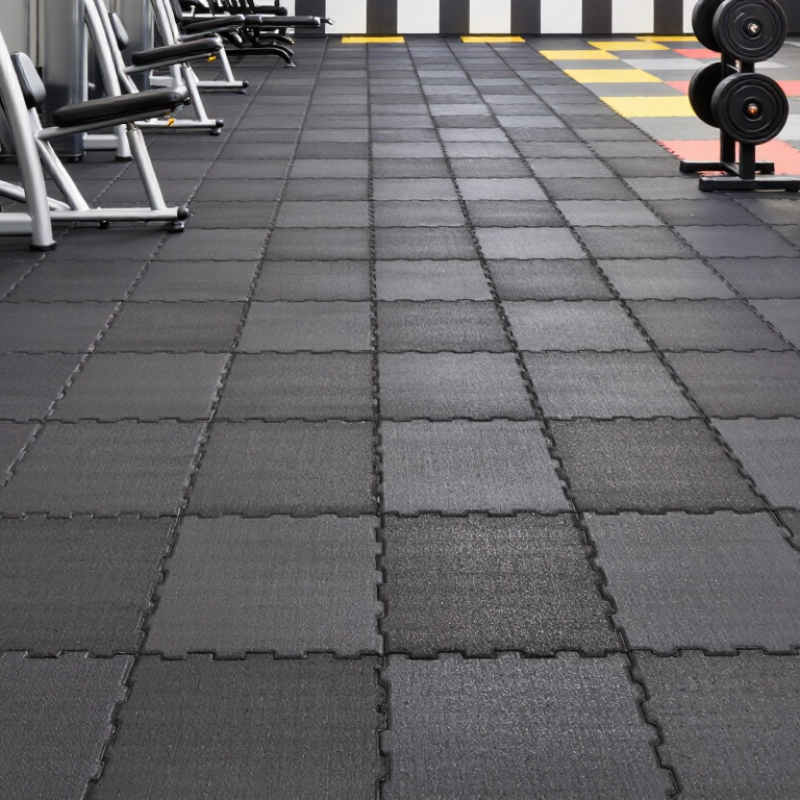
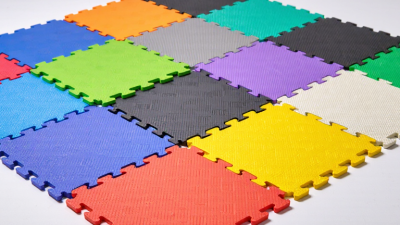
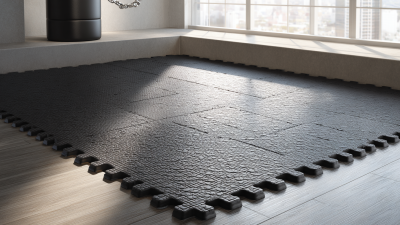
Interlocking foam mats are modular floor panels with puzzle-like edges. Each tile locks into its neighbor, creating a continuous surface without permanent installation. Commercial versions commonly use closed-cell polyethylene or EVA foam, though material, thickness, and firmness vary. The interlocking edges help keep panels aligned, while the foam compresses underfoot and spreads contact across a broader area. A snug fit matters. Gaps can collect grit or catch a shoe.
Design details affect performance. Textured tops improve grip; beveled outer edges can reduce abrupt transitions at exposed borders. ASTM International’s D3574 standard describes tests for flexible cellular materials, including firmness and compression set. These measurements help compare foam behavior, but they do not guarantee a mat will suit every floor or load. A useful specification should also state tile dimensions, thickness, and cleaning limits. Rolling carts can stress seams.
The U.S. Bureau of Labor Statistics recorded about 2.6 million nonfatal workplace injury and illness cases in private industry in 2023. That figure is broad, not evidence that mats prevent injuries. Still, it makes floor choices worth examining. Check for tile movement, worn joints, and moisture beneath panels during routine inspections. The seams are not magic. Even well-fitted mats may shift on dusty or uneven floors.
| Dimension | What It Is or How It Works | Commercial Relevance |
|---|---|---|
| Basic construction | Interlocking foam mats are separate foam panels with shaped edges that connect to neighboring panels. Many are made from materials such as EVA or polyethylene foam; exact composition varies by product. | Panels can cover a defined area without requiring one large, custom-cut floor covering. |
| Interlocking edge design | Jigsaw-like tabs and recesses fit together to align adjacent panels. Some products also include detachable straight-edge pieces for finishing exposed sides. | Individual panels can be assembled, rearranged, or replaced. Correct alignment and a suitable floor underneath help reduce panel movement. |
| Cushioning | Foam compresses under load and provides a softer surface than a hard floor. The amount of cushioning depends on the material, thickness, density, and construction. | May improve comfort for activities such as standing, floor-based exercise, or supervised play. It is not a substitute for a purpose-designed safety surface where impact protection is required. |
| Modular coverage | Coverage is created by joining multiple panels. The layout can be adapted to room dimensions, and panels can be removed or added as requirements change. | Useful for temporary activity areas, changing room layouts, and localized floor coverage. Measure the space and account for edges, doors, and equipment. |
| Installation | Panels are commonly installed on a clean, dry, reasonably level surface. They are typically joined by hand; adhesive is not inherent to the interlocking design. | A floating installation can be convenient, but heavy traffic, rolling loads, or uneven floors may cause separation or movement. Check suitability for the intended use. |
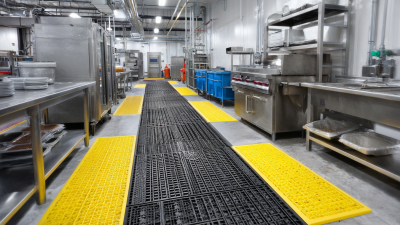
| Typical commercial settings | Potential uses include fitness and exercise areas, childcare activity spaces, trade-show or event flooring, and work areas where temporary cushioning is useful. | Choose a product designed for the specific activity. Commercial suitability depends on factors such as expected traffic, equipment, cleaning methods, and applicable safety requirements. |
| Cleaning and maintenance | Many foam surfaces can be cleaned with a damp cloth and a mild cleaner, but care instructions differ by material and finish. | Follow the product’s cleaning guidance. Harsh chemicals, excessive moisture, or abrasive tools may damage some foam surfaces or finishes. |
| Wear and load limits | Repeated compression can leave marks or reduce cushioning over time. Sharp objects, concentrated loads, and dragging heavy equipment may damage foam or joints. | Check the manufacturer’s stated load and use guidance. Mats intended for light activity may not be appropriate for heavy machinery or continuous rolling traffic. |
| Slip and stability considerations | Grip depends on the mat’s surface texture, the floor beneath it, footwear, and whether the surface is dry or contaminated. | Assess the complete floor setup in real operating conditions. Do not assume that every foam mat is slip-resistant or suitable for wet areas. |
| Product verification | Foam type, dimensions, thickness, fire performance, emissions information, and test results vary across products. | Review product documentation and local requirements before purchase, especially for public spaces, regulated facilities, or applications involving impact, heat, or chemicals. |