Choosing the right rubber door mat is more than matching a color to your entrance. It affects cleanliness, slip resistance, floor protection, and daily maintenance. A busy doorway collects rain, grit, leaves, and small stones. The wrong mat may curl, slide, or hold too much water. That creates problems quickly.
Peter J. Sweeney, a commercial entrance-mat consultant, says, “A good mat should stop dirt before it becomes a flooring problem.” His point is practical. A rubber door mat must fit the doorway, suit the traffic level, and work with the surrounding floor. Thickness matters near doors. A mat that is too tall can catch the door. A thin mat may shift under heavy footsteps. Small details count.
This guide explains seven useful tips for making a better choice. You will consider material quality, backing design, drainage, texture, size, cleaning needs, and indoor or outdoor placement. Look closely at the entrance. Is it exposed to strong sunlight? Does water pool beside the threshold? Do children, pets, customers, or delivery workers cross it every day? These details should shape your decision.
No mat performs perfectly everywhere. That is worth remembering. A deeply textured surface may trap more debris, but it can be harder to clean. A lightweight model may be easy to move, yet less stable. The best rubber door mat is not always the most expensive one. It is the one that fits your entrance, usage, and maintenance habits with fewer compromises.
7 Tips for Choosing the Best Rubber Door Mat
Understand the Main Functions of a Rubber Door Mat
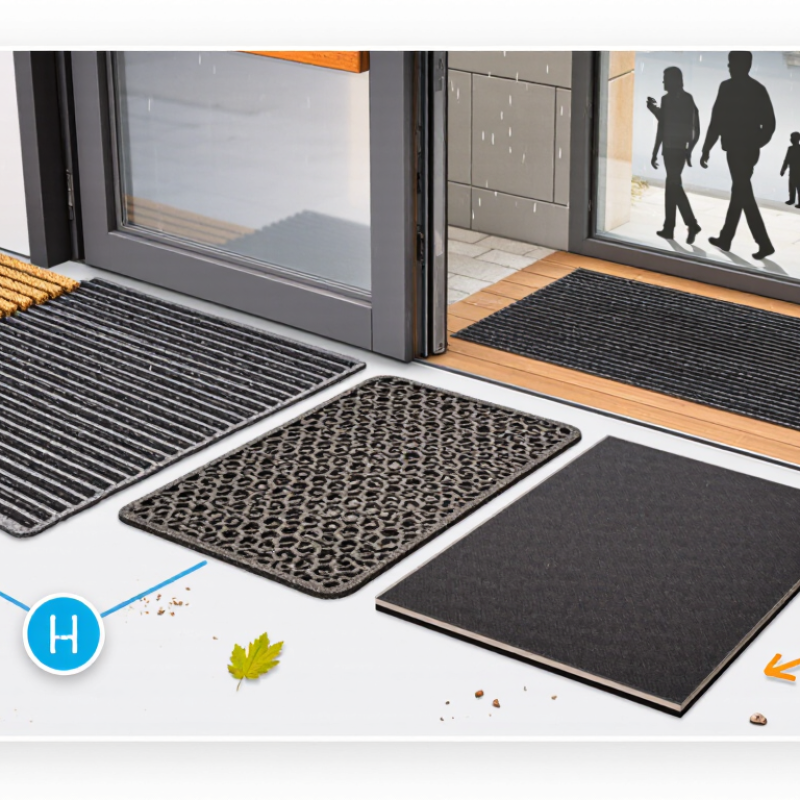
A rubber door mat does more than decorate an entrance. It removes grit, controls moisture, improves footing, and helps protect indoor flooring. Tip 1: Check the surface pattern. Deep ridges scrape dirt from shoe soles more effectively than flat rubber. Tip 2: Look for drainage openings when the mat will face rain or snow. Standing water can make an entrance messy and slippery.
Tip 3: Measure the doorway before buying. A mat should cover the main walking path without blocking the door. Tip 4: Test its grip on the floor. A stable backing reduces sliding, especially on smooth tile. Tip 5: Consider the rubber’s thickness. A thicker mat may last longer, but it can catch beneath a door. I once overlooked this detail. It caused daily frustration.
Tip 6: Choose a material suited to the location. Outdoor mats need resistance to sunlight, temperature changes, and frequent moisture. Indoor mats may need a softer, quieter surface. Tip 7: Inspect cleaning requirements. A practical mat should be easy to shake, rinse, or brush. Check the edges, too. Curled corners collect dirt and create a tripping risk. In busy entrances, function matters more than appearance. Yet appearance still affects how welcoming the space feels.
| Tip | Main Function | What to Check | Useful Selection Guidance | Why It Matters |
|---|---|---|---|---|
| 1 | Scrape dirt from footwear | Raised ribs, scraper bars, or molded patterns | Choose a textured surface with grooves deep enough to contact shoe soles without creating a trip hazard. | A textured rubber surface helps remove loose soil, sand, and small particles before they enter the building. |
| 2 | Improve slip resistance | Non-slip backing, stable weight, and beveled edges | Look for a mat that lies flat, has a secure underside, and includes tapered edges where people walk across it. | A stable mat can reduce movement and edge catching, especially in entrance areas exposed to moisture. |
| 3 | Control water and moisture | Drainage holes, channels, or open-grid construction | For outdoor or semi-covered entrances, select a design that allows water to pass through instead of pooling on top. | Drainage helps keep the walking surface less wet and prevents the mat from holding a layer of standing water. |
| 4 | Fit the entrance correctly | Mat length, width, thickness, and door swing clearance | Measure the available area first. The mat should sit flat without blocking the door or extending into a high-traffic obstruction. | Correct sizing improves coverage and prevents the mat from interfering with doors, thresholds, or accessible routes. |
| 5 | Select suitable thickness | Profile height and compatibility with the door gap | Use a low-profile design where a door must pass over the mat; thicker drainage mats require sufficient clearance. | An unsuitable thickness may cause the door to drag, prevent full opening, or create a raised edge. |
| 6 | Prioritize durability | Material resilience, edge construction, and resistance to weather exposure | For busy entrances, choose a dense rubber mat with reinforced or molded edges and suitability for the expected environment. | Rubber is flexible and resilient, but heat, sunlight, oils, and extreme temperatures can affect service life. |
| 7 | Make cleaning and maintenance easy | Open surface design, washable construction, and manageable weight | Choose a mat that can be shaken, swept, vacuumed, or rinsed according to the manufacturer’s care instructions. | Regular cleaning removes trapped grit and moisture, helping preserve traction and reduce indoor dirt. |
Match the rubber door mat to the doorway, not the catalogue photo. Measure the clear opening, threshold depth, and door swing. For a 36-inch doorway, choose a mat close to that width without touching the frame. A narrow mat leaves exposed edges where wet shoes collect water. A thick mat may stop the door.
Tip: Check the shape before buying. Rectangular mats suit straight thresholds and hinged doors. Half-round mats can soften curved entrances, but they may waste space beside a narrow frame. Keep the mat flat, with no curled corners. The U.S. Consumer Product Safety Commission repeatedly identifies falls as a major source of injury, although it does not claim every fall involves a mat. That distinction matters.
Tip: Match length to foot traffic. A longer mat gives each foot more contact steps, especially at busy entrances. The World Health Organization reports about 684,000 fatal falls worldwide each year. Most household mats will not prevent every slip. Still, correct sizing can reduce awkward stepping and trapped moisture. In practical checks, open and close the door several times. Then walk across the mat with wet soles. This simple test is often skipped. It should not be. CDC data also reports over three million older adults receive emergency treatment for fall injuries annually in the United States. A mat that looks attractive but shifts underfoot needs reconsideration.
7 Tips for Choosing the Best Rubber Door Mat?
A rubber door mat should match the dirt outside your entrance. Look closely at its surface texture before buying. Deep grooves catch sand, grit, and wet soil better than flat patterns. However, very narrow grooves can clog quickly. Choose raised ribs for heavy foot traffic. Choose a tighter, shallower pattern for dust and indoor entryways. The pattern should feel firm, not soft or flimsy. A stable surface reduces slipping when shoes are wet. I once selected a very aggressive texture for a covered porch. It trapped dirt well but was uncomfortable under bare feet. That choice was not ideal.
Test the mat with different shoe soles if possible. Smooth soles need stronger ridges for effective scraping. Deep tread shoes may already carry less loose soil. Check whether the grooves guide dirt sideways or hold it in one place. A mat that stores debris can look clean while hiding a thick layer underneath. Lift it after several days and inspect the floor below. This simple check reveals its real trapping ability. Also examine the edges, where dirt often escapes. Rubber should feel dense and return to shape after bending. Avoid surfaces that collect water without drainage paths. Cleaning matters too. Shake the mat outdoors, rinse it, and let it dry fully. Some textures work brilliantly at first, then become disappointing when maintenance is inconvenient.
A good rubber door mat must handle rain, heat, grit, and repeated foot traffic. Check its weather-resistance test data, not only the product description. ASTM D573 evaluates rubber after heat and air exposure, helping reveal cracking or hardening risks. For outdoor entrances, choose a mat with UV-resistant rubber and drainage openings. Standing water can freeze, stain floors, or create a slippery surface. That detail is easy to overlook.
Safety deserves closer attention. The CDC reports that more than one in four adults aged 65 and older fall each year. A stable mat cannot prevent every accident, but it can reduce avoidable hazards. Look for a low-profile edge, strong floor contact, and a textured upper surface. ASTM F2913 provides a recognized method for measuring footwear slip resistance. However, laboratory results are not real life. Wet shoes, dust, and poor floor cleaning can still change performance.
Cleaning should be simple enough for busy entrances. Rubber mats with open channels trap less visible water but may collect stones underneath. Lift the mat weekly and inspect the floor below. Rinse it with clean water, use mild detergent, and dry both surfaces fully. Avoid harsh solvents unless the manufacturer confirms compatibility. In practice, I once ignored the underside and found fine grit wearing the floor finish. That was preventable. A mat that looks clean may not be clean.
7 Tips for Choosing the Best Rubber Door Mat
Choose a Suitable Style, Thickness, and Overall Value
Tip 1: Match the mat’s style to your entrance. A low-profile design suits modern doors, while a textured pattern hides dirt better. Tip 2: Check the rubber quality. Dense rubber usually resists curling, cracking, and daily moisture. I have found that very soft mats often wear faster than expected. That detail is easy to miss.
Tip 3: Choose thickness according to door clearance. A thick mat may trap against the door. Measure the gap before buying. Tip 4: Consider the entrance surface. Raised patterns work well outdoors, while smoother surfaces feel more comfortable indoors. Tip 5: Look for reliable drainage. Small openings can help rainwater escape instead of spreading across the floor. Test this carefully, because attractive designs sometimes drain poorly.
Tip 6: Review the mat’s overall value, not only its price. A durable mat may cost more but require fewer replacements. Tip 7: Check cleaning needs and edge stability. A washable surface saves time, and weighted edges reduce sliding. I prefer mats that stay flat after repeated cleaning. Still, no mat performs perfectly in every location, especially during heavy rain or winter grit.
Choose a suitable style, thickness, and overall value by matching the mat to traffic level, location, drainage needs, and maintenance requirements.
The chart shows practical starting thickness ranges for common entry conditions. Lighter mats suit indoor or low-traffic areas, while thicker mats generally provide greater durability and stability for exposed or high-traffic entrances. Always check door clearance, drainage, slip resistance, cleaning needs, and total value before purchasing.